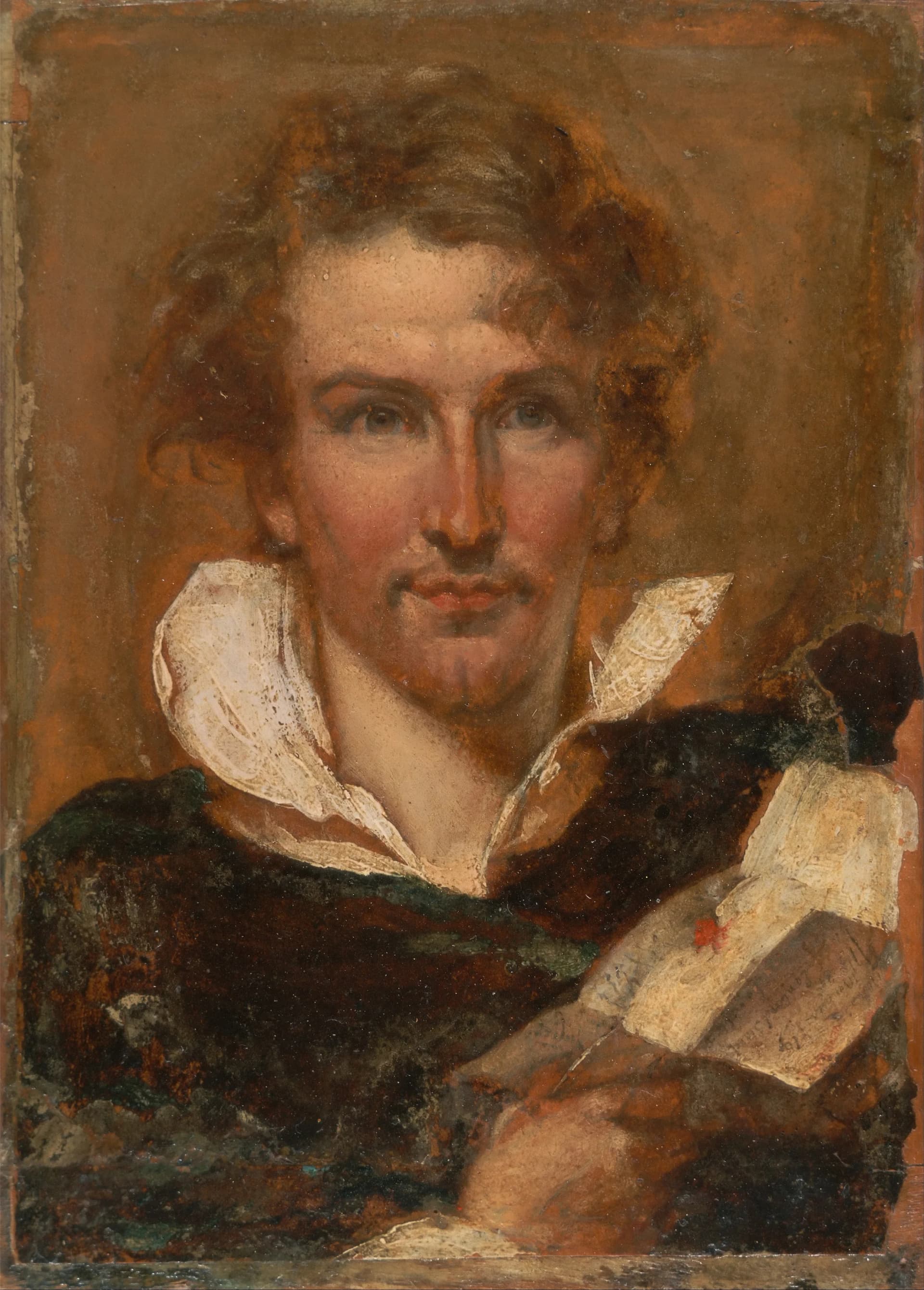
William Etty (b. 1787, York, UK – d. 1849, York, UK) was a British painter known for his distinctive focus on the nude figure within historical and mythological subjects. He spent most of his career in London, where he trained at the Royal Academy Schools and then (1807–8) with Sir Thomas Lawrence, who had a great influence on him; this was later modified by the impact of Venetian art, which he admired on a lengthy tour of France and Italy in 1822–4. Etty's paintings are often of mythological or historical subjects, sometimes on an ambitious scale, but he also made life studies in the RA Schools throughout his career, and these are now probably his most admired works. He was often attacked for the alleged indecency of his work, The Times considering it ‘entirely too luscious for the public eye’.