Robin Megannity
About this work
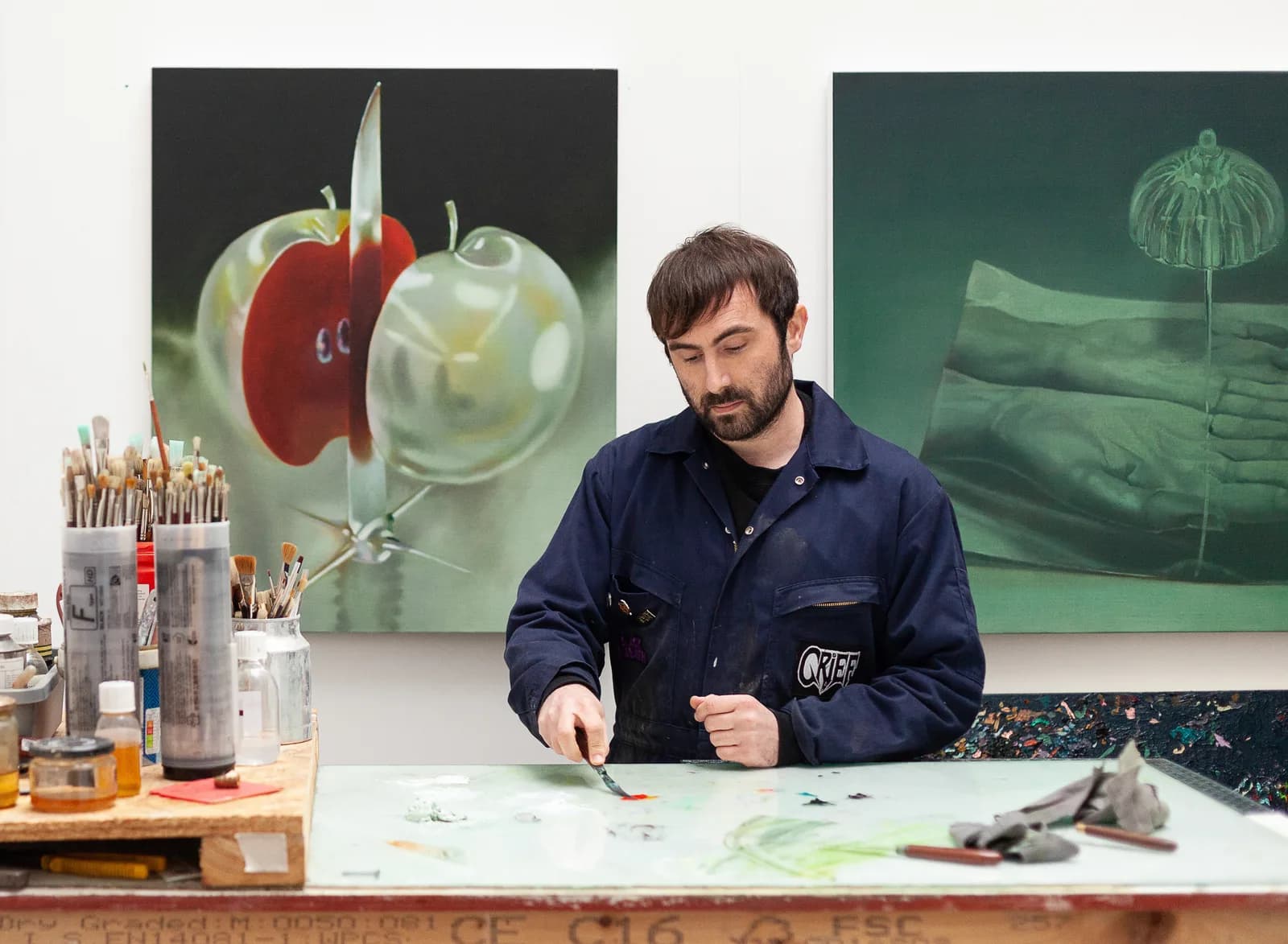
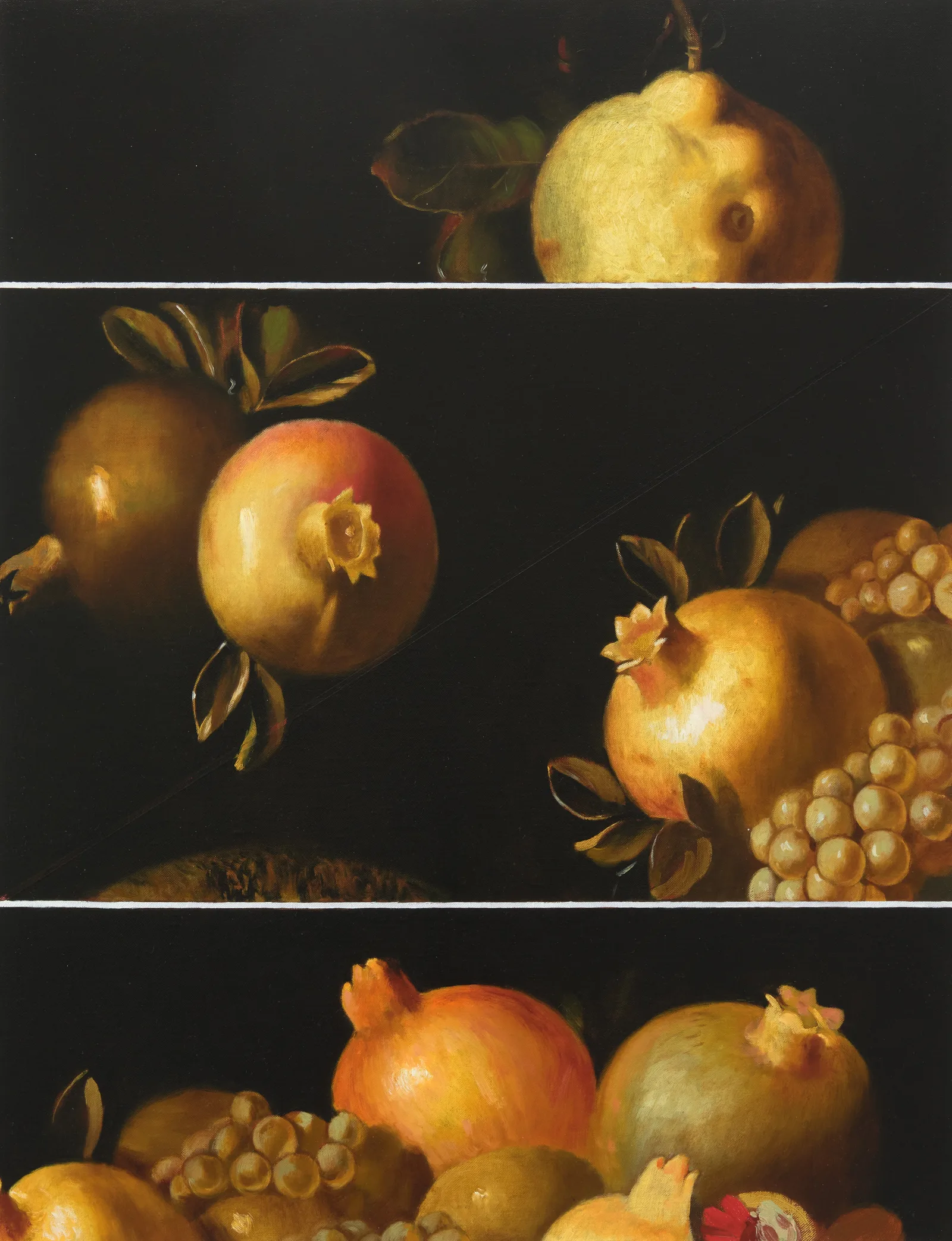
Robin Megannity imbues his images with the retro appearance of traditional oil paintings. Unusually for a contemporary artist, he makes use of oil paint's illusionistic potential, building up fictional scenarios in fine layers to suggest real-life scenes. He employs a changing cast of actors to pose with apparently meaningful gestures amid an assortment of symbolic props. Muted colours create claustrophobic shadows, and cryptic titles add to an atmosphere of narrative suspense. Megannity’s works operate as glimpses of storylines, petrified into enigmatic yet intriguing mysteries.
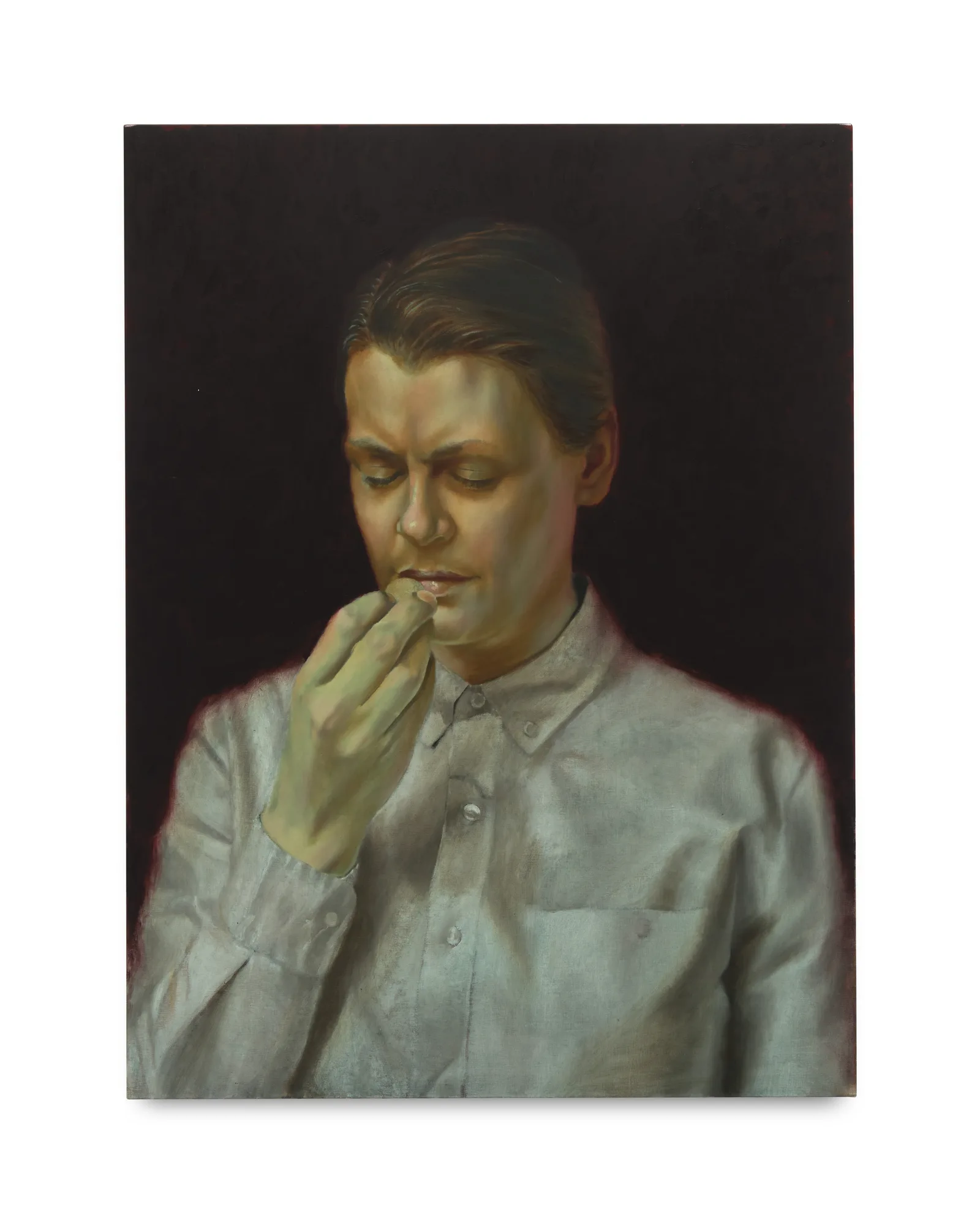
Megannity’s portrait one more stone to swallow, a work of oil on linen, may be conventional in form and style, but is unconventional in subject: his model is rendered in the moment before consuming a stone. Megannity’s model is his partner, who lives with PICA, an eating disorder that involves eating items not typically considered food and with no nutritional value. The work’s sensitive, naturalistic style, applied to its little-known subject, gestures at the paradoxes that, for Megannity, define all painting: intimacy and mystery, tenderness and melodrama, sincerity and artificiality. While characterised by a soft, melancholic intimacy, ultimately, one more stone to swallow cannot shake off the uncanny sense of its own strangeness.
...
one more stone to swallow typifies Robin Megannity’s unique approach to image-making, which is inspired by the uncanniness of Surrealism and heavily influenced by the techniques of classical European painters such as Diego Velázquez and Francisco Ribalta. Megannity’s paintings bare a dramatic, filmic quality, weaving narratives in a curious yet hypnotising manner. one more stone to swallow is no different, presenting us with an atmospheric scene that depicts a figure placed ambiguously against a pitch black background, poised to eat an unknown object.
The figure in question is in fact Megannity’s partner, who suffers from Pica – a rare disorder in which people are compelled to eat non-food objects – and the object they are holding is a lump of plasticine. While this fact goes some way to contextualise the work, it is characteristic of the enigmatic nature of Megannity’s work that it raises as many questions as it answers.