Focus
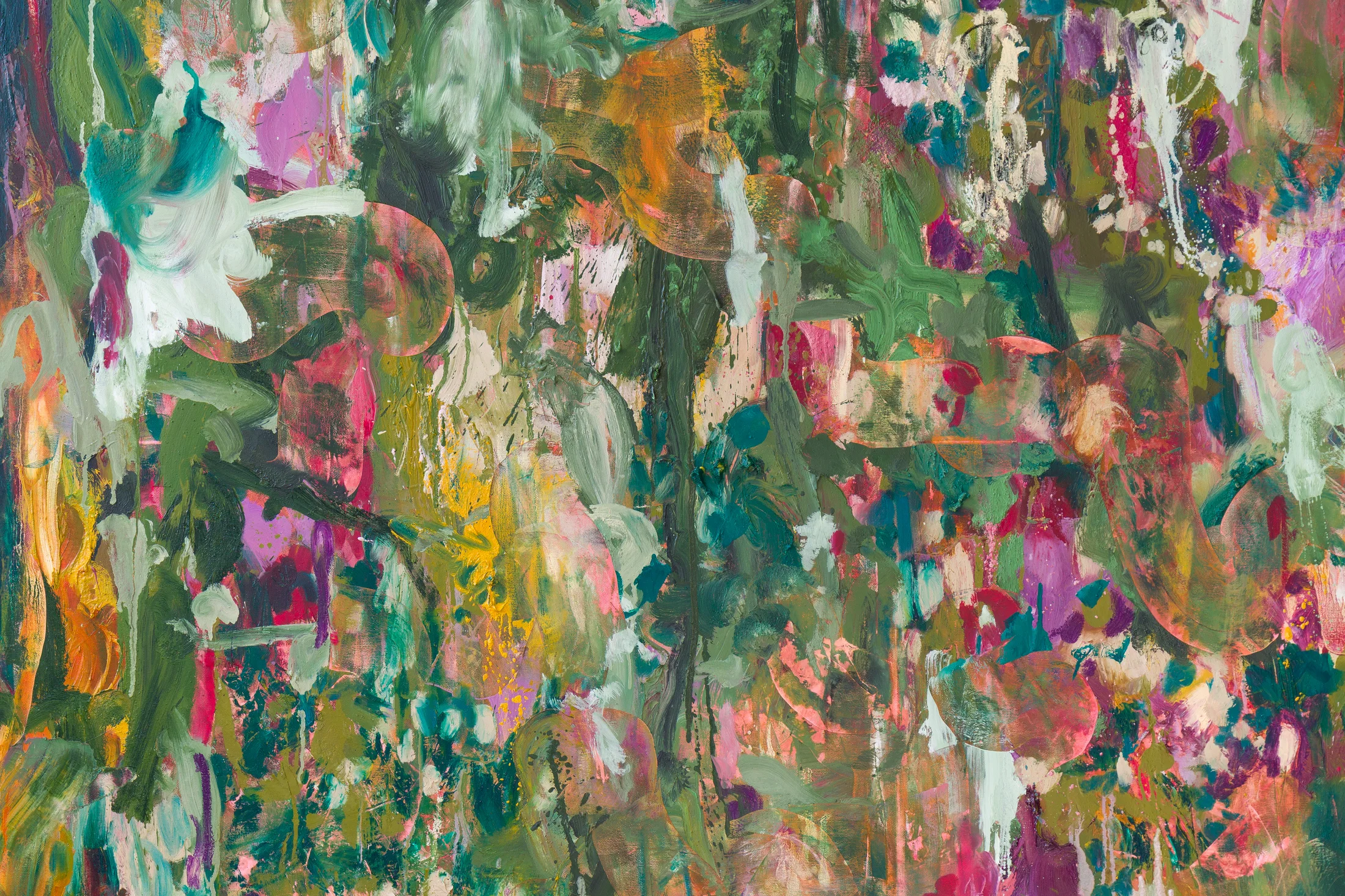
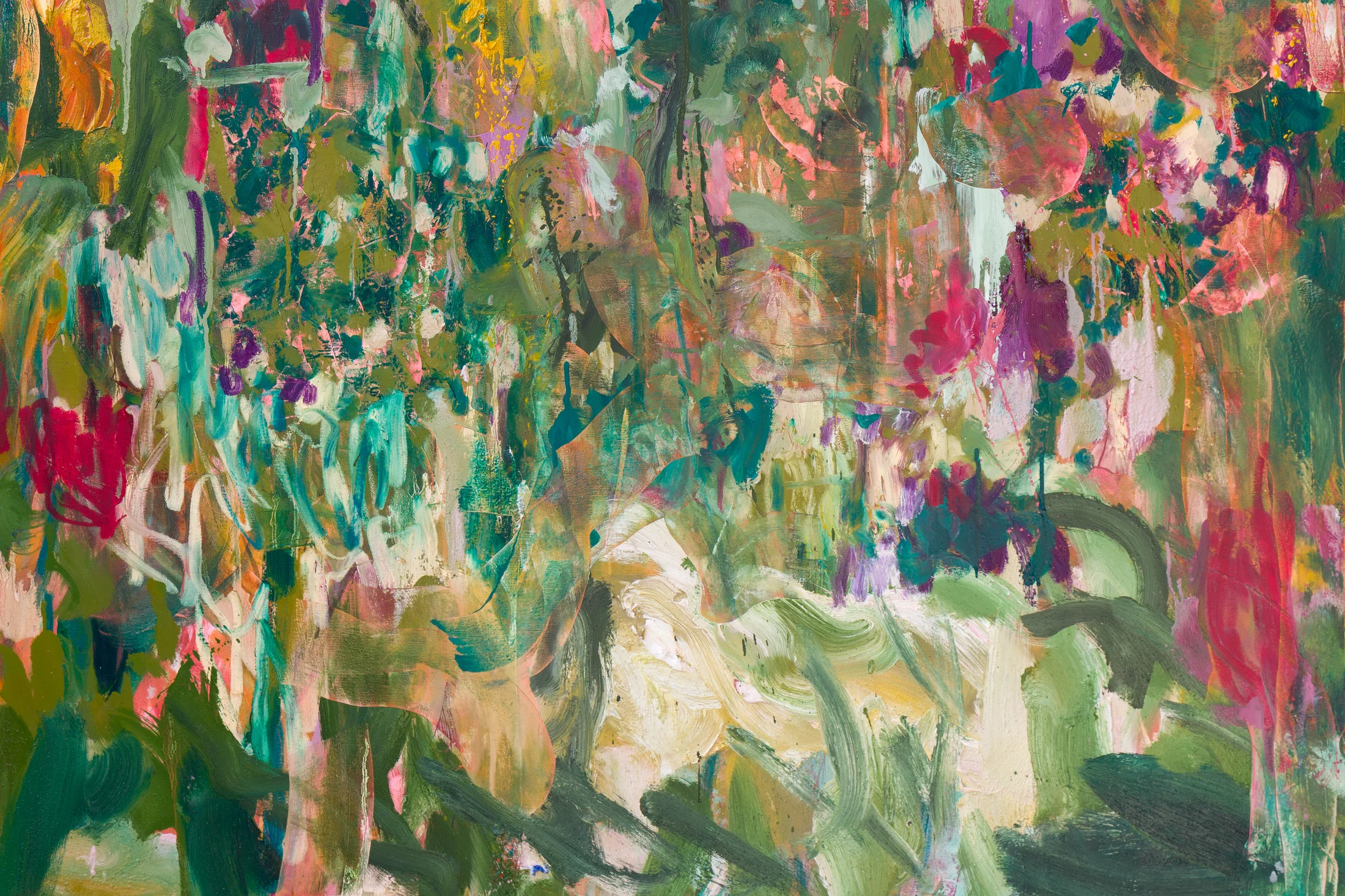
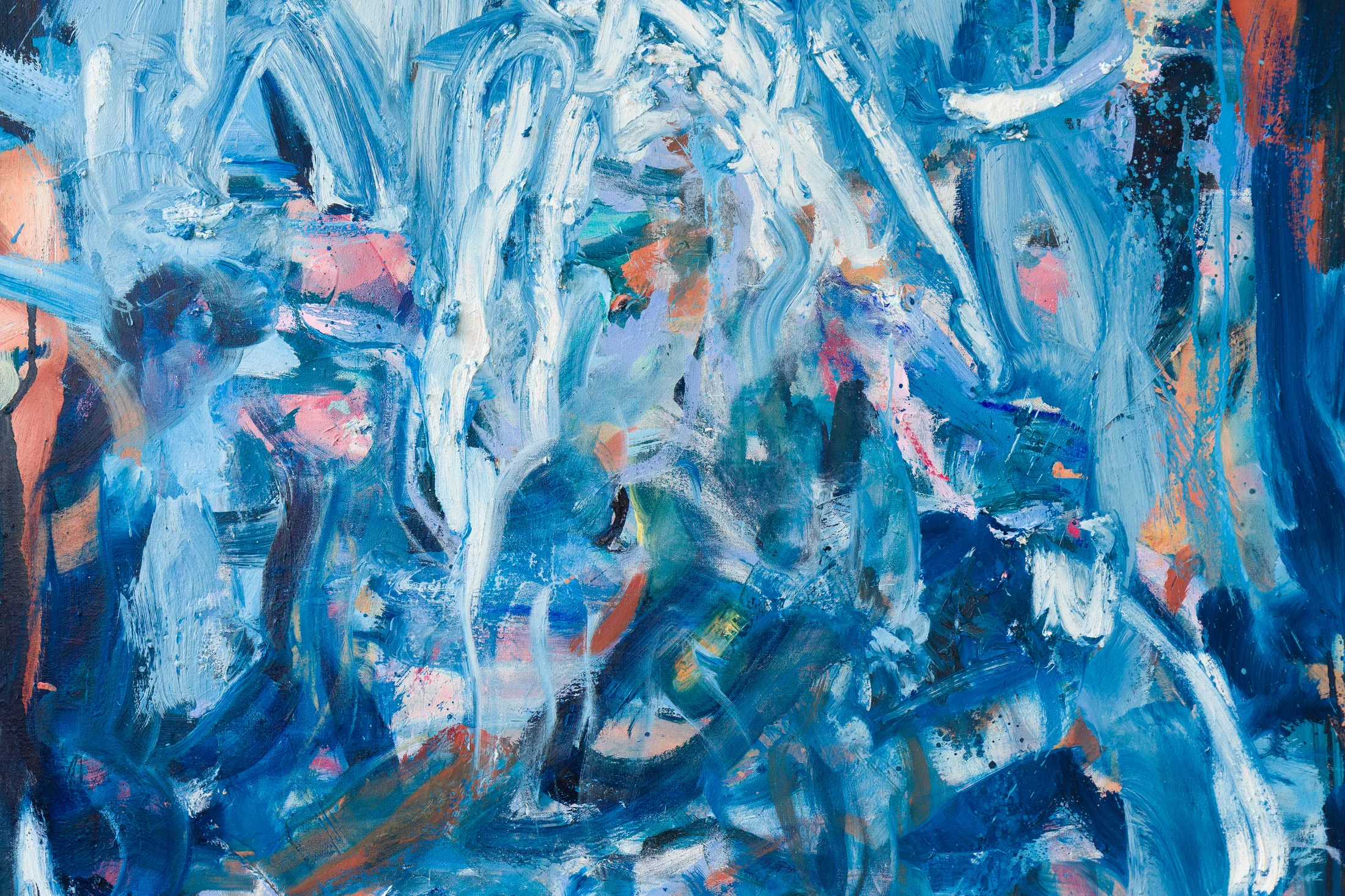
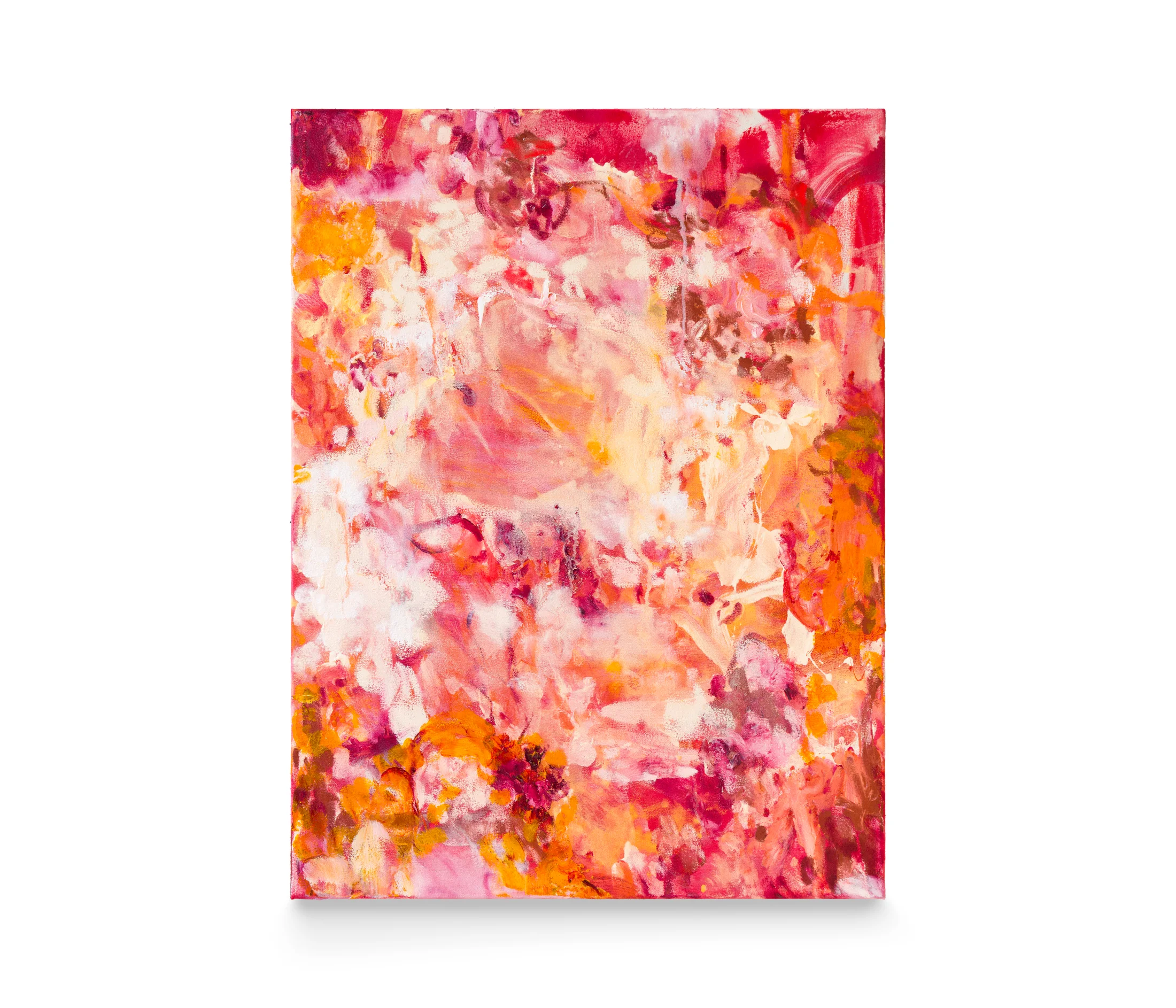
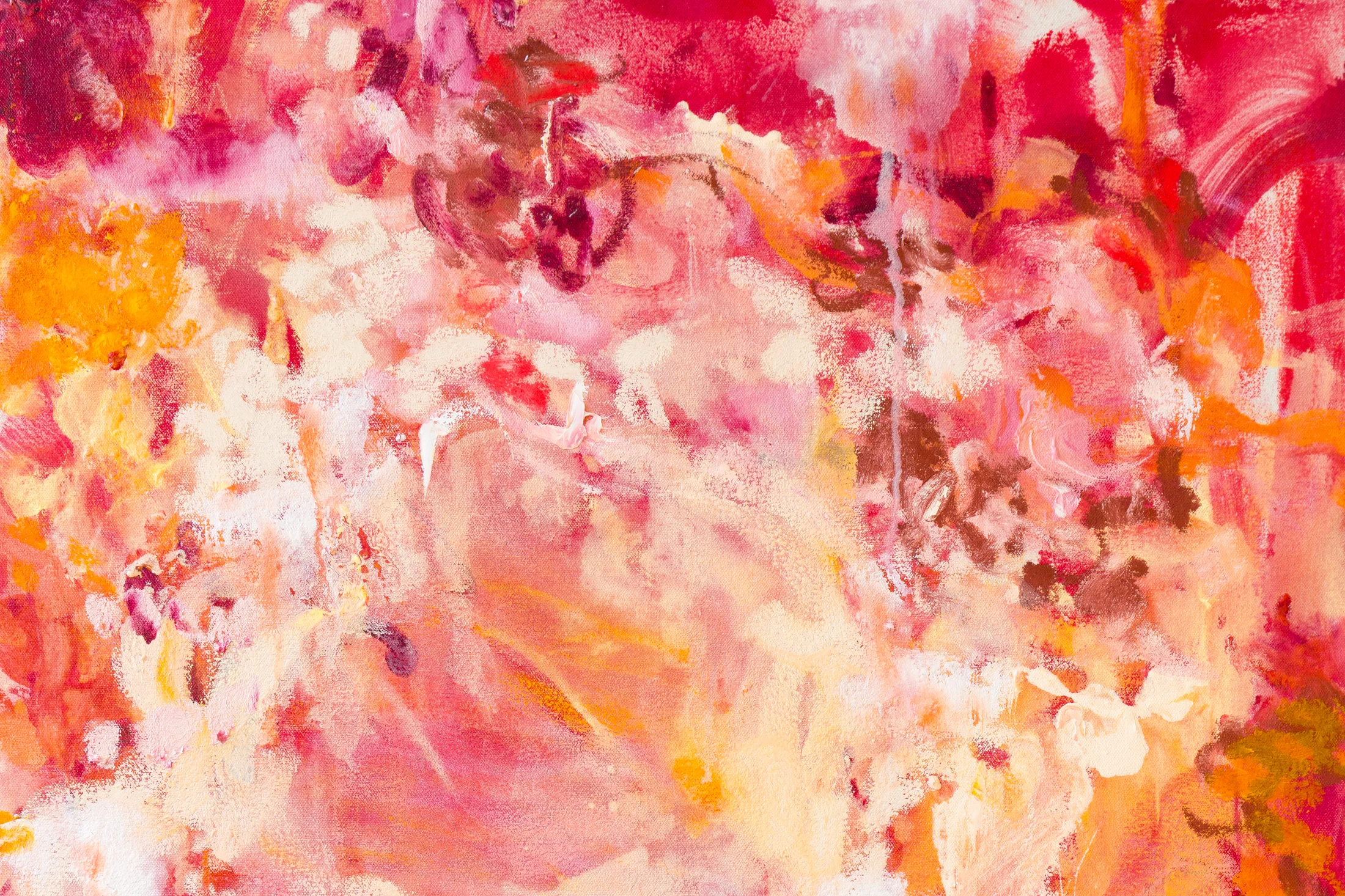
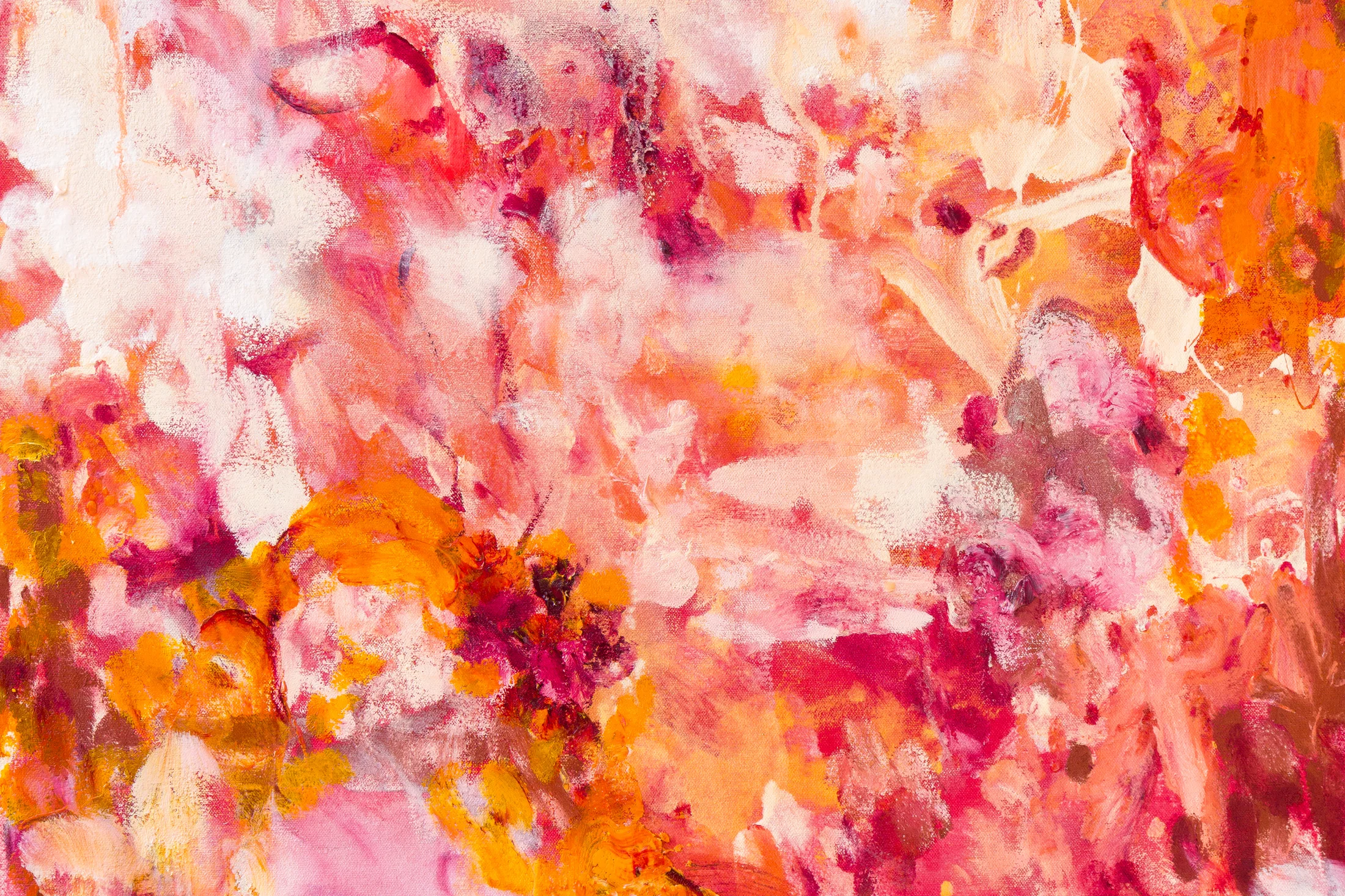
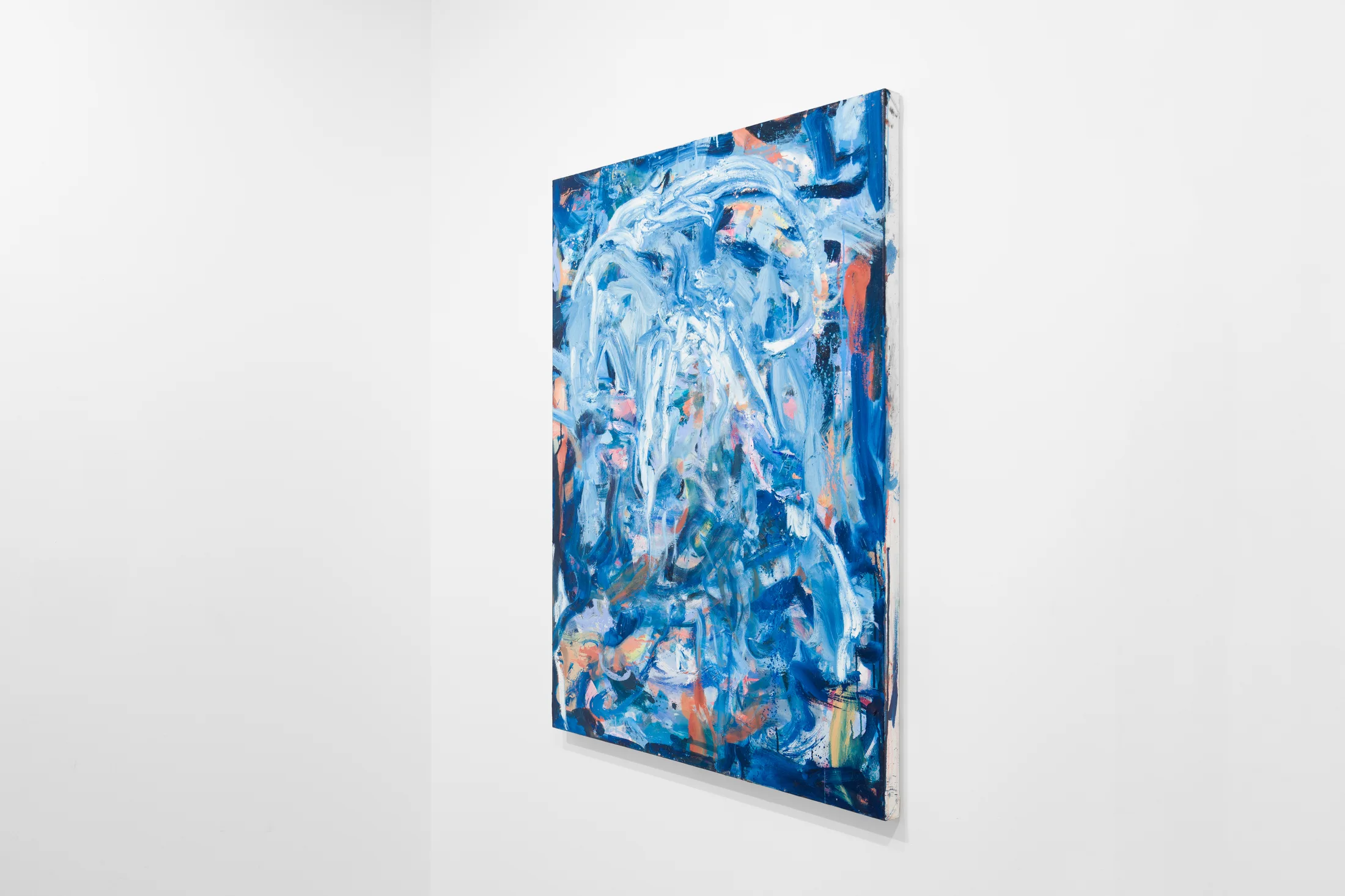
Isabella Amram, Lolita, 2025, (detail image); Courtesy the artist and WORKPLACE, UK
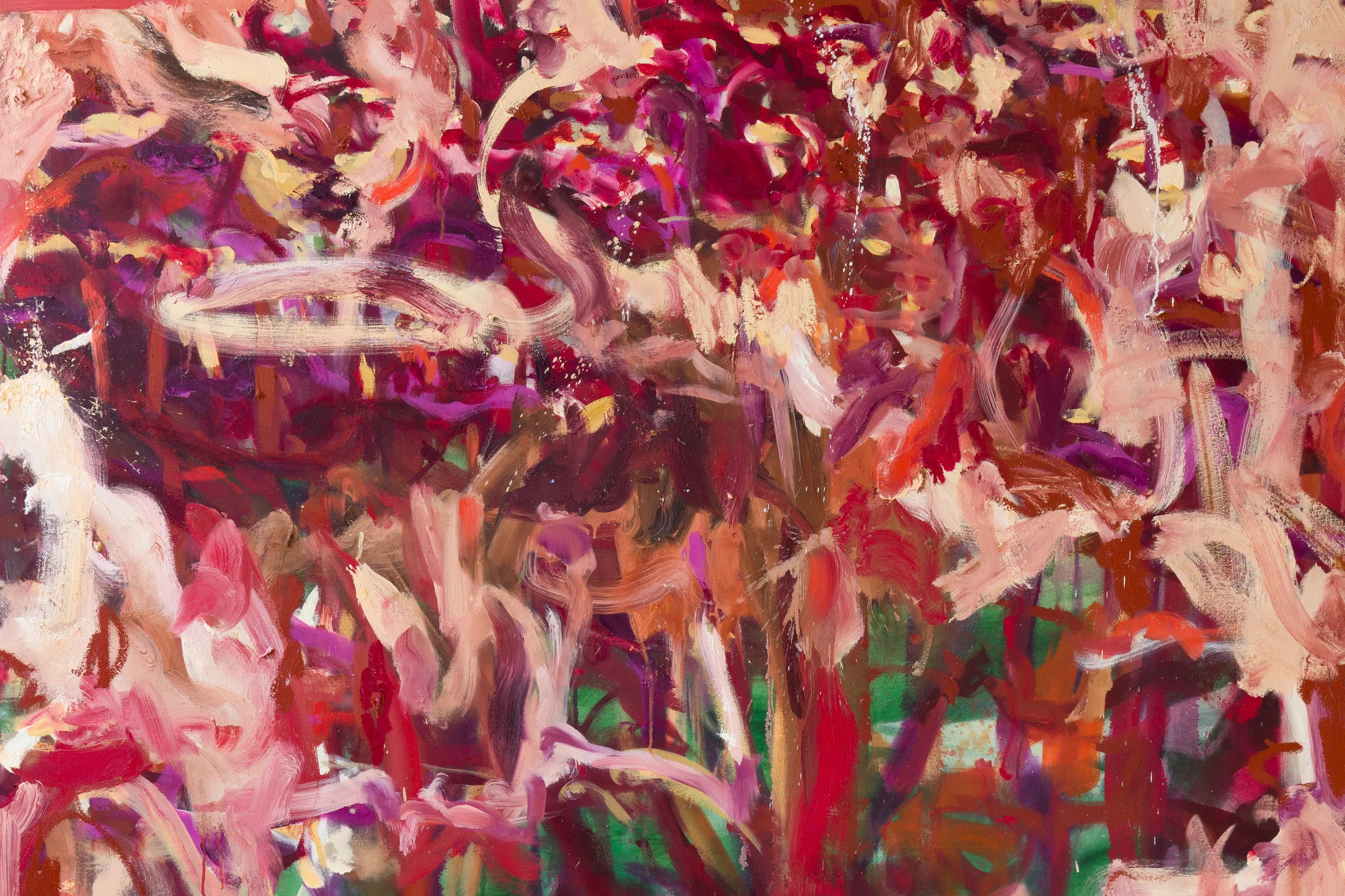
Isabella Amram, Lolita, 2025, (detail image); Courtesy the artist and WORKPLACE, UK
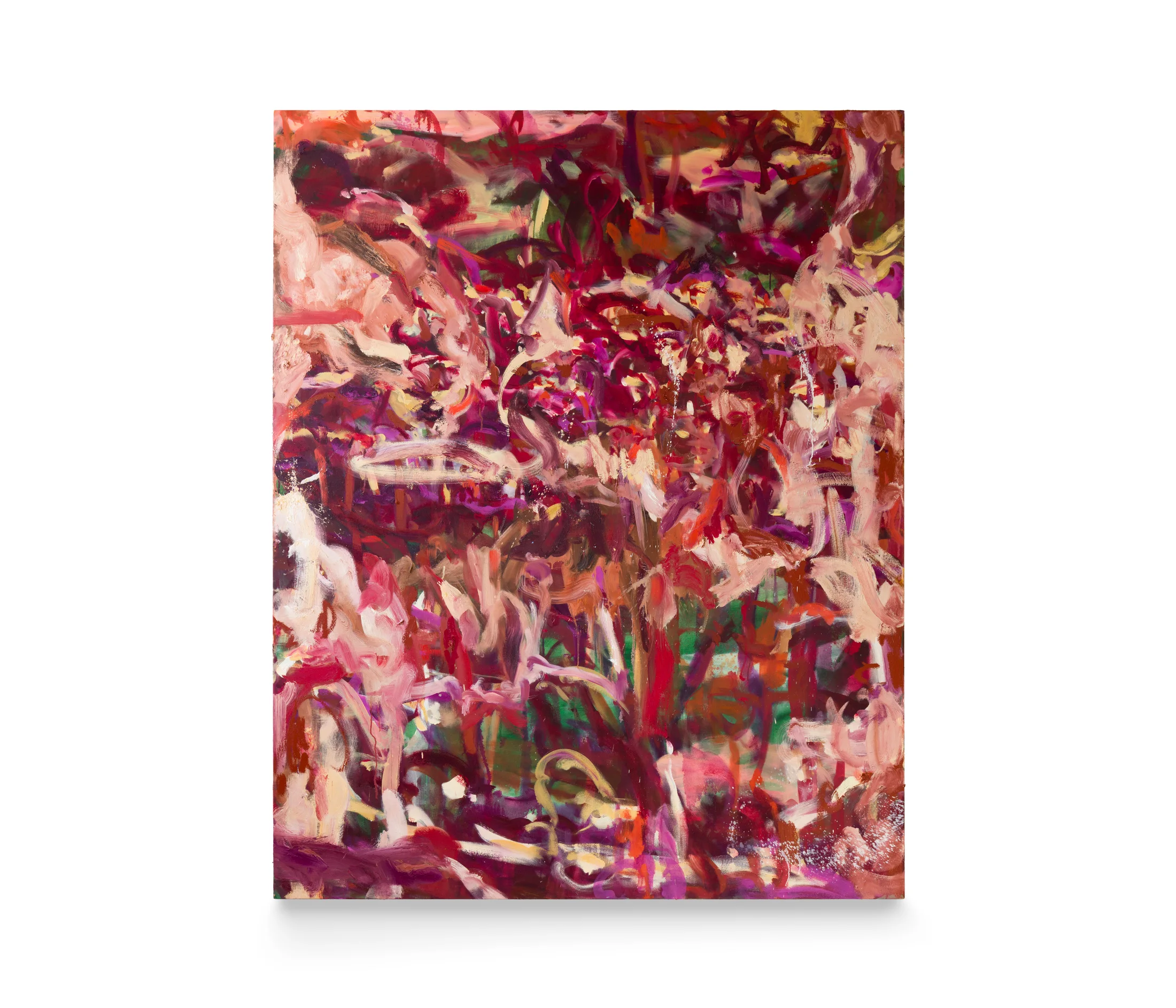
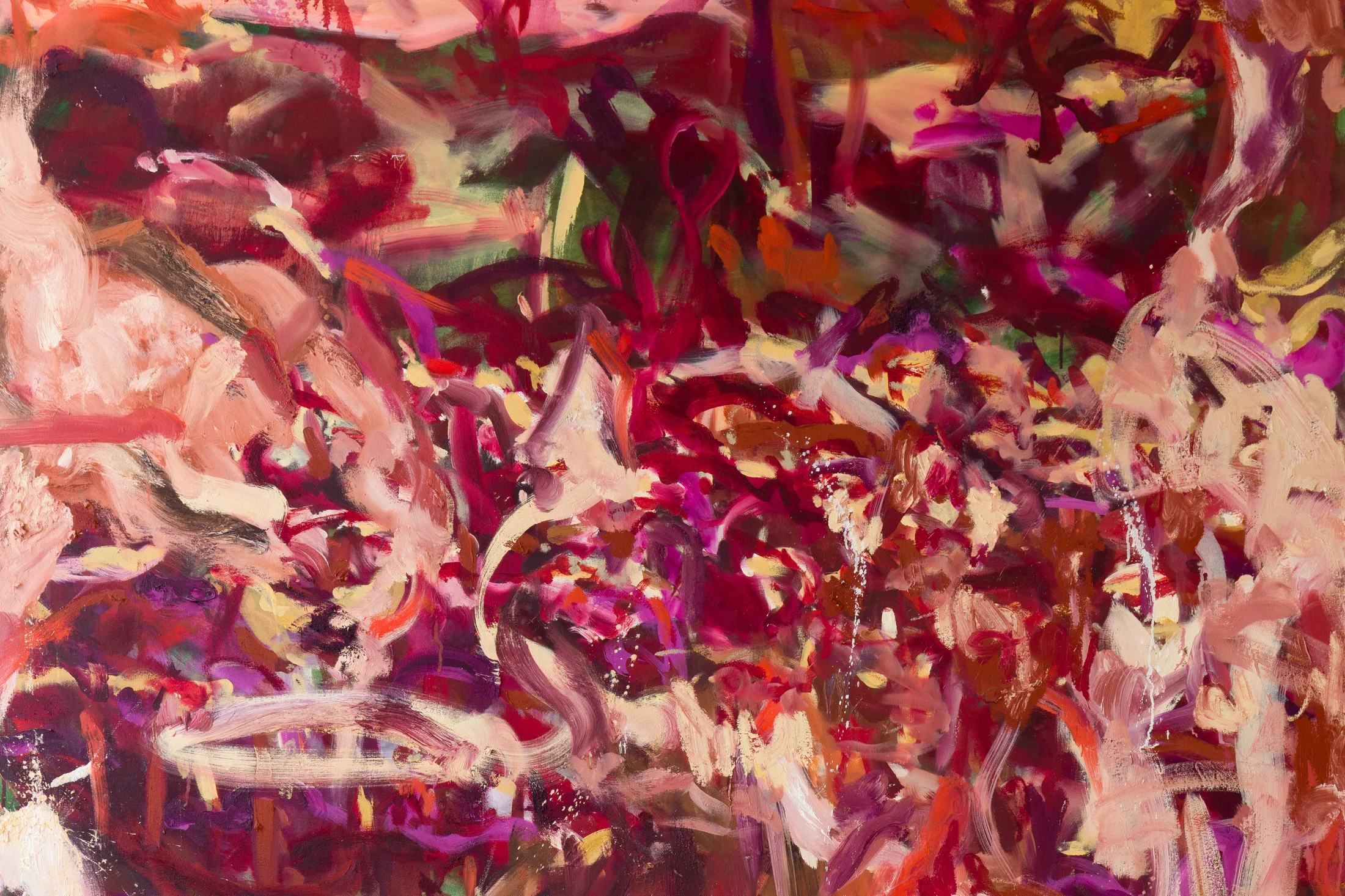
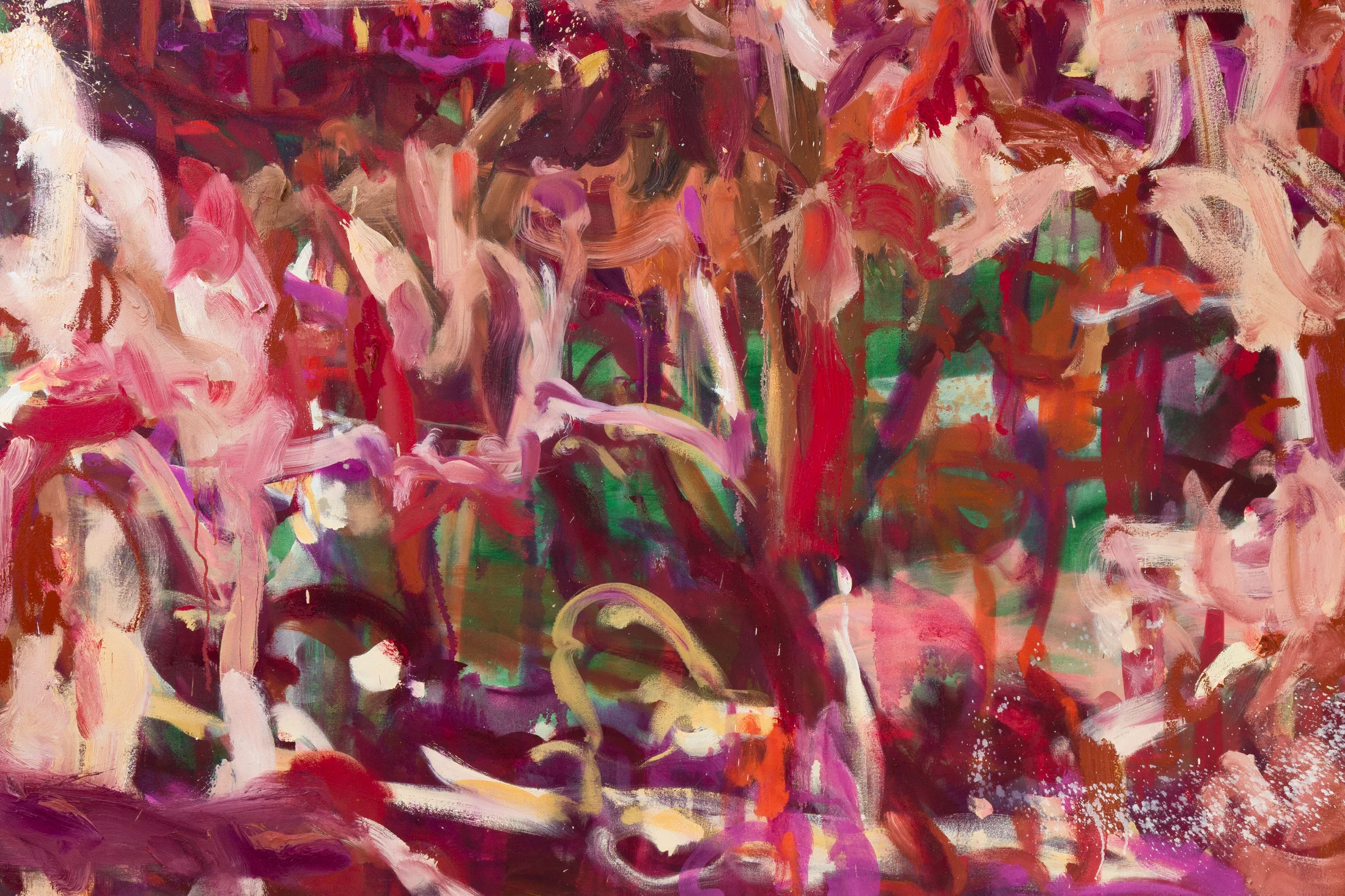
Isabella Amram
Workplace is pleased to launch the latest instalment of Focus, a series of online exhibitions in the which the practice of artists at early stages of their career and new to the gallery programme are introduced through a body of work, curated specifically for each presentation.
For this Focus we introduce the work of Isabella Amram, a Turkish-Venezuelan artist living and working in London. She holds a BA from Brown University and has recently graduated from the RCA Painting MA programme.
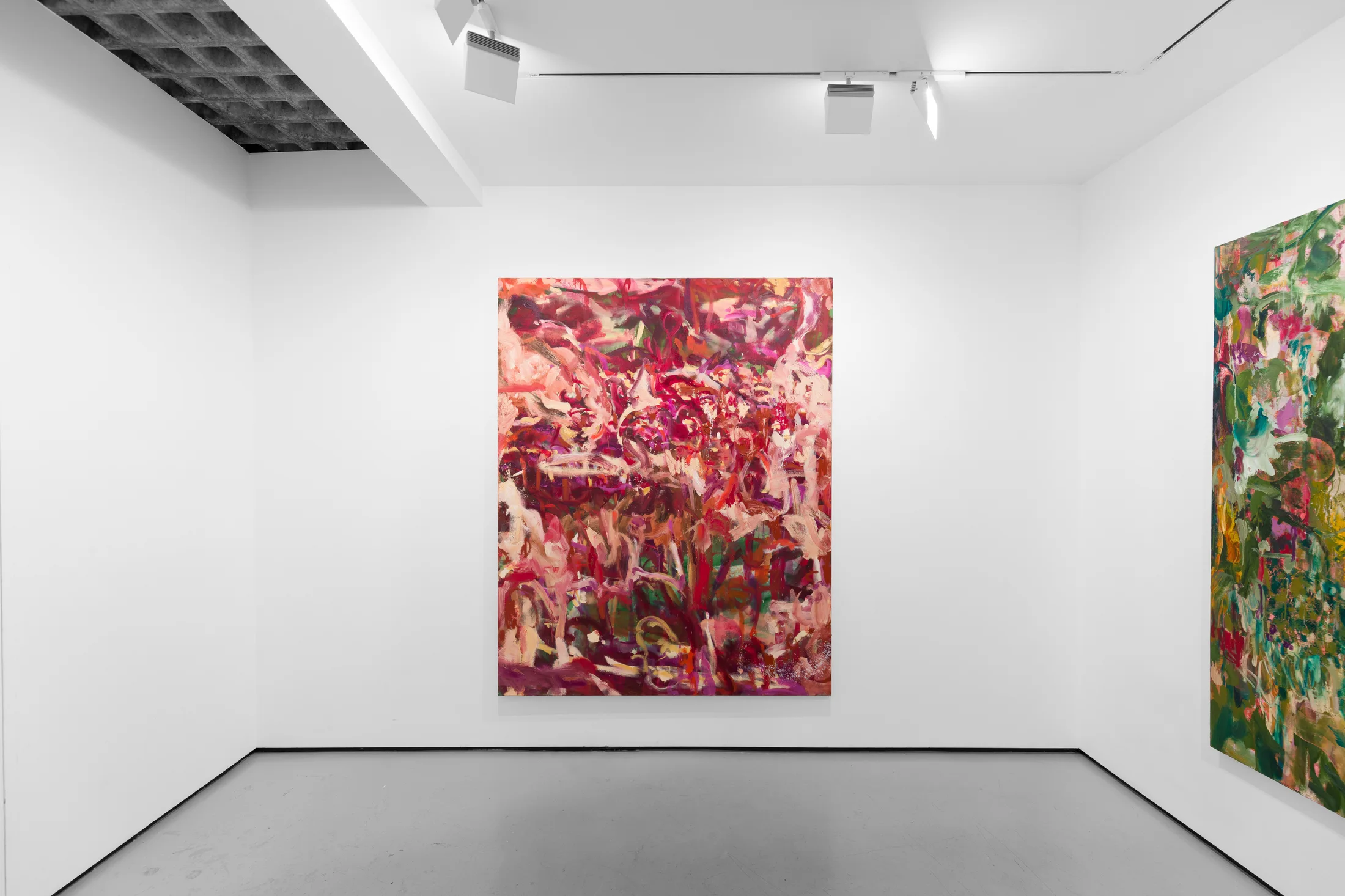
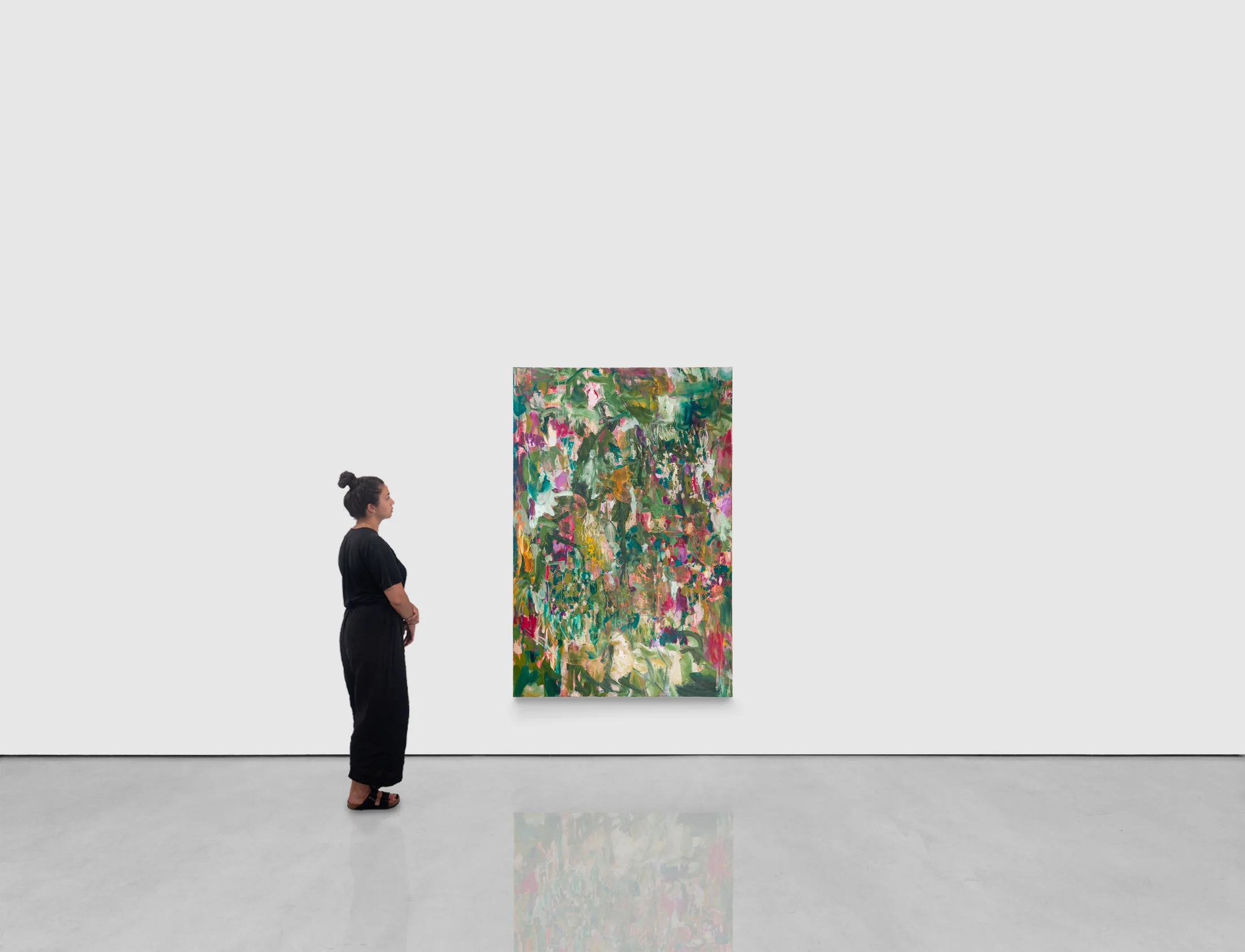
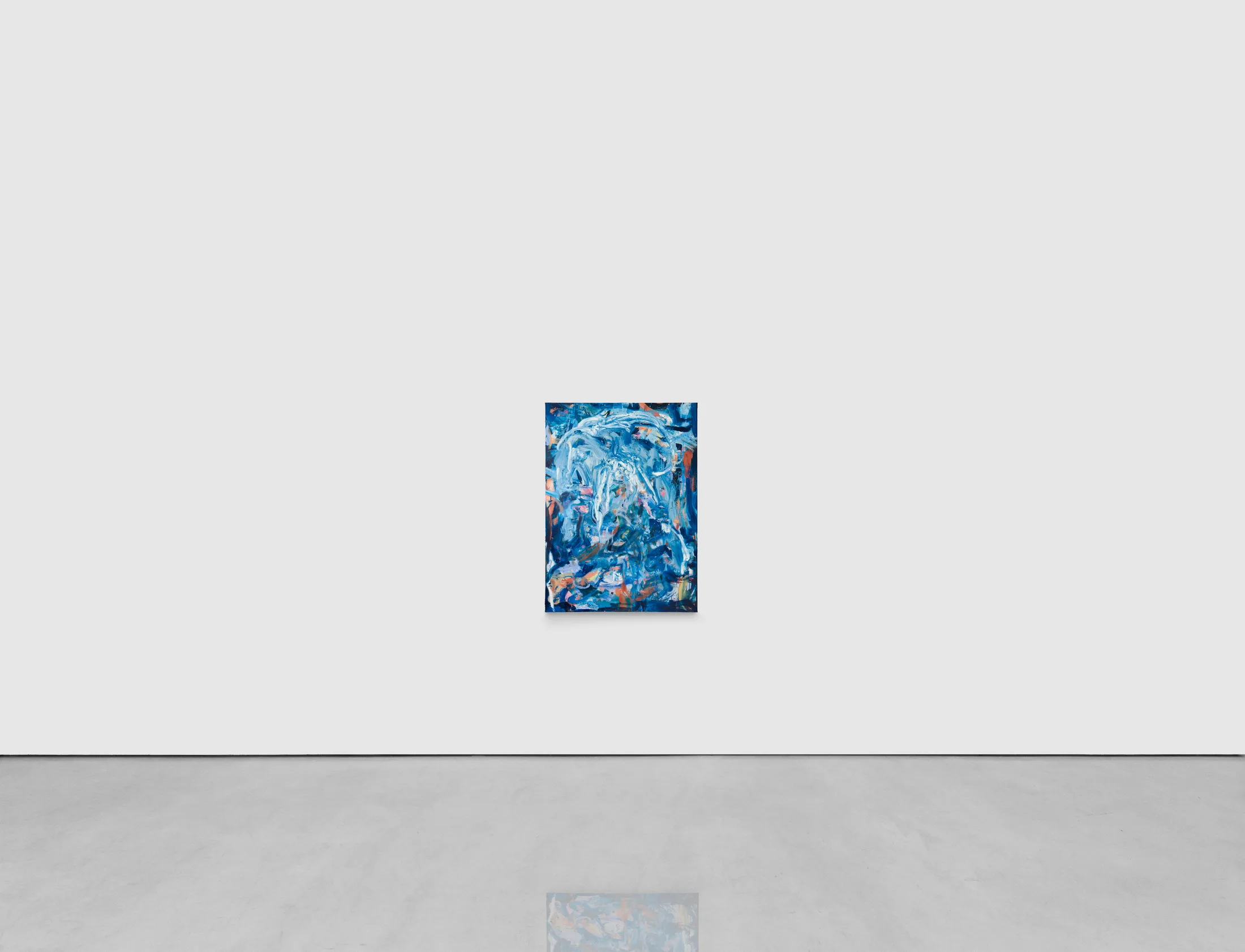
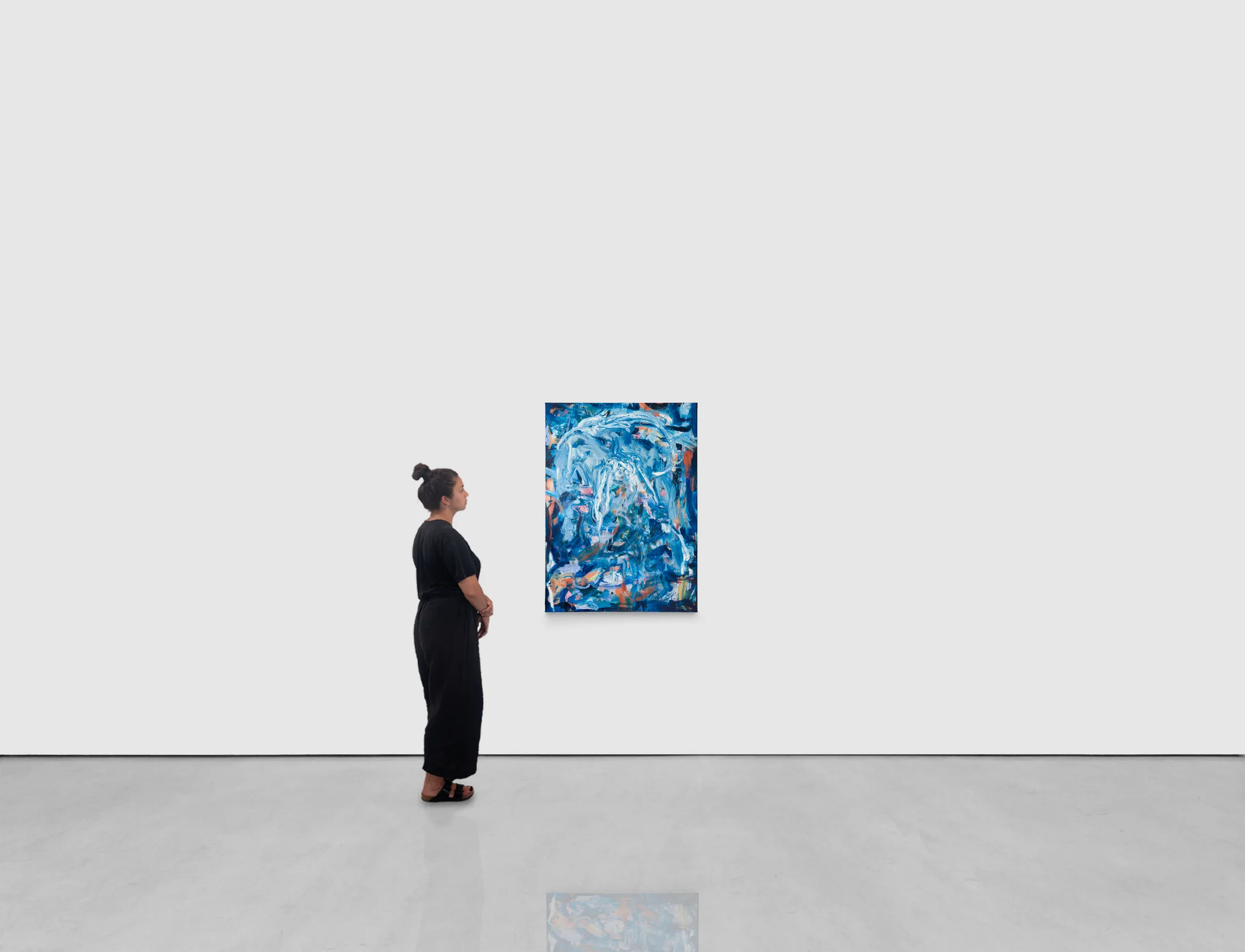
Installation view:
Isabella Amram:
Focus,
WORKPLACE, London, United Kingdom.8 October - 8 November 2025
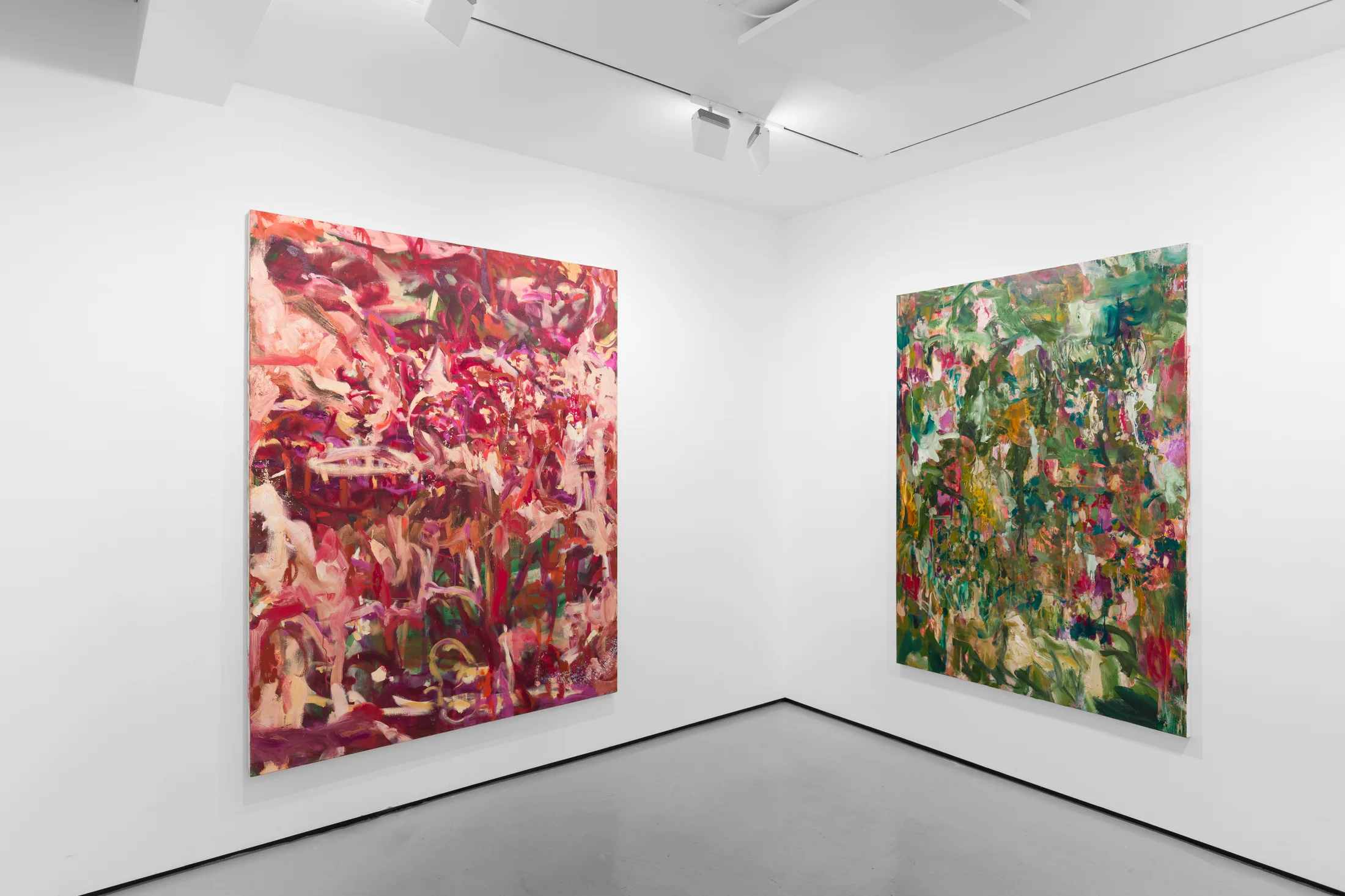
Installation view:
Isabella Amram:
Focus,
WORKPLACE, London, United Kingdom.8 October - 8 November 2025
Isabella Amram, The Birds and the Bees, 2025, (detail image); Courtesy the artist and WORKPLACE, UK
For this Focus we introduce the work of Isabella Amram, a Turkish-Venezuelan artist living and working in London. She holds a BA from Brown University and has recently graduated from the RCA Painting MA programme.
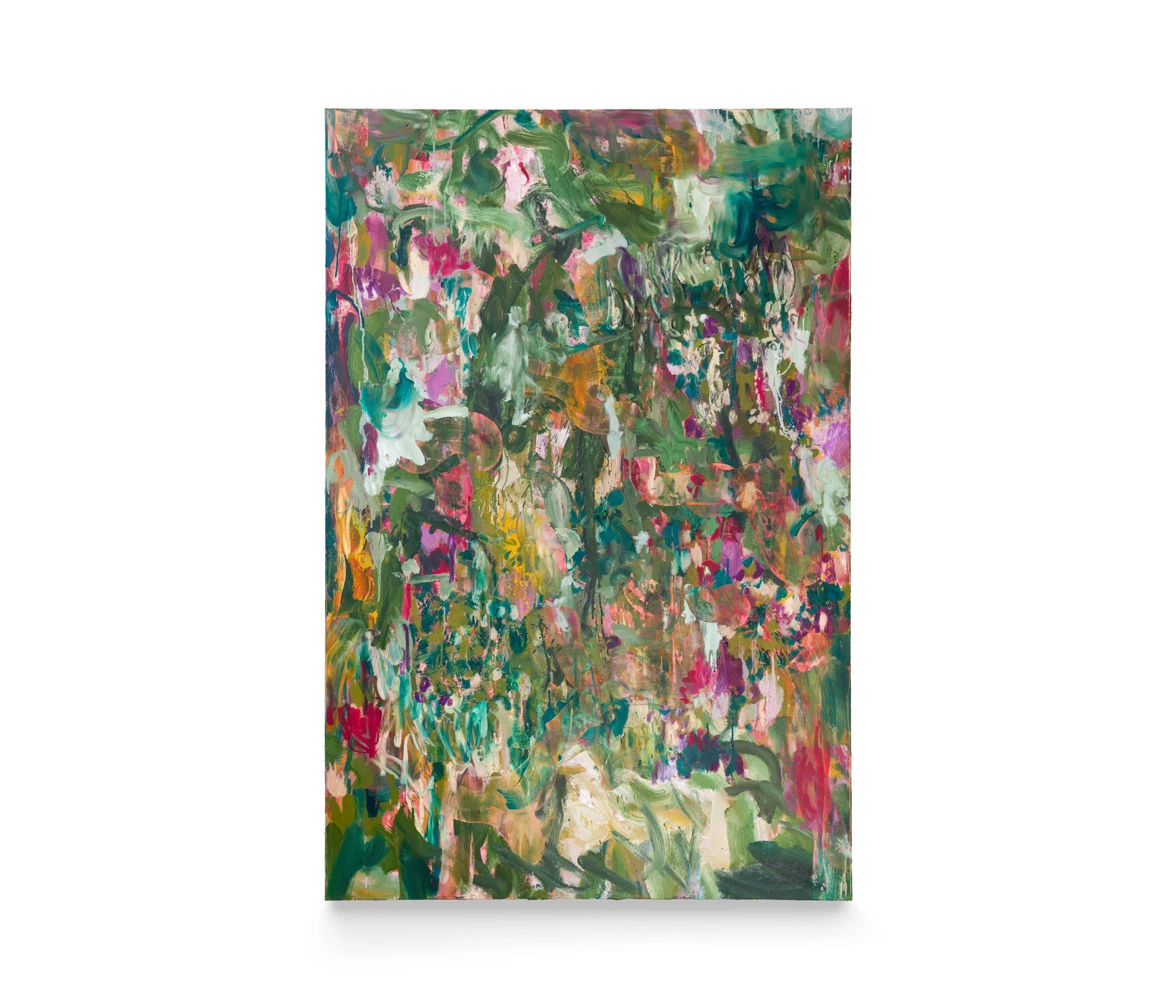
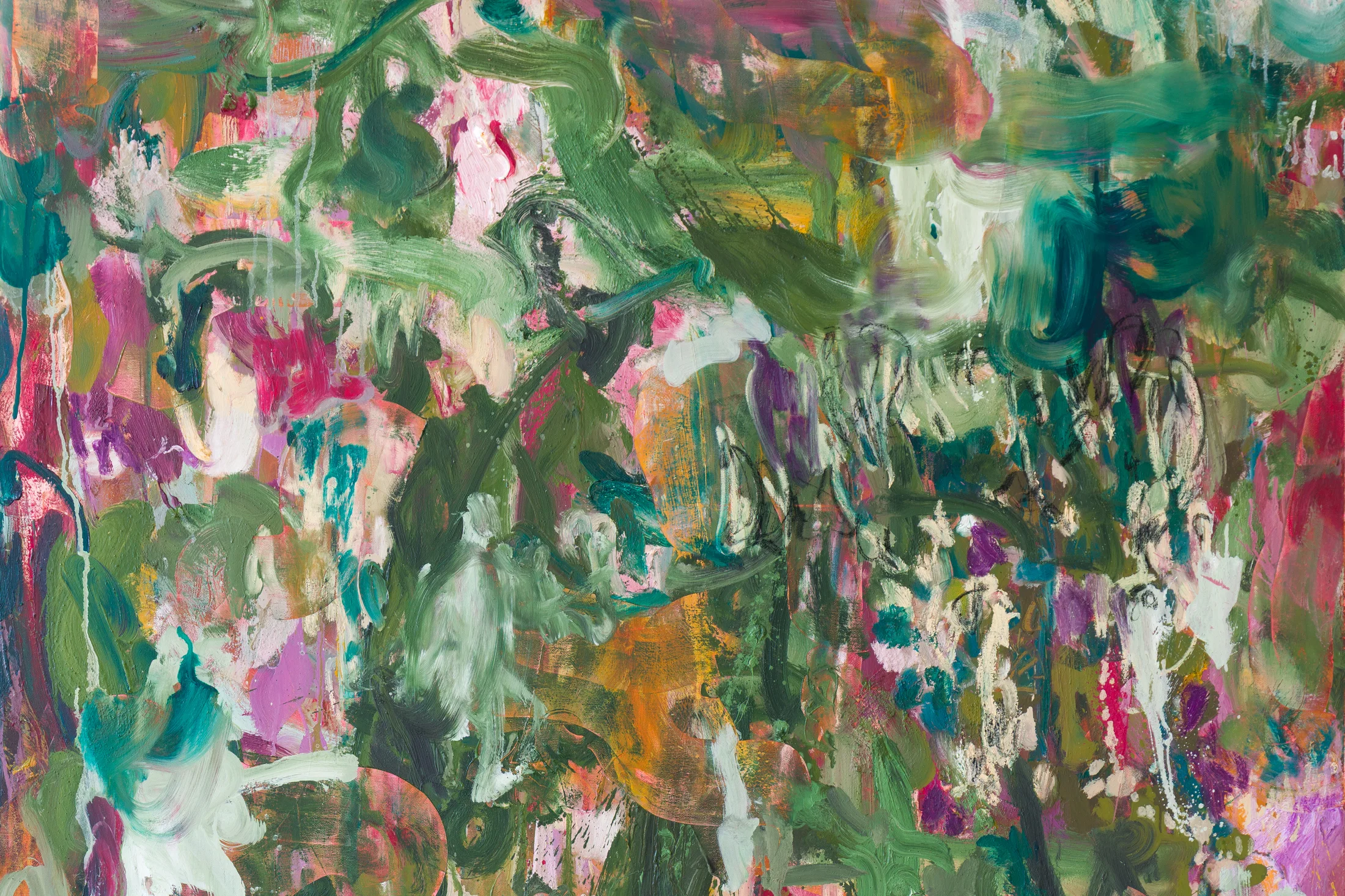
Isabella Amram
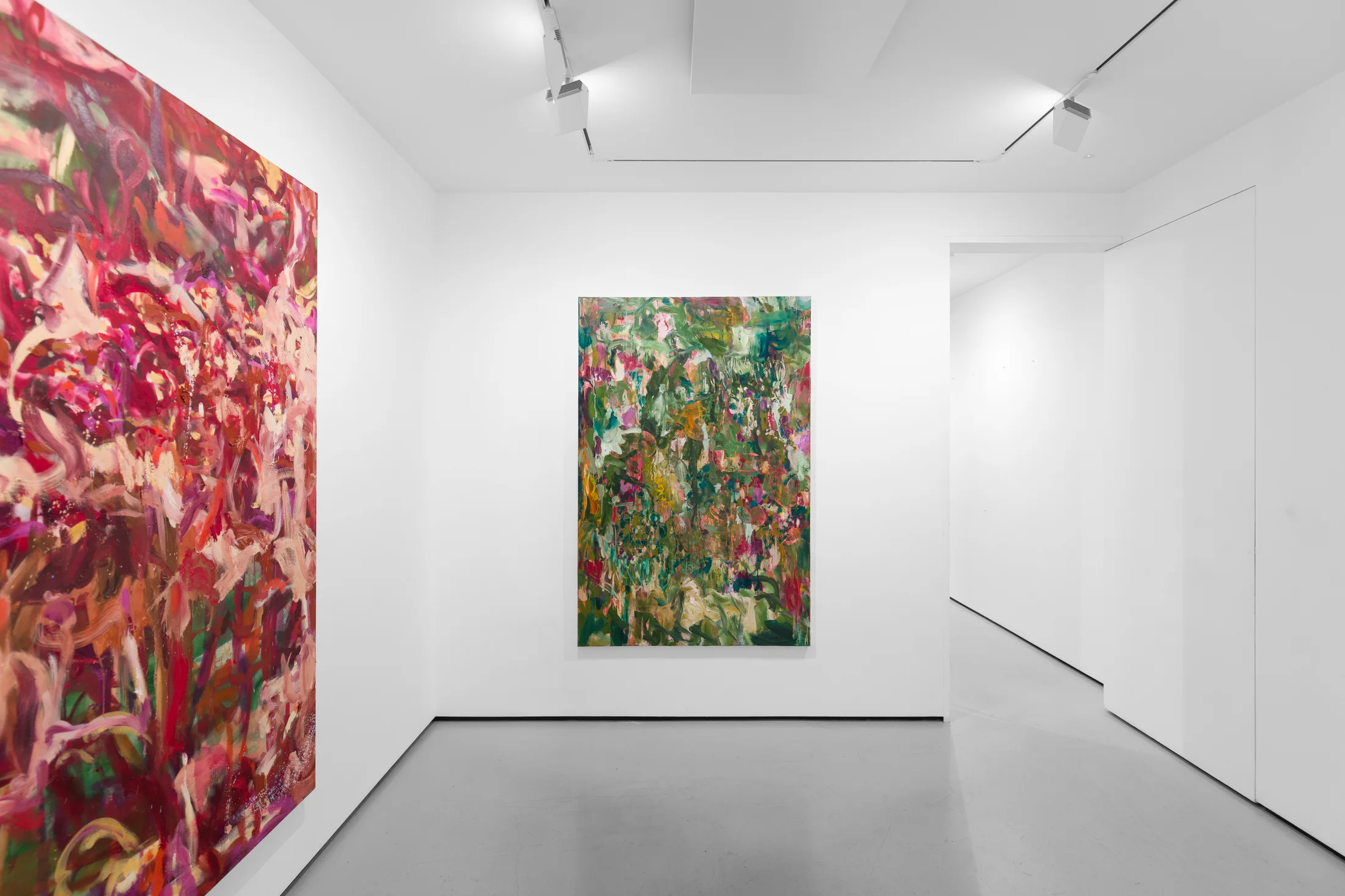
Installation view:
Isabella Amram:
Focus,
WORKPLACE, London, United Kingdom.8 October - 8 November 2025
WG: Can you talk about the starting points and influences for this new body of works included in Focus?
IA: This work began with an exploration of rhythm and flux; how physical gestures accumulate in layers, turning the canvas into a record of movement. My process is highly embodied, almost choreographic as I move around the surface and let each mark respond to the last. Alongside this, I’ve built an archive of photographs from daily walks in London parks and short trips to the countryside and coast.
These images aren’t direct references, but they sharpen my attention to how forms organise themselves: branches crossing like lines, overlapping foliage, light reconfiguring a surface. I’m not painting landscape in a literal sense, but those encounters teach me about structure, layering, and tempo. Nature becomes less of a subject than a model, showing how a painting can grow, erode, and reform over time. I’m drawn to patterns of movement and repetition, especially fractal structures that recur across scales, which I echo through gesture and rhythm on canvas.
Isabella Amram, Blossoming Sunrise, 2025, (detail image); Courtesy the artist and WORKPLACE, UK
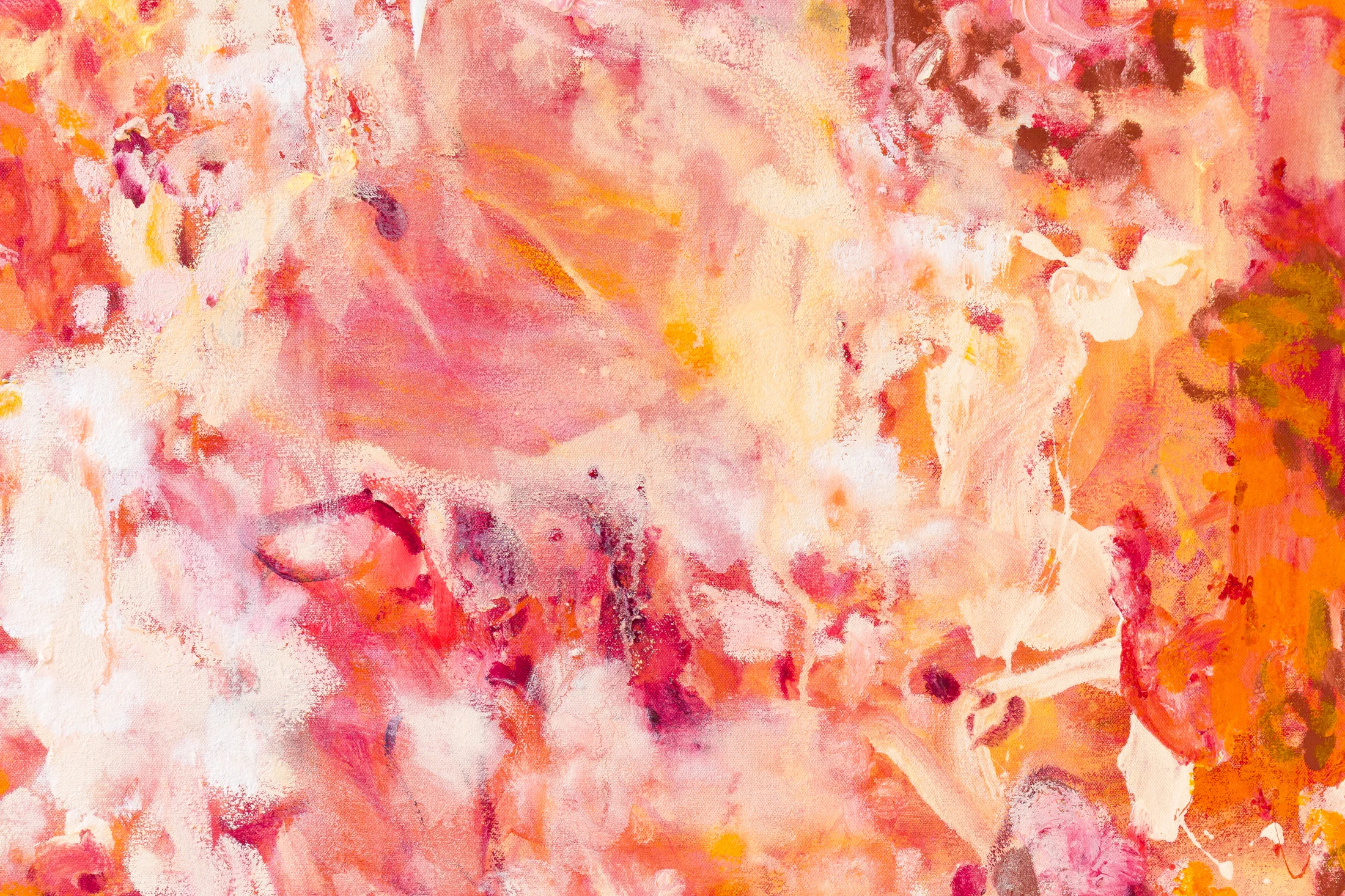
Isabella Amram, Blossoming Sunrise, 2025, (detail image); Courtesy the artist and WORKPLACE, UK
IA: This work began with an exploration of rhythm and flux; how physical gestures accumulate in layers, turning the canvas into a record of movement. My process is highly embodied, almost choreographic as I move around the surface and let each mark respond to the last. Alongside this, I’ve built an archive of photographs from daily walks in London parks and short trips to the countryside and coast.
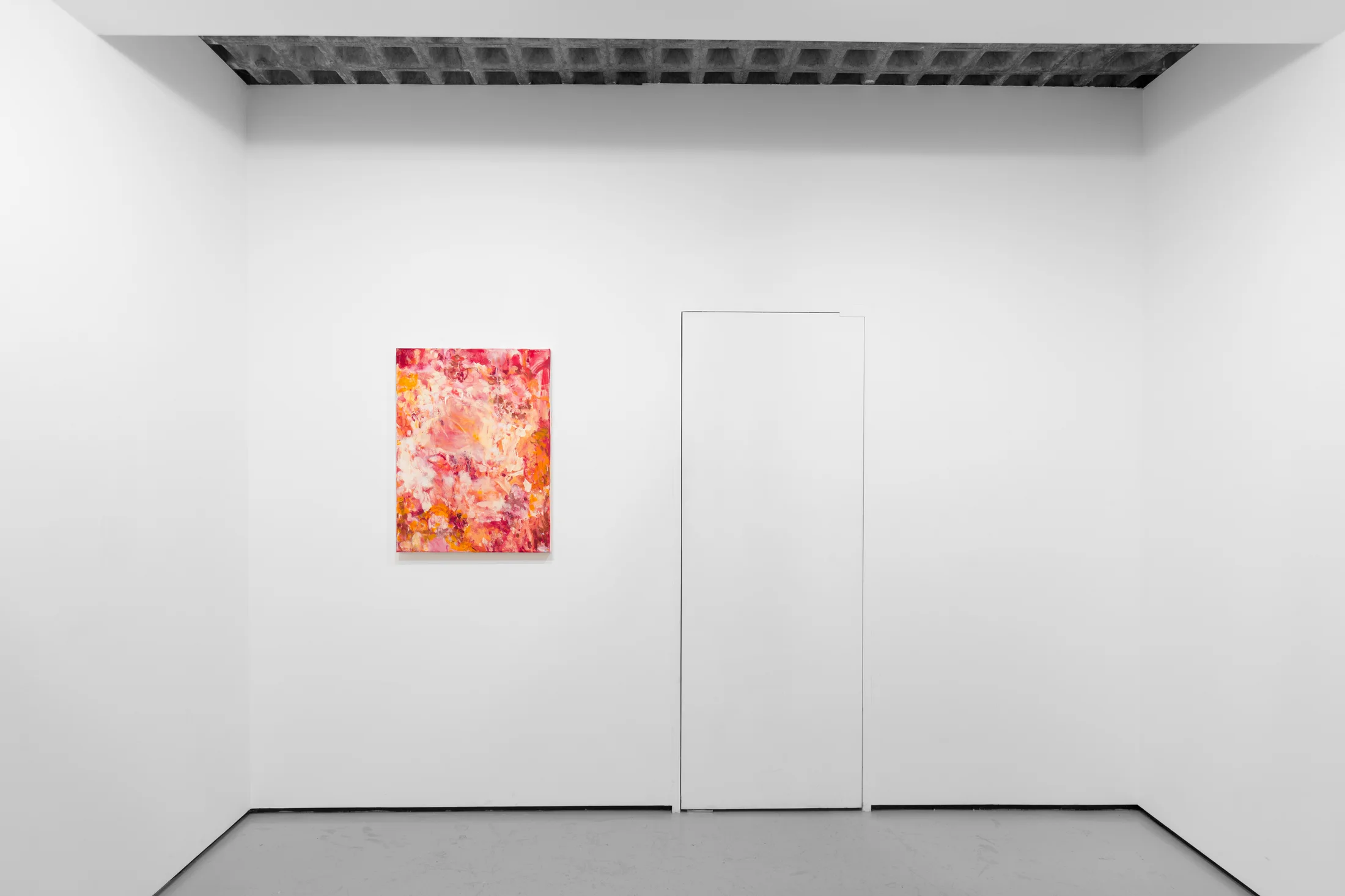
Installation view:
Isabella Amram:
Focus,
WORKPLACE, London, United Kingdom.8 October - 8 November 2025
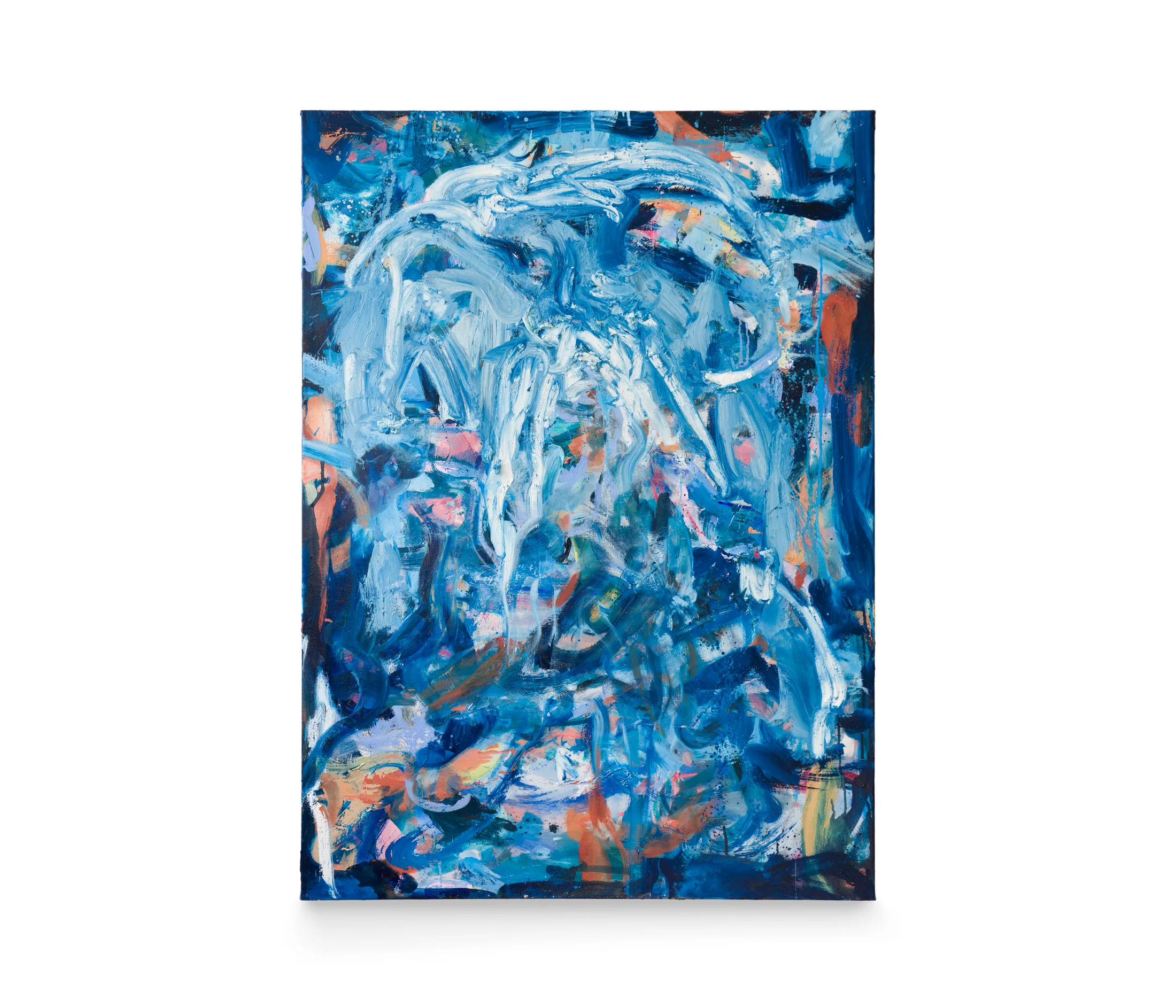
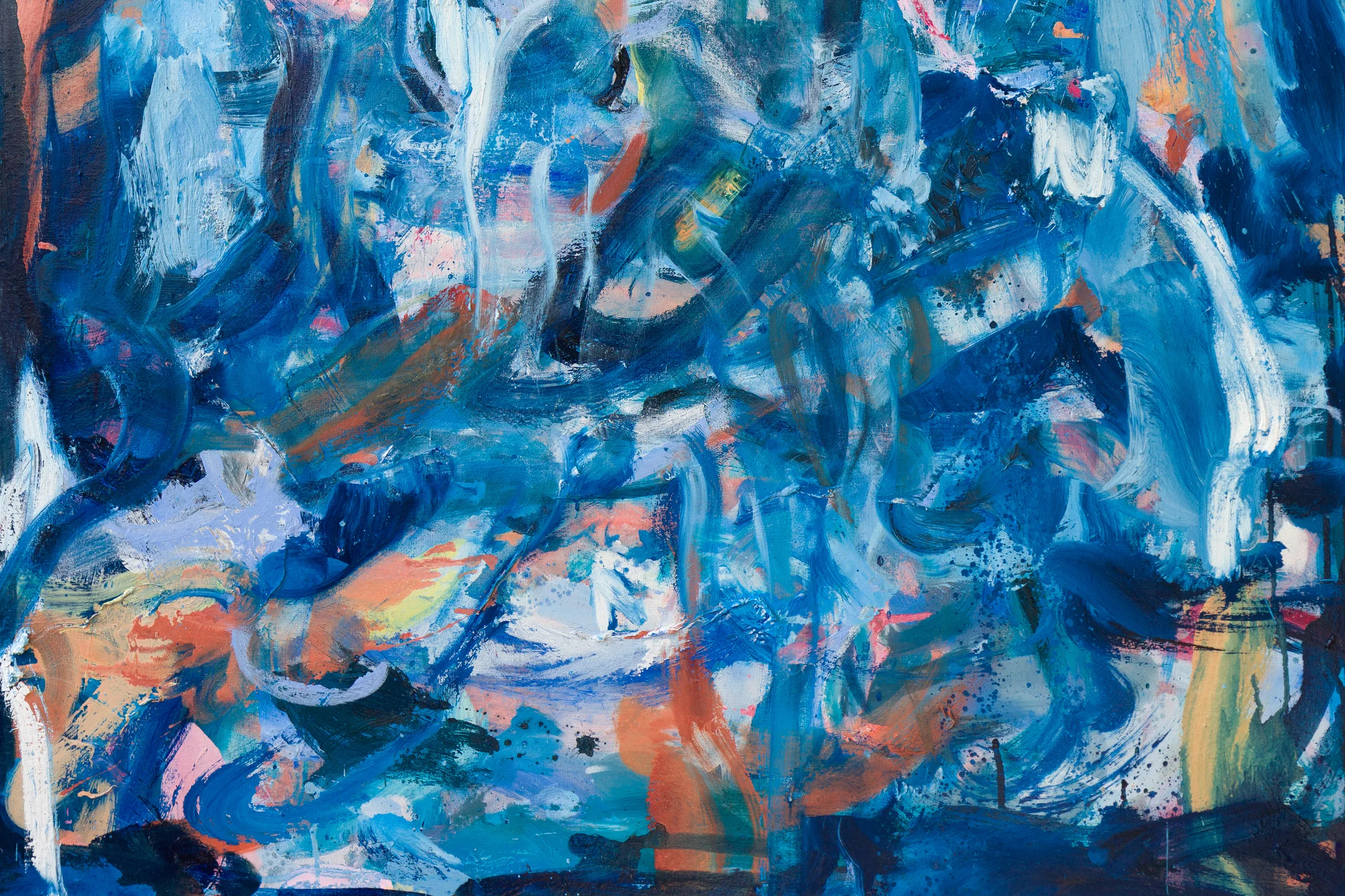
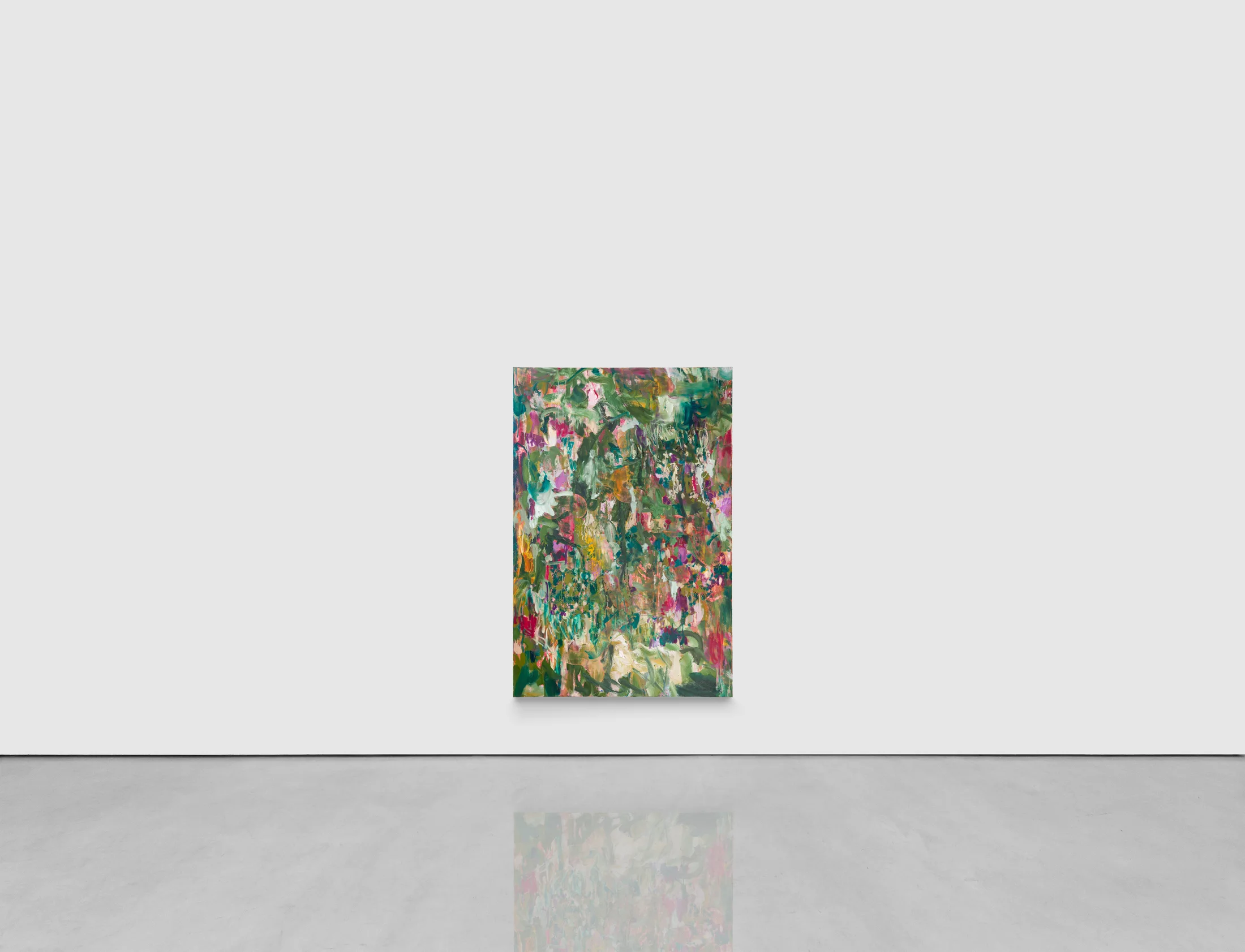
Isabella Amram, Chewton Cloud, 2025, (detail image); Courtesy the artist and WORKPLACE, UK
These images aren’t direct references, but they sharpen my attention to how forms organise themselves: branches crossing like lines, overlapping foliage, light reconfiguring a surface. I’m not painting landscape in a literal sense, but those encounters teach me about structure, layering, and tempo. Nature becomes less of a subject than a model, showing how a painting can grow, erode, and reform over time. I’m drawn to patterns of movement and repetition, especially fractal structures that recur across scales, which I echo through gesture and rhythm on canvas.
Isabella Amram
Isabella Amram, Chewton Cloud, 2025, (detail image); Courtesy the artist and WORKPLACE, UK
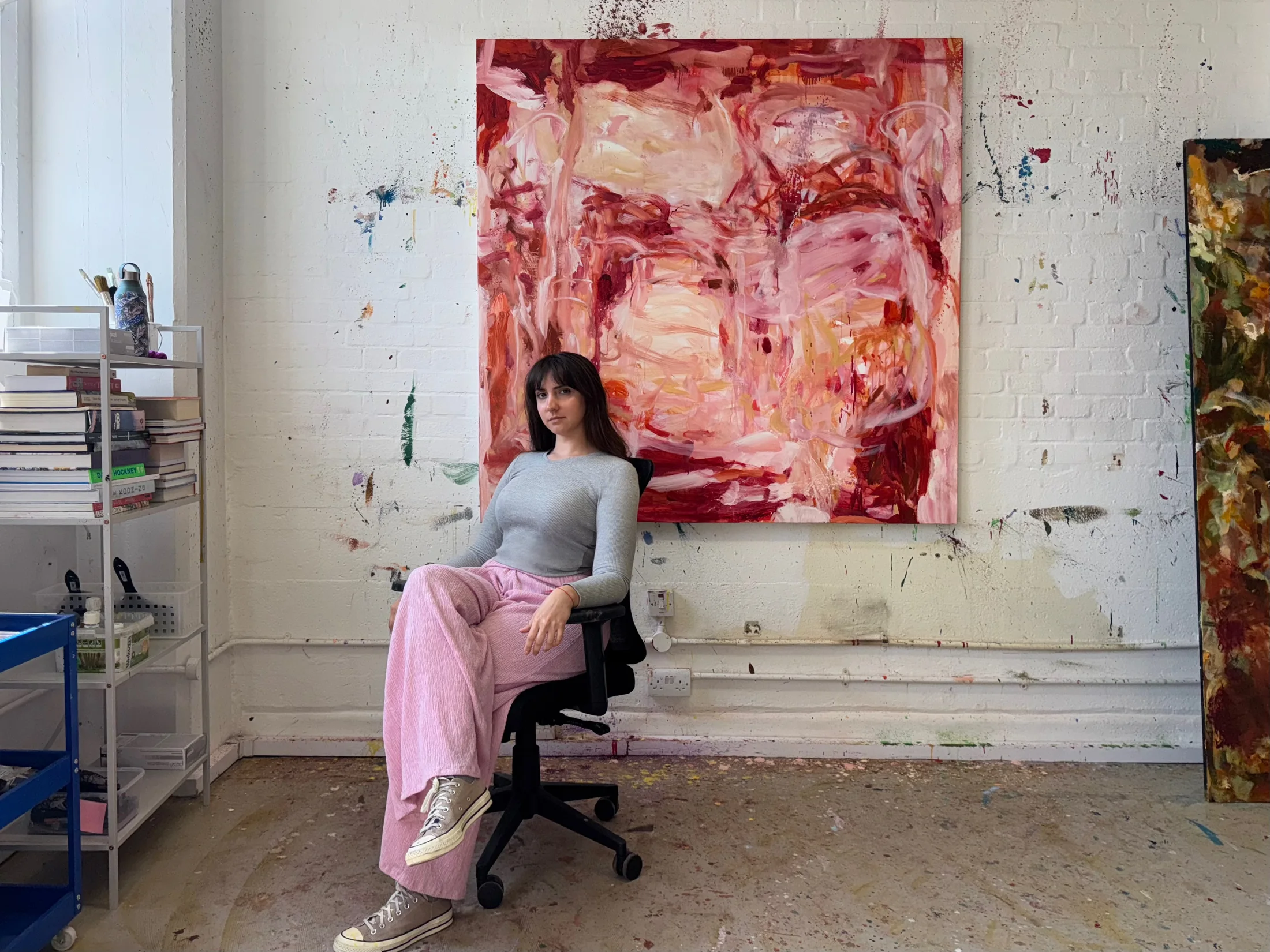
Isabella Amram (b.1995, Istanbul) is a Turkish–Venezuelan artist living and working in London. Amram’s paintings are shaped by an engagement with uncertainty and curiosity. Having grown up across multiple countries and spoken four languages at home, she developed an early awareness of how meaning is constructed, fractured, or quietly imposed. In the studio, each painting becomes a site for testing how mark-making, texture, colour, and other painterly qualities can hold conflicting impulses without forcing resolution. Her layered, scraped, and reworked surfaces open spaces where marks and forms align, collide, or drift apart, oscillating between calm and agitation. Situated within the legacy of gestural abstraction yet questioning its contemporary role, her work resists digital flatness, insisting on tactile, materially dense processes that demand embodied forms of attention.
Amram holds a BA from Brown University (2018) and an MA in Painting from the Royal College of Art (2025). Solo exhibitions include Gestures In Flux curated by Kira Streletzki and Deutsche Bank, Berlin, Germany (2025). Group exhibitions include Microcosm, Matt Carey Williams, London, UK (2025)); A Journey Into The Unkown, Haricot Gallery, London, UK (2025); Immaterial, Soho Revue, London, UK (2025); Bounce, Mint Munich, Munich, Germany (2025); Poetry Of The Earth, Wilder Gallery, London, UK (2025); The Sway of Form, Gillian Jason Gallery, London, UK
Ogilvy’s Sea Container House, London, UK (2024); Reflexion, Château Saint Maur, France (2024); Art on a Postcard International Women’s Day Auction, The Bomb Factory, London, UK (2024); Art on a Postcard Winter Auction, Gathering Gallery, London, UK (2023); ONE Akaretler, curated by Begin Guney Eyit, Bilgili Holding & Shopigo Art Istanbul, Turkey (2023); and Intuition Goes Before You, curated by Vittoria Beltrame, 13 Soho Square, London, UK.
WG: You consider your colour palette very carefully before starting a work, can you talk about how colour theory and your own experiences influence your decisions?
IA: Just as I look to landscapes for rhythm and layering, I also look to them for colour relationships. Observing how tonality ripples across a field, or how a single tree transforms across the seasons, has taught me to see colour as active and relational. I think of it less as a fixed tint than as a state of action; absorbing, reflecting, vibrating in response to its surroundings. Colour theory informs this, not as a rigid system but as a framework for understanding that no colour exists in isolation: each tone is shaped by what lies beside or beneath it. In my paintings, this unfolds both spatially, through saturated contrasts and subtle transitions, and temporally, as layers shift, conceal, and reveal one another.
Isabella Amram, Lolita, 2025, (detail image); Courtesy the artist and WORKPLACE, UK
IA: Just as I look to landscapes for rhythm and layering, I also look to them for colour relationships. Observing how tonality ripples across a field, or how a single tree transforms across the seasons, has taught me to see colour as active and relational. I think of it less as a fixed tint than as a state of action; absorbing, reflecting, vibrating in response to its surroundings. Colour theory informs this, not as a rigid system but as a framework for understanding that no colour exists in isolation: each tone is shaped by what lies beside or beneath it. In my paintings, this unfolds both spatially, through saturated contrasts and subtle transitions, and temporally, as layers shift, conceal, and reveal one another.
Isabella Amram, Lolita, 2025, (detail image); Courtesy the artist and WORKPLACE, UK
WG: Though your works are gestural and abstract, through your layering process landscapes and forms reveal themselves – what are you anticipating the audience to interpret when they view your work?
IA: I don’t anticipate a single interpretation. Some people might glimpse landscapes or forms, others might read rhythm, gesture, or pure energy. What matters to me is that the paintings open up a field of experience rather than close down into one fixed image. The paintings don’t reveal themselves all at once; they ask for duration. Forms appear, dissolve, and re-emerge depending on how long one looks and how their eye moves through the surface.
I think of them less as static images than as environments in flux, operating spatially (inviting the viewer to enter) and temporally, since no two encounters are the same. Just as in nature, where repetition and change coexist—stones fractalising, tides returning—the paintings hold both recurrence and transmutation. I also prefer them to be seen in person: their vibrancy, scale, and materiality can’t fully be conveyed on a screen. In a digital economy where images are consumed instantly and flattened, painting offers another kind of encounter.
Isabella Amram
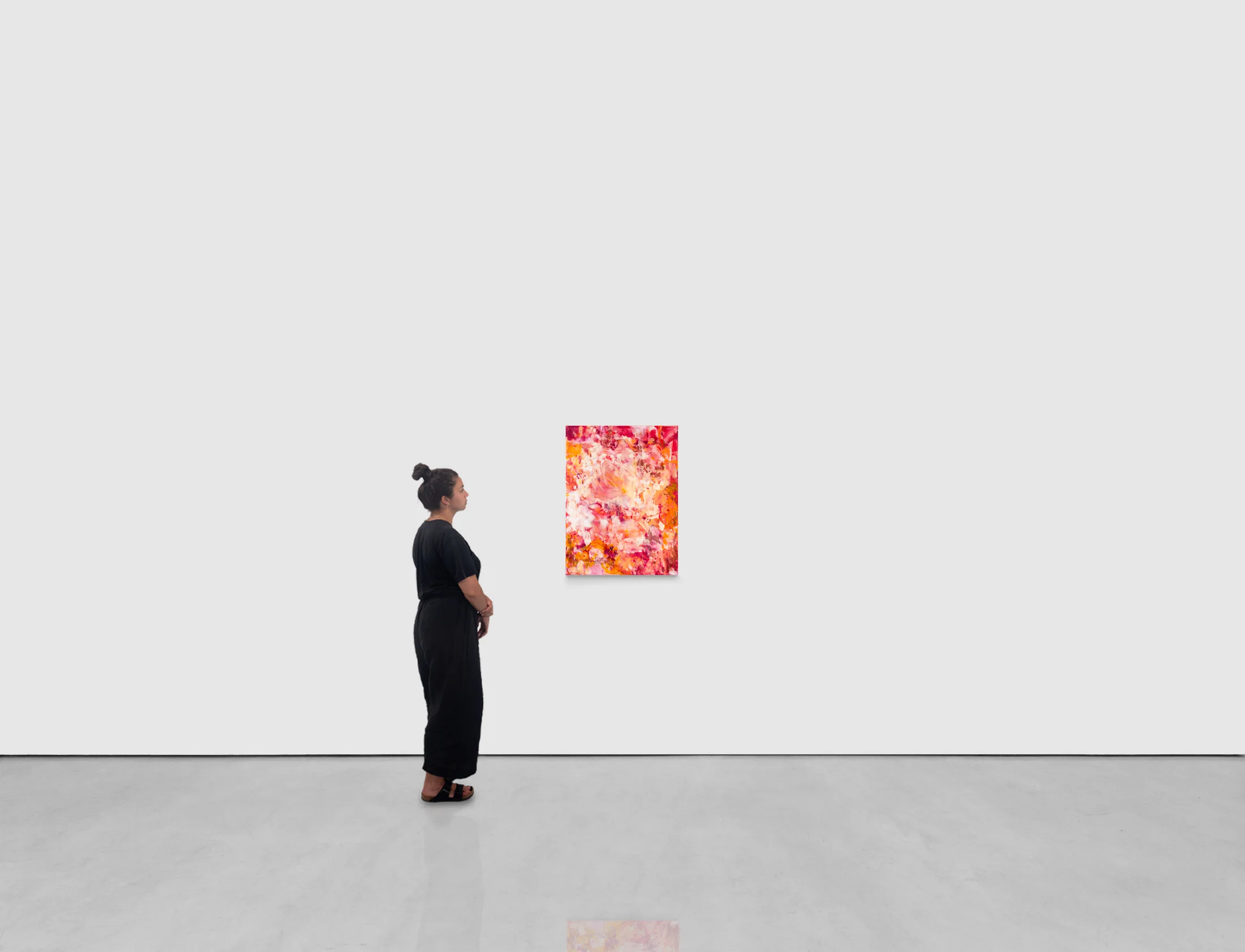
Installation view:
Isabella Amram:
Focus,
WORKPLACE, London, United Kingdom.8 October - 8 November 2025
IA: I don’t anticipate a single interpretation. Some people might glimpse landscapes or forms, others might read rhythm, gesture, or pure energy. What matters to me is that the paintings open up a field of experience rather than close down into one fixed image. The paintings don’t reveal themselves all at once; they ask for duration. Forms appear, dissolve, and re-emerge depending on how long one looks and how their eye moves through the surface.
Installation view:
Isabella Amram:
Focus,
WORKPLACE, London, United Kingdom.8 October - 8 November 2025
Isabella Amram
I think of them less as static images than as environments in flux, operating spatially (inviting the viewer to enter) and temporally, since no two encounters are the same. Just as in nature, where repetition and change coexist—stones fractalising, tides returning—the paintings hold both recurrence and transmutation. I also prefer them to be seen in person: their vibrancy, scale, and materiality can’t fully be conveyed on a screen. In a digital economy where images are consumed instantly and flattened, painting offers another kind of encounter.
Isabella Amram, The Birds and the Bees, 2025, (detail image); Courtesy the artist and WORKPLACE, UK
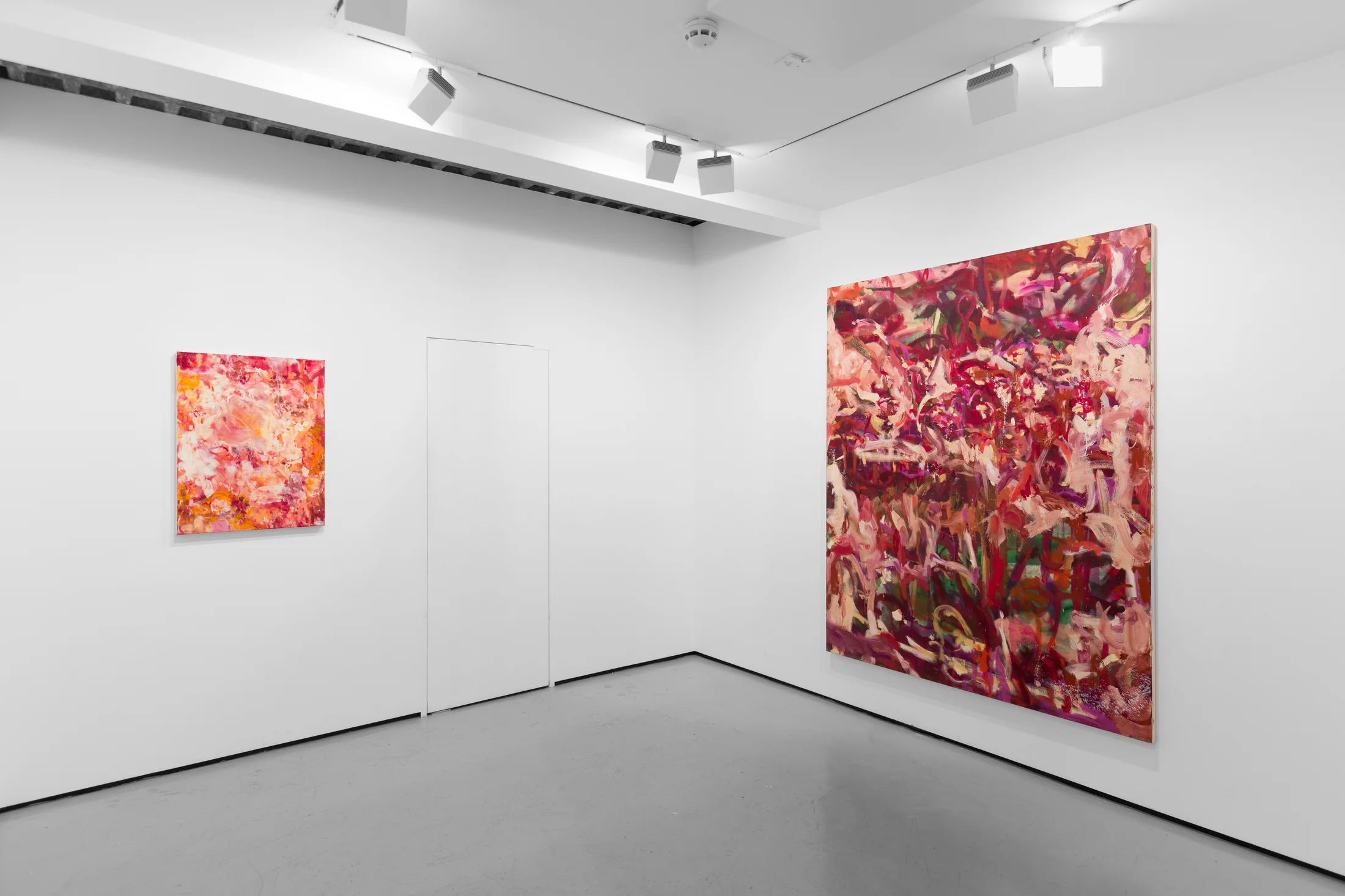
Installation view:
Isabella Amram:
Focus,
WORKPLACE, London, United Kingdom.8 October - 8 November 2025
WG: You’ve talked before about how your works are suggestive of language or script yet remain unreadable. How would you say having grown up over multiple countries speaking four languages, has influenced your perspective and visual language?
IA: Growing up between languages gave me a sense of how meaning is always contingent. Words shift, mistranslate, or fail to capture what is felt. They are symbols as a stand-in for reality. That awareness carries into my paintings. My gestures often resemble writing yet are unreadable, suspending themselves between communication and abstraction. I’m also attentive to the language of the body: the way physical gestures carry memory and experience, leaving traces that can be communicated without words.
On canvas, those movements translate into raw mark-making, a form of inscription that is bodily as much as visual. Alongside this, I draw inspiration from “scripts” in the natural world: the branching of trees, the repetition of floral patterns, the fractal structures that recur across scales. They suggest rhythm and connection, as if legible, but they resist conventional translation. My visual language emerges in a similar way, inviting meaning to be sensed rather than fixed.
Isabella Amram
Installation view:
Isabella Amram:
Focus,
WORKPLACE, London, United Kingdom.8 October - 8 November 2025
IA: Growing up between languages gave me a sense of how meaning is always contingent. Words shift, mistranslate, or fail to capture what is felt. They are symbols as a stand-in for reality. That awareness carries into my paintings. My gestures often resemble writing yet are unreadable, suspending themselves between communication and abstraction. I’m also attentive to the language of the body: the way physical gestures carry memory and experience, leaving traces that can be communicated without words.
Isabella Amram
On canvas, those movements translate into raw mark-making, a form of inscription that is bodily as much as visual. Alongside this, I draw inspiration from “scripts” in the natural world: the branching of trees, the repetition of floral patterns, the fractal structures that recur across scales. They suggest rhythm and connection, as if legible, but they resist conventional translation. My visual language emerges in a similar way, inviting meaning to be sensed rather than fixed.
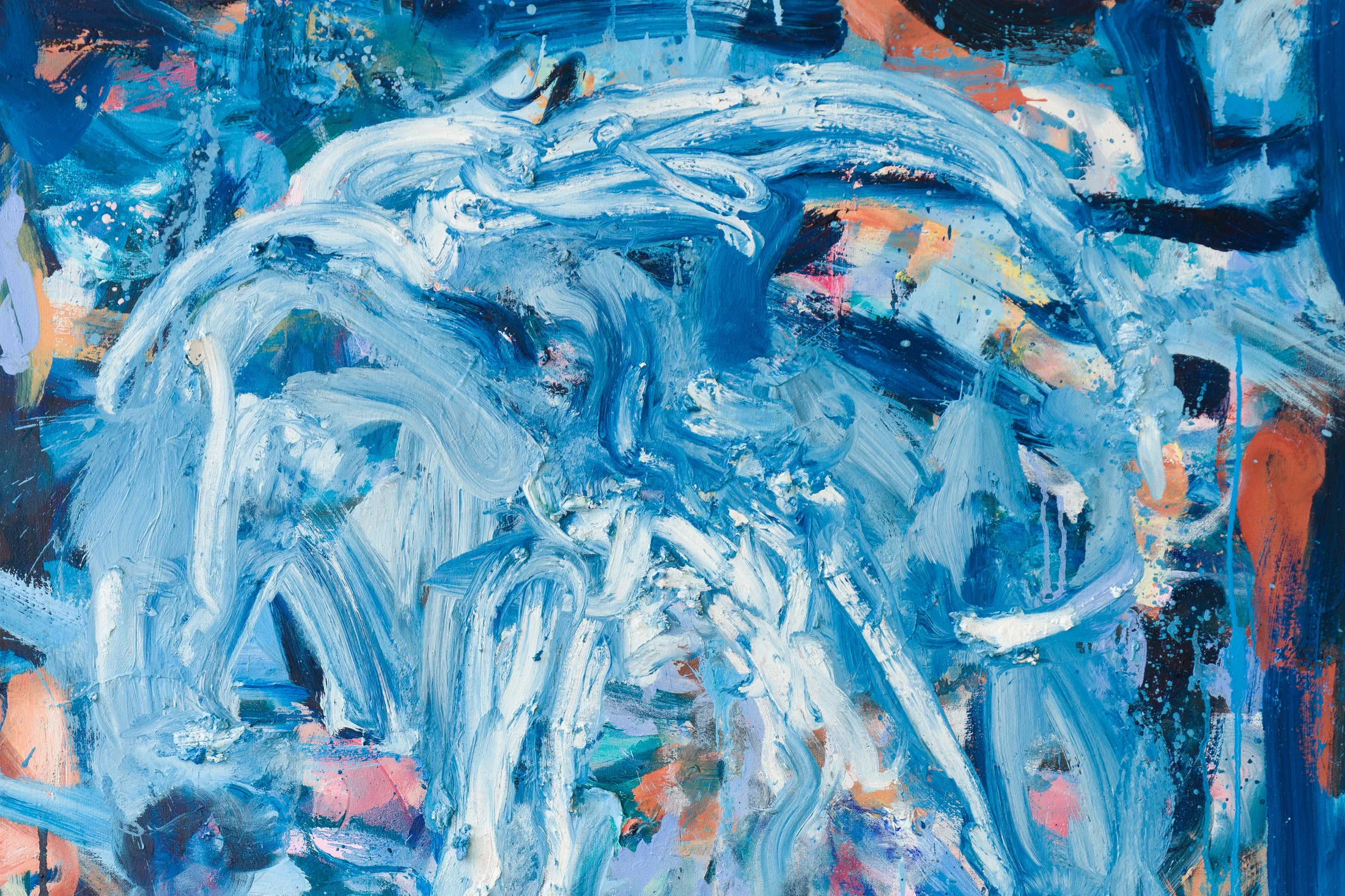
Isabella Amram, The Birds and the Bees, 2025, (detail image); Courtesy the artist and WORKPLACE, UK
Isabella Amram
WG: What artists are you currently looking at and being inspired by, are there any artists that you reference within your work?
IA: Joan Mitchell remains a touchstone for the way sensation and memory become paint, and her ‘remembered landscapes’ mirror my own approach of translating encounters into rhythm and colour. Peter Paul Rubens gives me a historical anchor for movement with his baroque diagonals and orchestrated bodies that feel almost choreographic. They hold the eye in motion and that sense of compositional propulsion informs how I approach surfaces.
Kazuo Shiraga’s fusion of body and painting (action painting) speaks directly to my embodied process. I don’t work with his specific method, but the idea that movement itself inscribes the image is important to me. I wouldn’t say I reference artists directly, but I see my work as part of this wider conversation about what painting can still do and how it continues to reinvent itself as a way of thinking through the world.
Isabella Amram
Isabella Amram
IA: Joan Mitchell remains a touchstone for the way sensation and memory become paint, and her ‘remembered landscapes’ mirror my own approach of translating encounters into rhythm and colour. Peter Paul Rubens gives me a historical anchor for movement with his baroque diagonals and orchestrated bodies that feel almost choreographic. They hold the eye in motion and that sense of compositional propulsion informs how I approach surfaces.
Isabella Amram
Isabella Amram
Kazuo Shiraga’s fusion of body and painting (action painting) speaks directly to my embodied process. I don’t work with his specific method, but the idea that movement itself inscribes the image is important to me. I wouldn’t say I reference artists directly, but I see my work as part of this wider conversation about what painting can still do and how it continues to reinvent itself as a way of thinking through the world.
WG: There’s such a sense of energy and an almost performative element to your work. Are these created in intense bursts in the studio, or is it a longer, more meditative process? What does a typical day in the studio look like for you?"
IA: The paintings tend to happen in bursts—periods of urgent, physical mark-making—but those moments are held within a longer, more durational rhythm. I often have to wait between layers, or for a surface to dry just enough to scrape back into it. So while the work arrives through intensity, it also relies on patience and cycles of return. I’m also usually working across different registers at once, moving between large canvases, smaller works on paper, or sketching outdoors, so there’s always something unfolding. That relationship between immediacy and duration feels central to the way the paintings take shape.
IA: The paintings tend to happen in bursts—periods of urgent, physical mark-making—but those moments are held within a longer, more durational rhythm. I often have to wait between layers, or for a surface to dry just enough to scrape back into it. So while the work arrives through intensity, it also relies on patience and cycles of return. I’m also usually working across different registers at once, moving between large canvases, smaller works on paper, or sketching outdoors, so there’s always something unfolding. That relationship between immediacy and duration feels central to the way the paintings take shape.