Focus
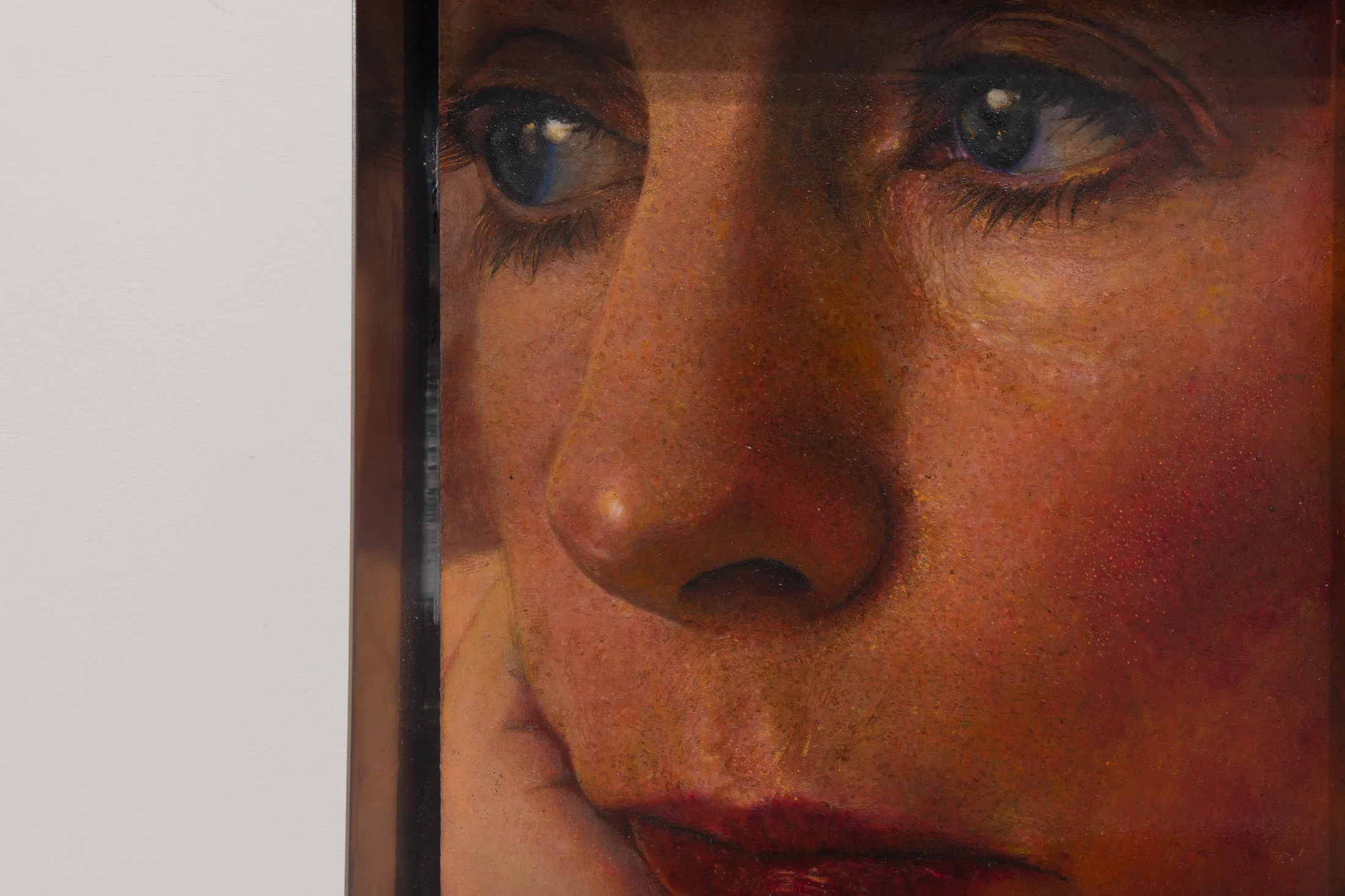
Workplace is pleased to launch the latest instalment of Focus, a series of online exhibitions in the which the practice of artists at early stages of their career and new to the gallery programme are introduced through a body of work, curated specifically for each presentation.
For this instalment we introduce the work of Ki Yoong (b.1985, Bradford, UK), a London based artist who completed is BA in Fine Art from The University of Leeds in 2010 and his MA in Fine Art from Central Saint Martins in 2013.
Yoong will be presenting a solo exhibition at Workplace | London in May 2025.
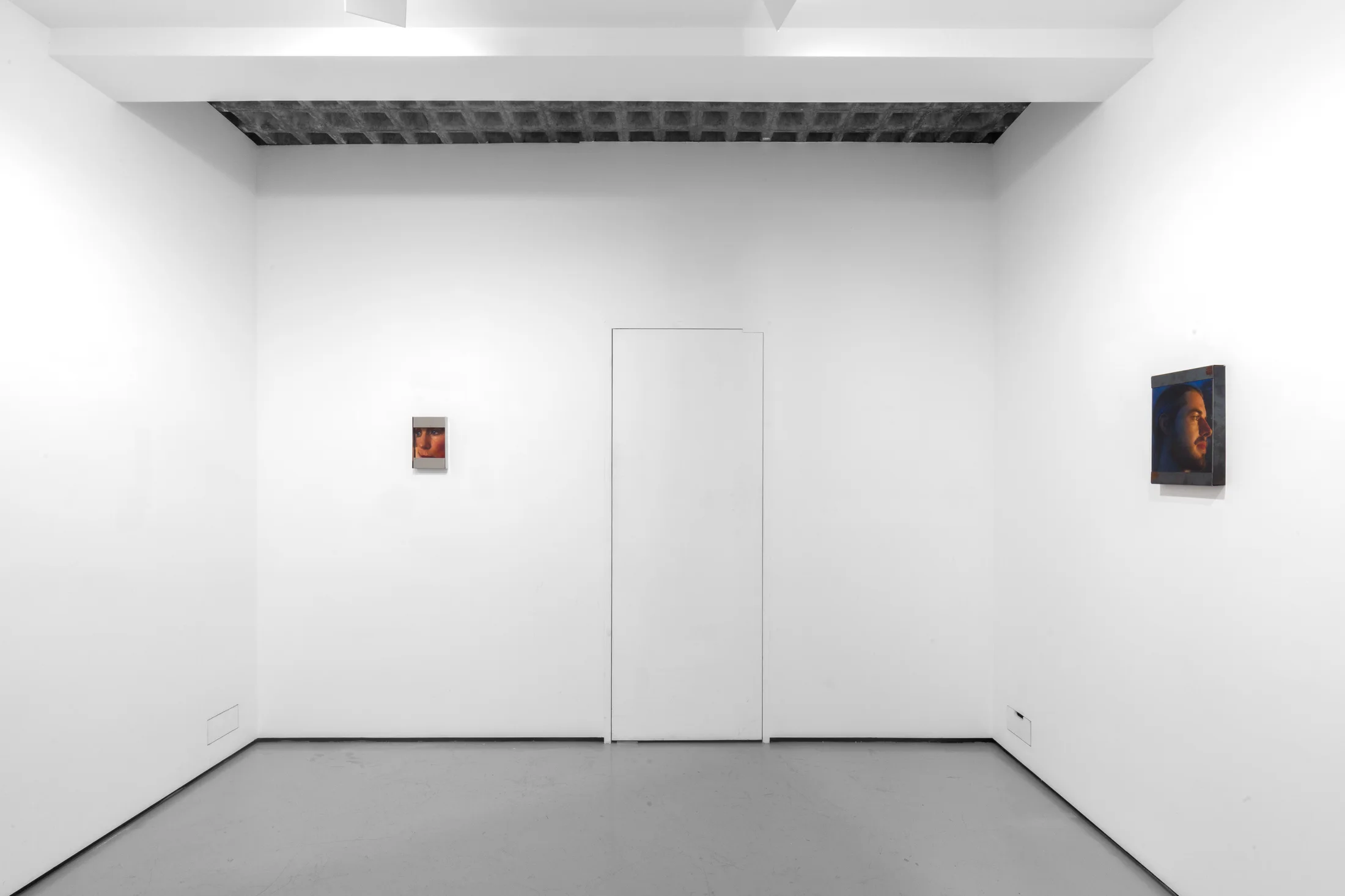
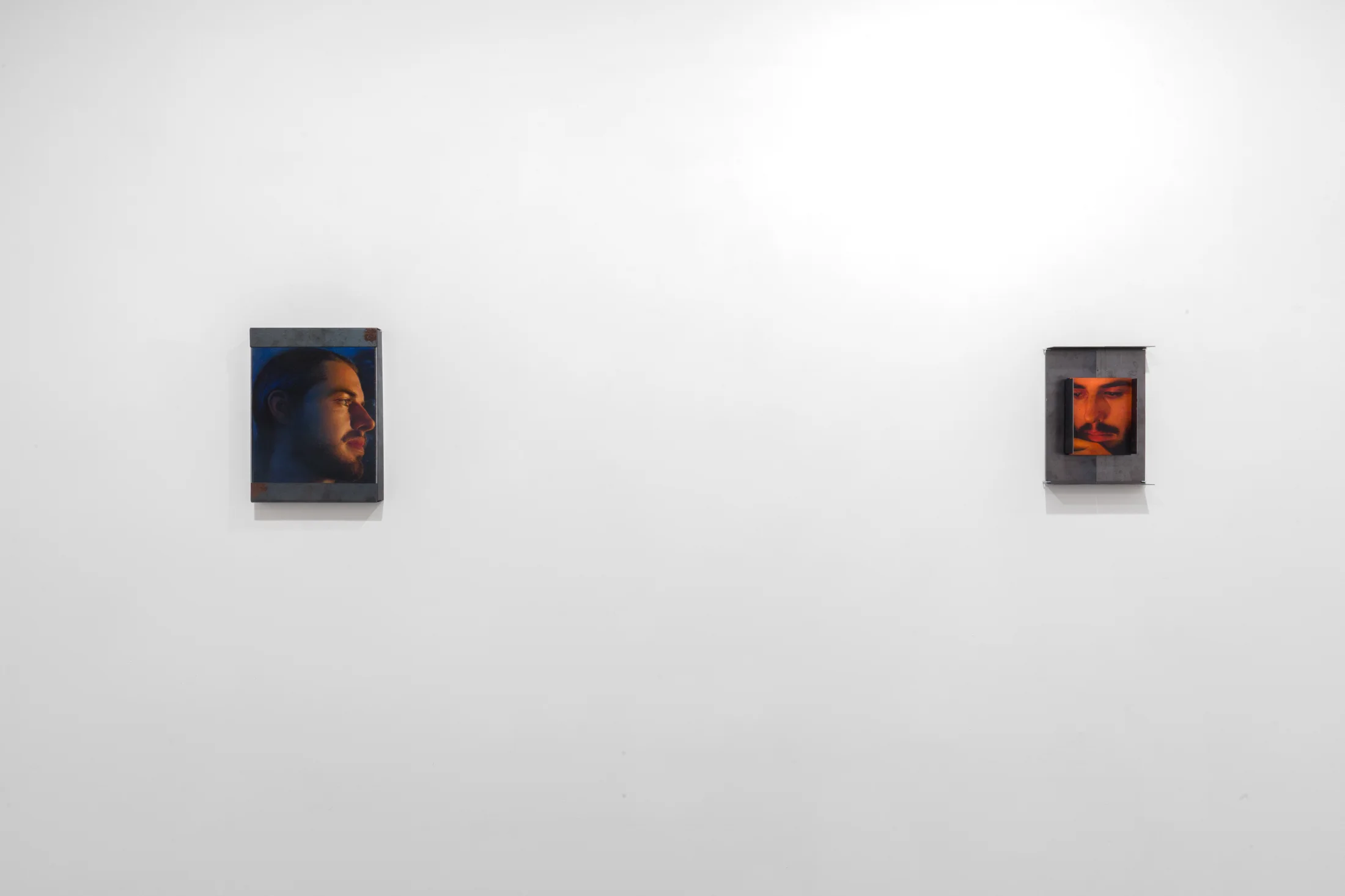
Installation view:
Ki Yoong:
Focus,
WORKPLACE, London, United Kingdom.6 March - 4 April 2025
For this instalment we introduce the work of Ki Yoong (b.1985, Bradford, UK), a London based artist who completed is BA in Fine Art from The University of Leeds in 2010 and his MA in Fine Art from Central Saint Martins in 2013.
Yoong will be presenting a solo exhibition at Workplace | London in May 2025.
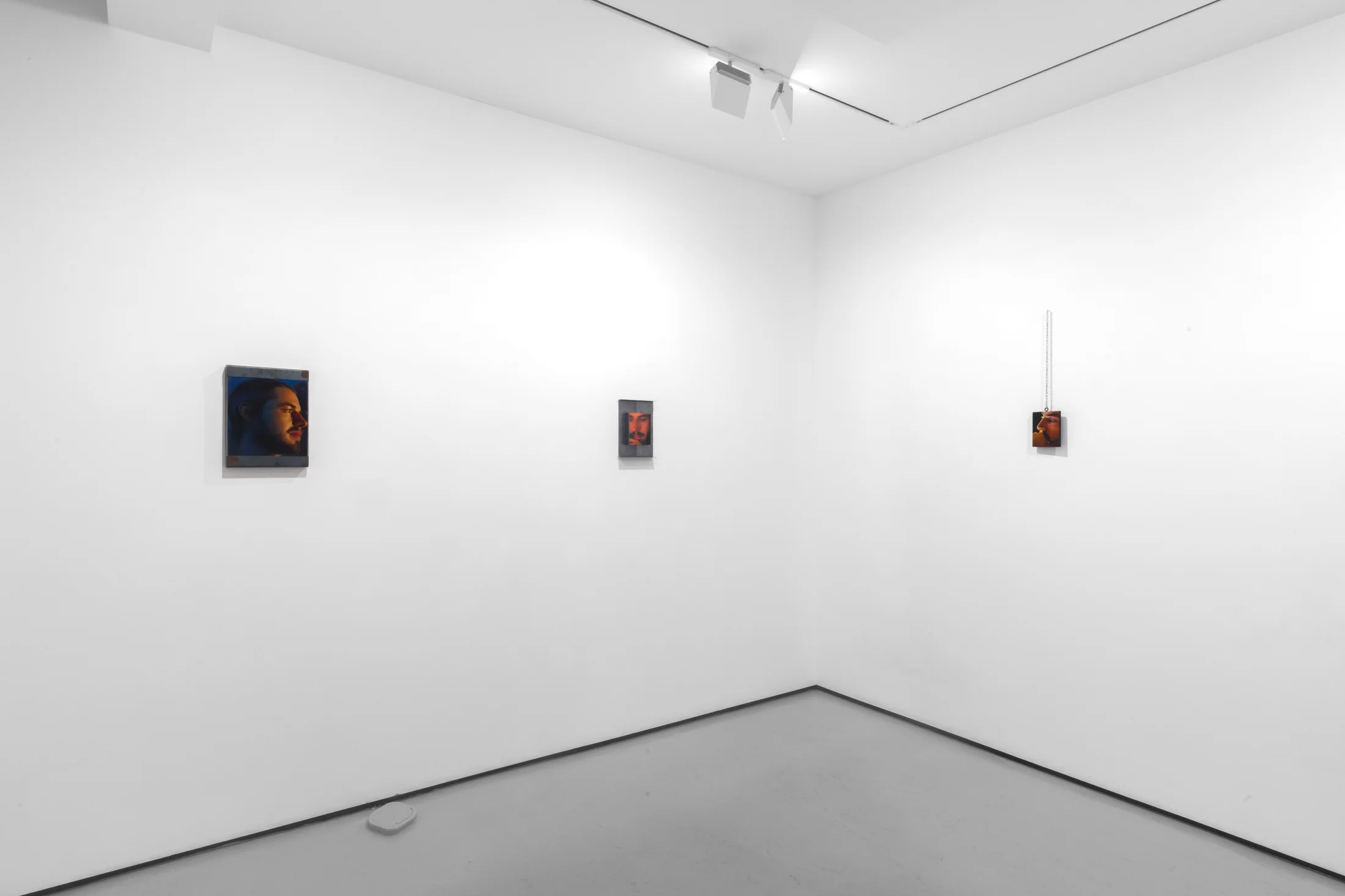
Installation view:
Ki Yoong:
Focus,
WORKPLACE, London, United Kingdom.6 March - 4 April 2025
WG: The people featured in your works are drawn from a diverse range of sources including people you know, anonymous images on the internet, as well as famous figures such as Marilyn Monroe. What’s the selection process and what draws you to paint?
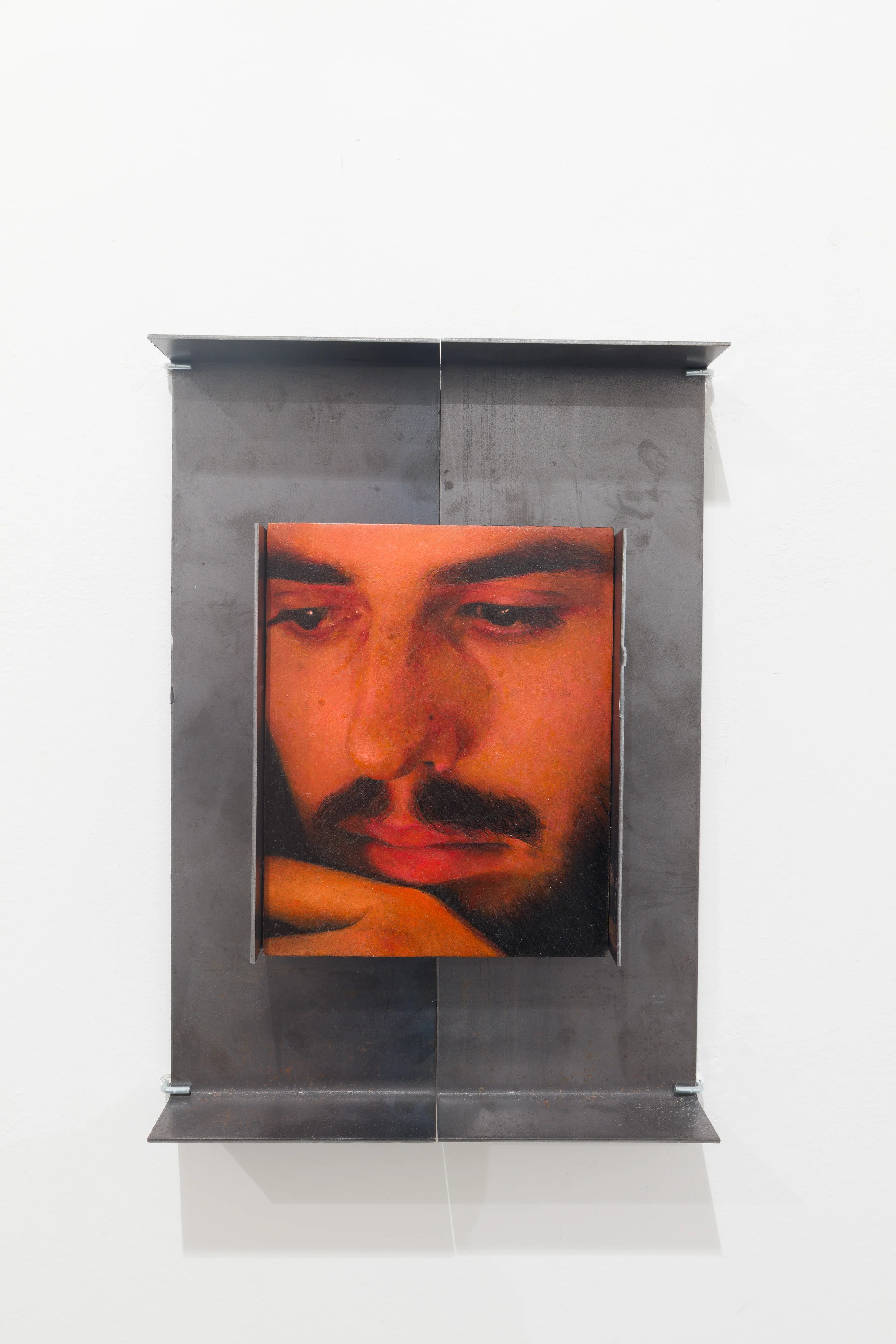
KY: Deciding who to paint feels a bit like walking down a street—sometimes a friend is beside you, and beyond that, there are faces that catch your eye: strangers, people you recognise, endless adverts, faces from pop culture. It’s an accumulation of gazes, some intimate, some anonymous. It’s this reflex of catching your eye that is my filtering process, looking around and seeing who I find interesting, we do it all the time when we sit on a park bench to people watch. Recently, I’ve been drawn more to the people close to me. Painting them becomes an act of devotion. As the world becomes more and more disheartening I’m looking close around me to the people who give me joy.
Ki Yoong
KY: Deciding who to paint feels a bit like walking down a street—sometimes a friend is beside you, and beyond that, there are faces that catch your eye: strangers, people you recognise, endless adverts, faces from pop culture. It’s an accumulation of gazes, some intimate, some anonymous. It’s this reflex of catching your eye that is my filtering process, looking around and seeing who I find interesting, we do it all the time when we sit on a park bench to people watch. Recently, I’ve been drawn more to the people close to me. Painting them becomes an act of devotion. As the world becomes more and more disheartening I’m looking close around me to the people who give me joy.
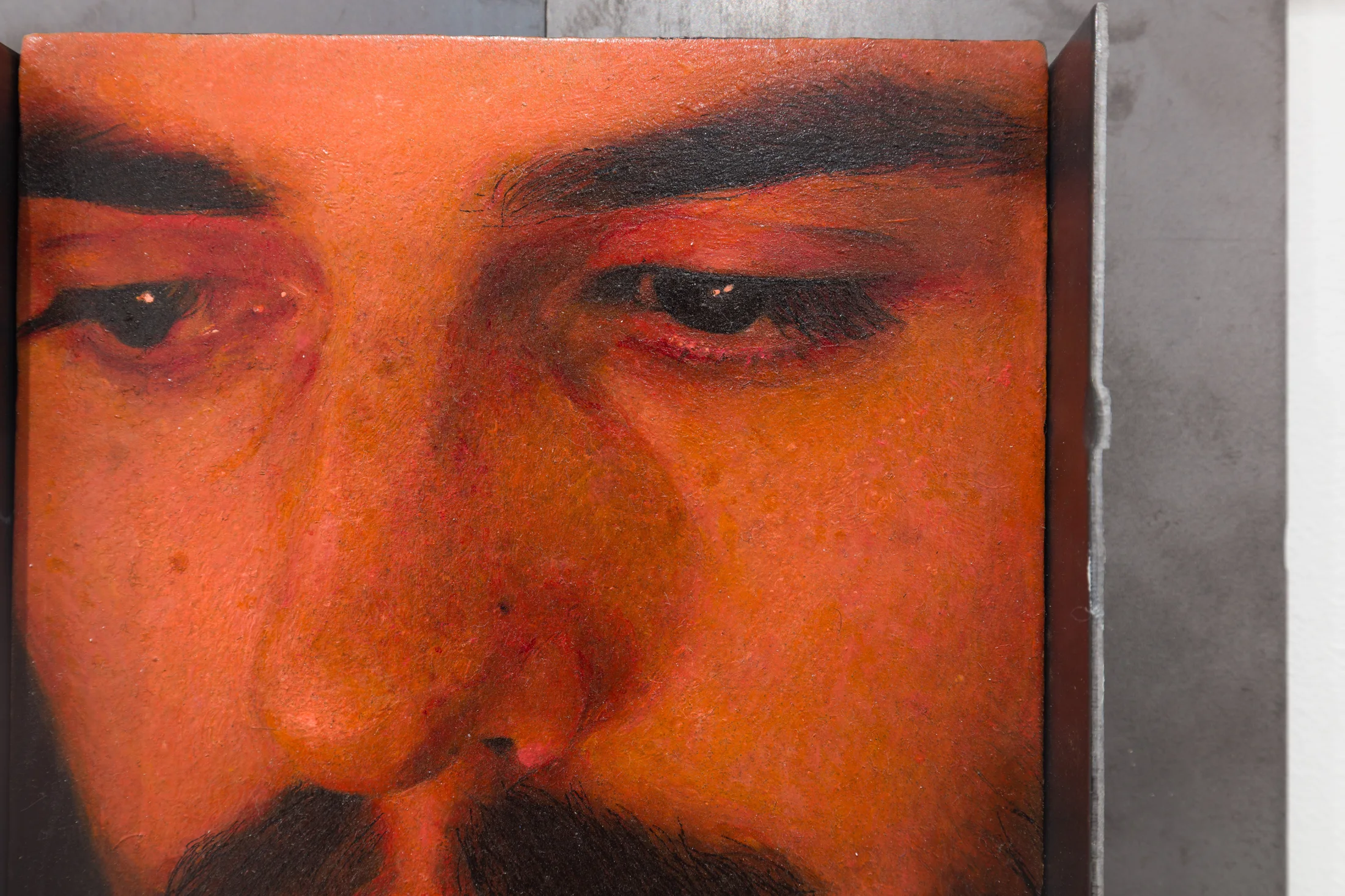
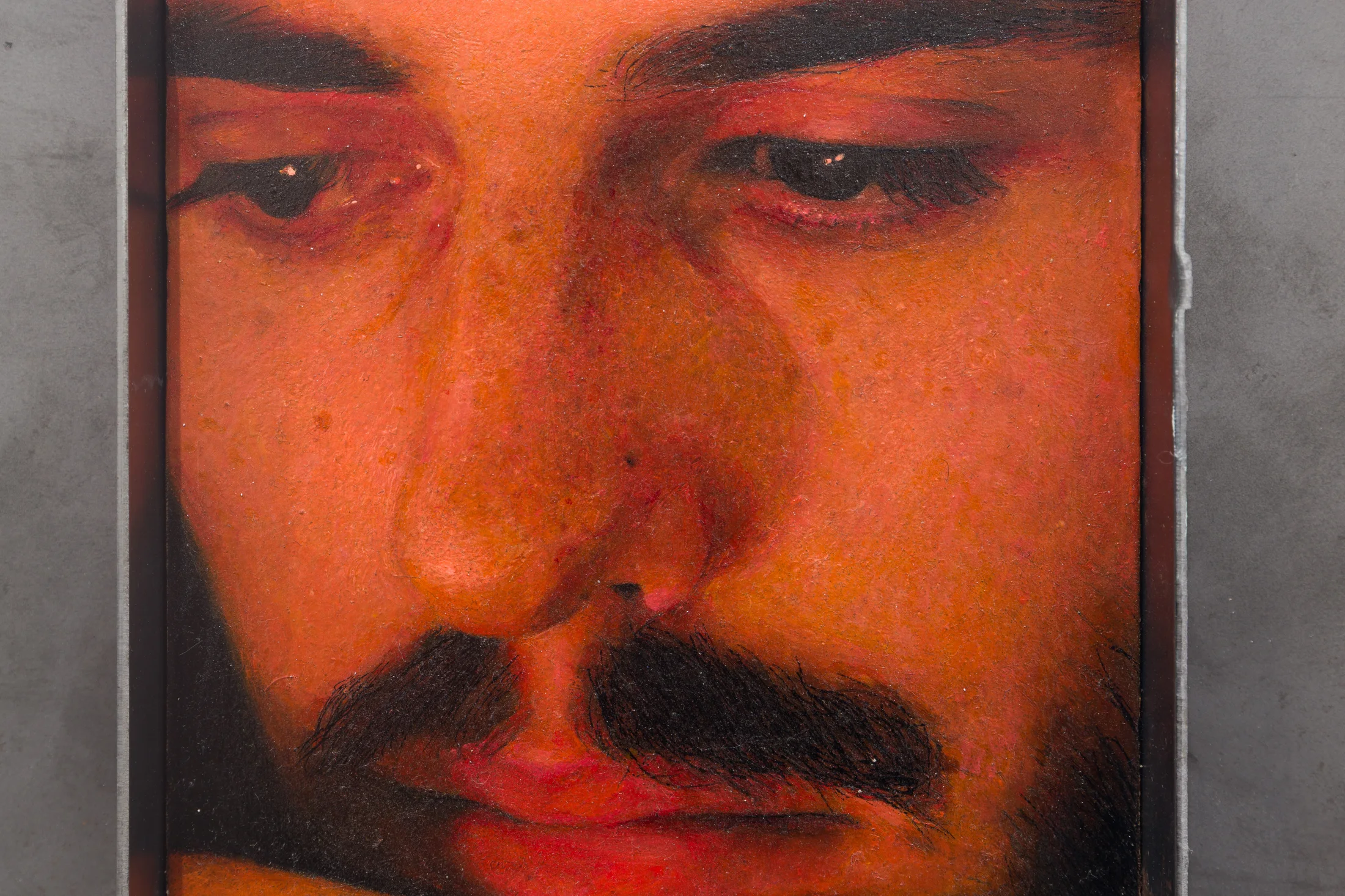
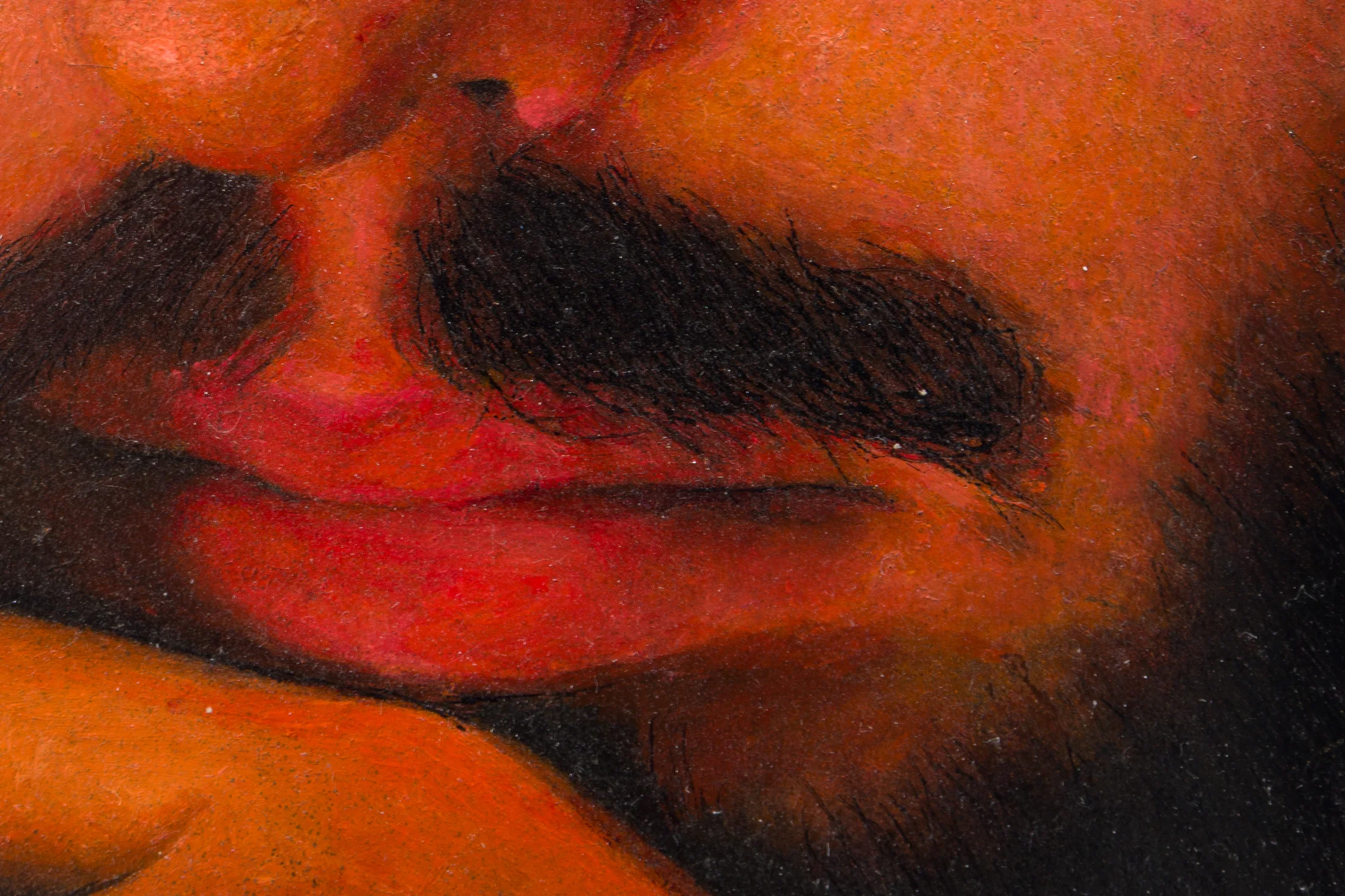
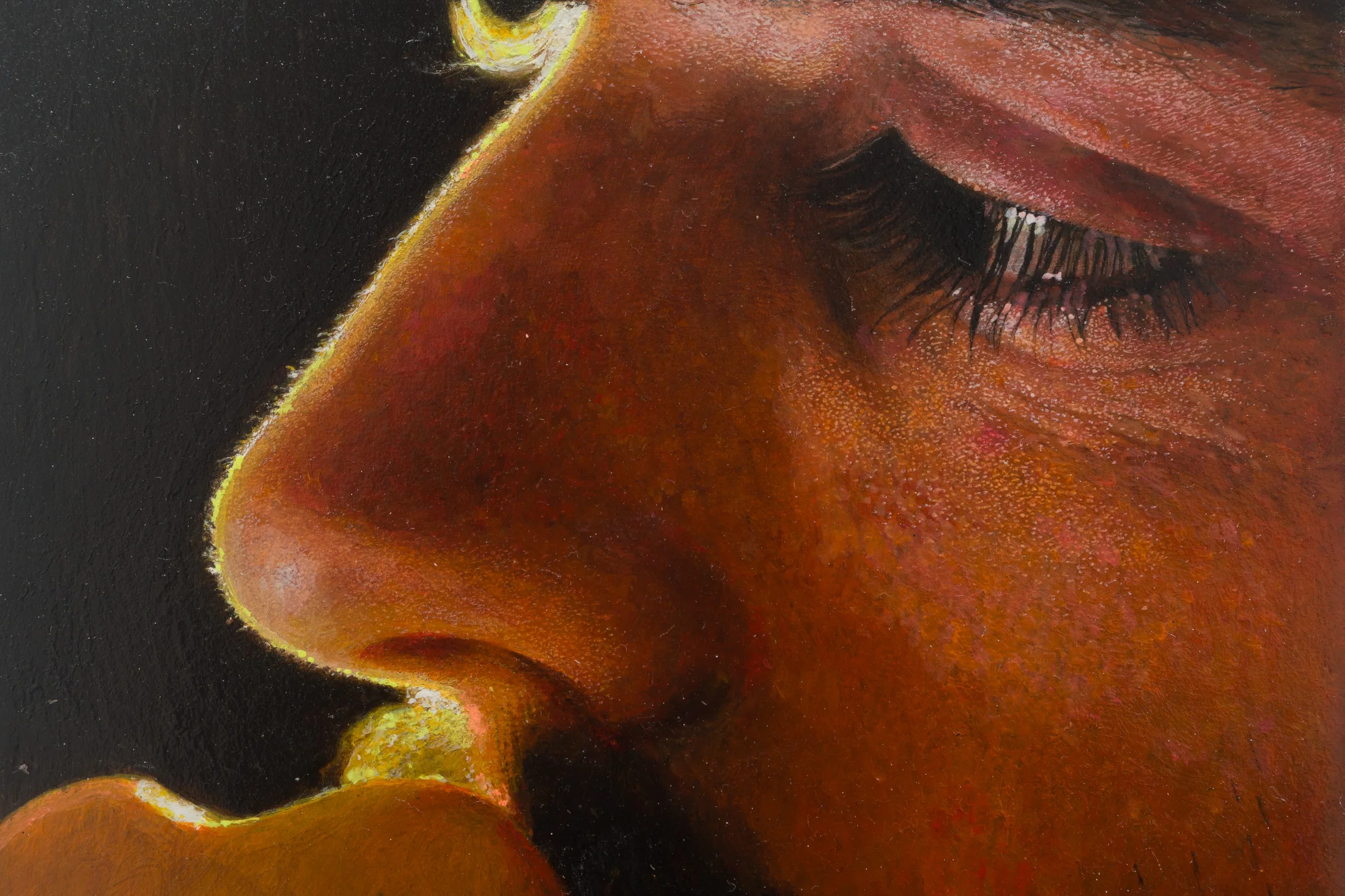
Ki Yoong, Firelight, 2025, (detail image); Courtesy the artist and WORKPLACE, UK
WG: Your works often utilises surprising and varied choices regarding framing, previously you’ve included copper, clay, wood, metal and even water. Can you talk about how these framing decisions tie into the ideas you’re exploring in your work?
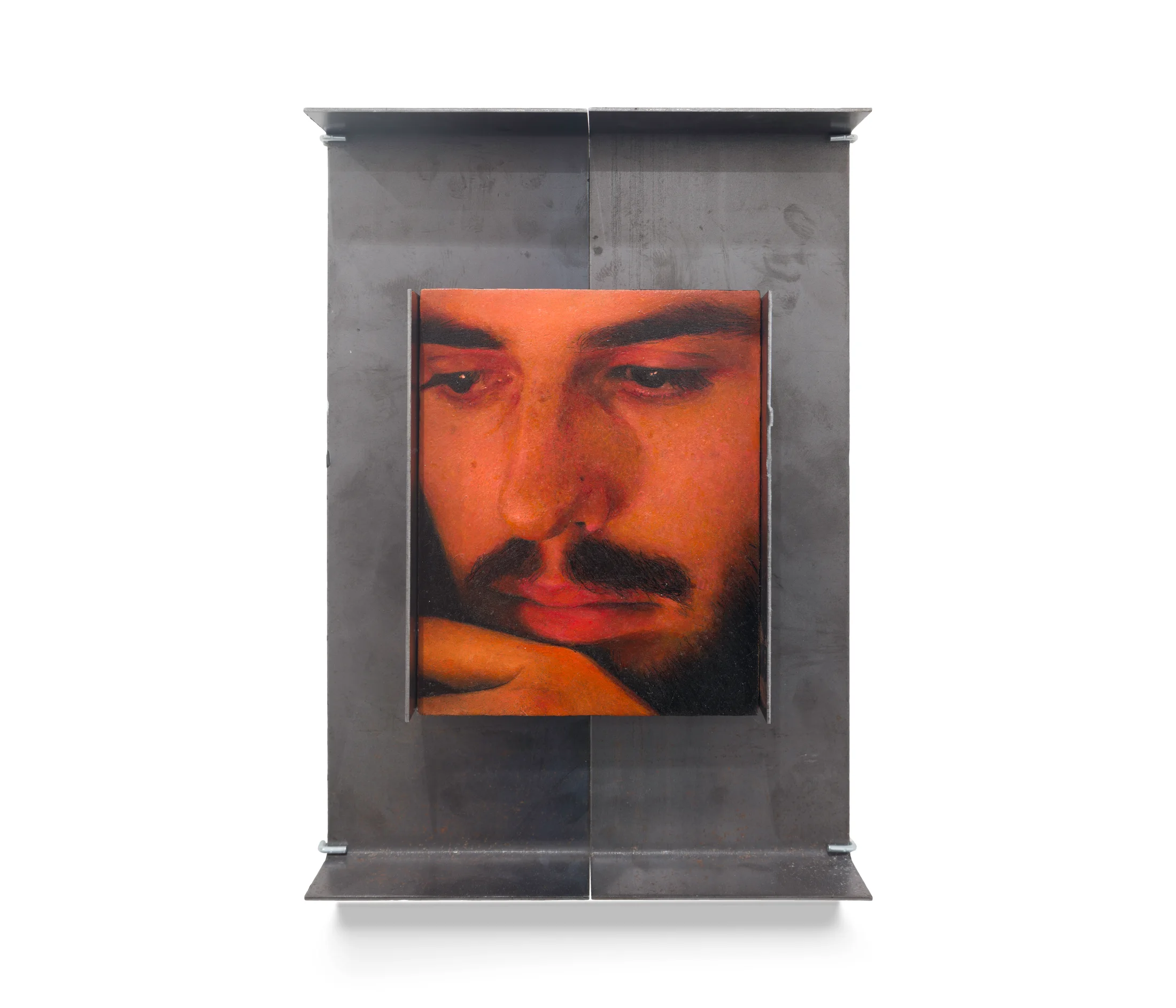
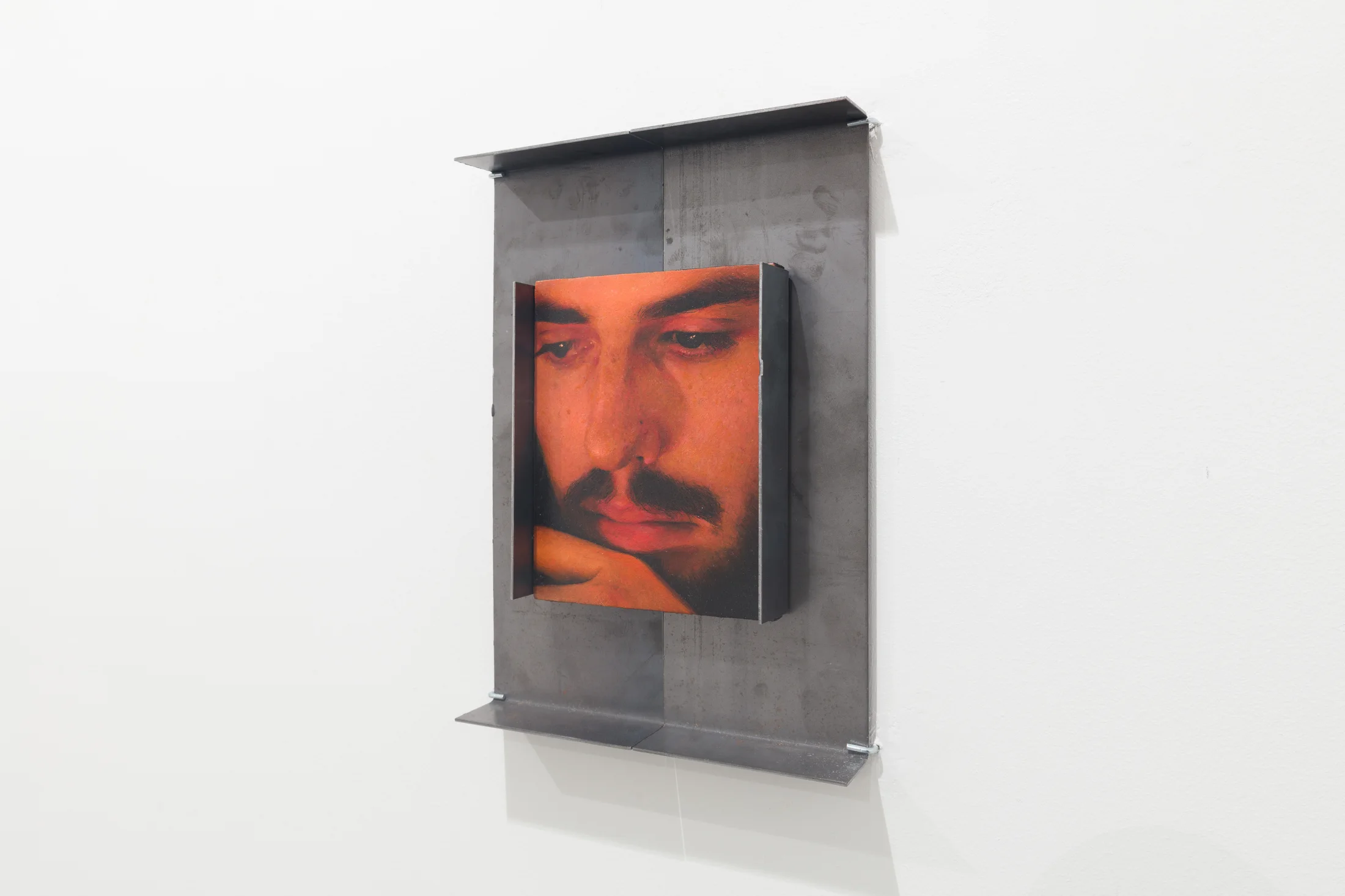
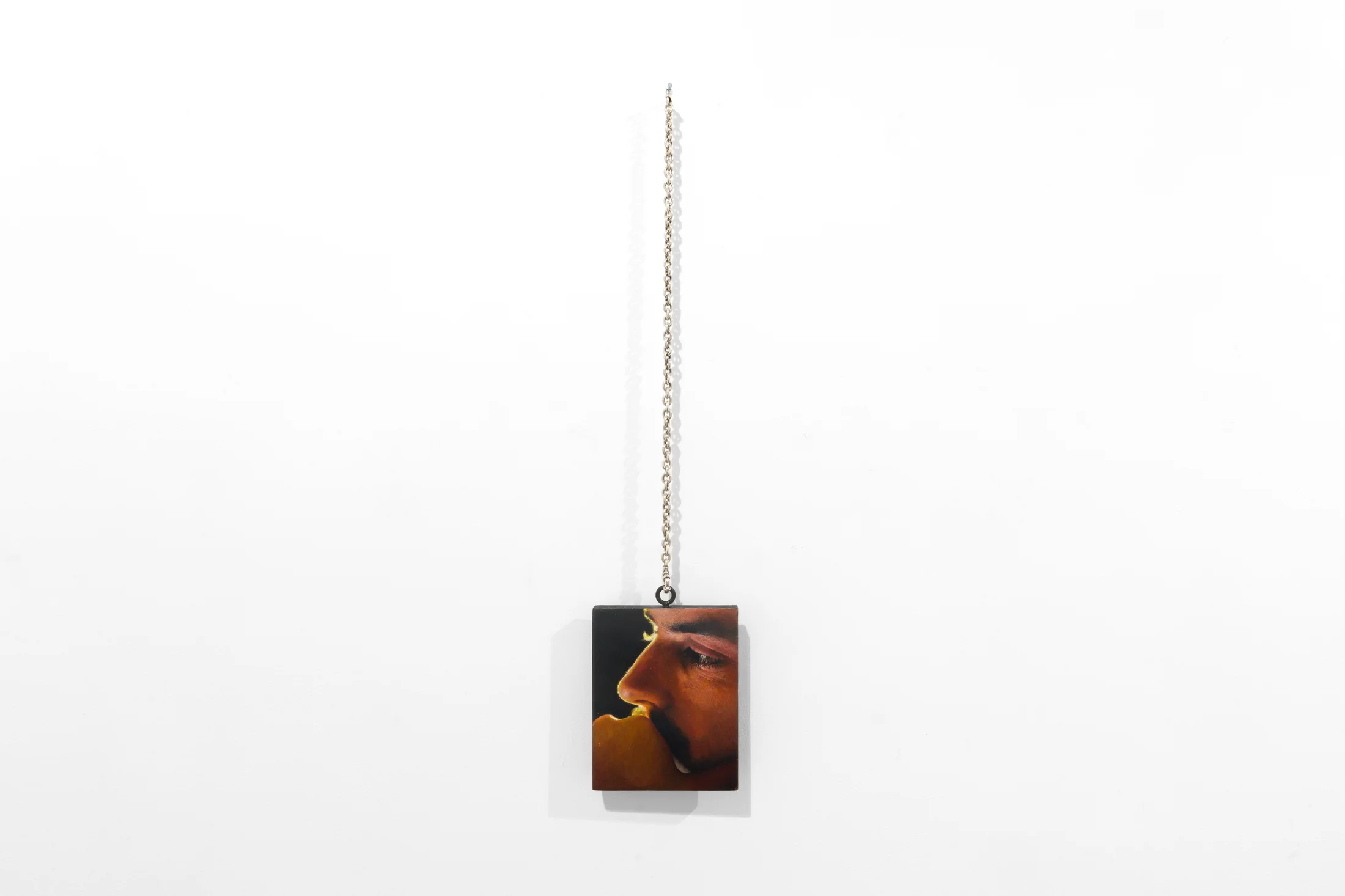
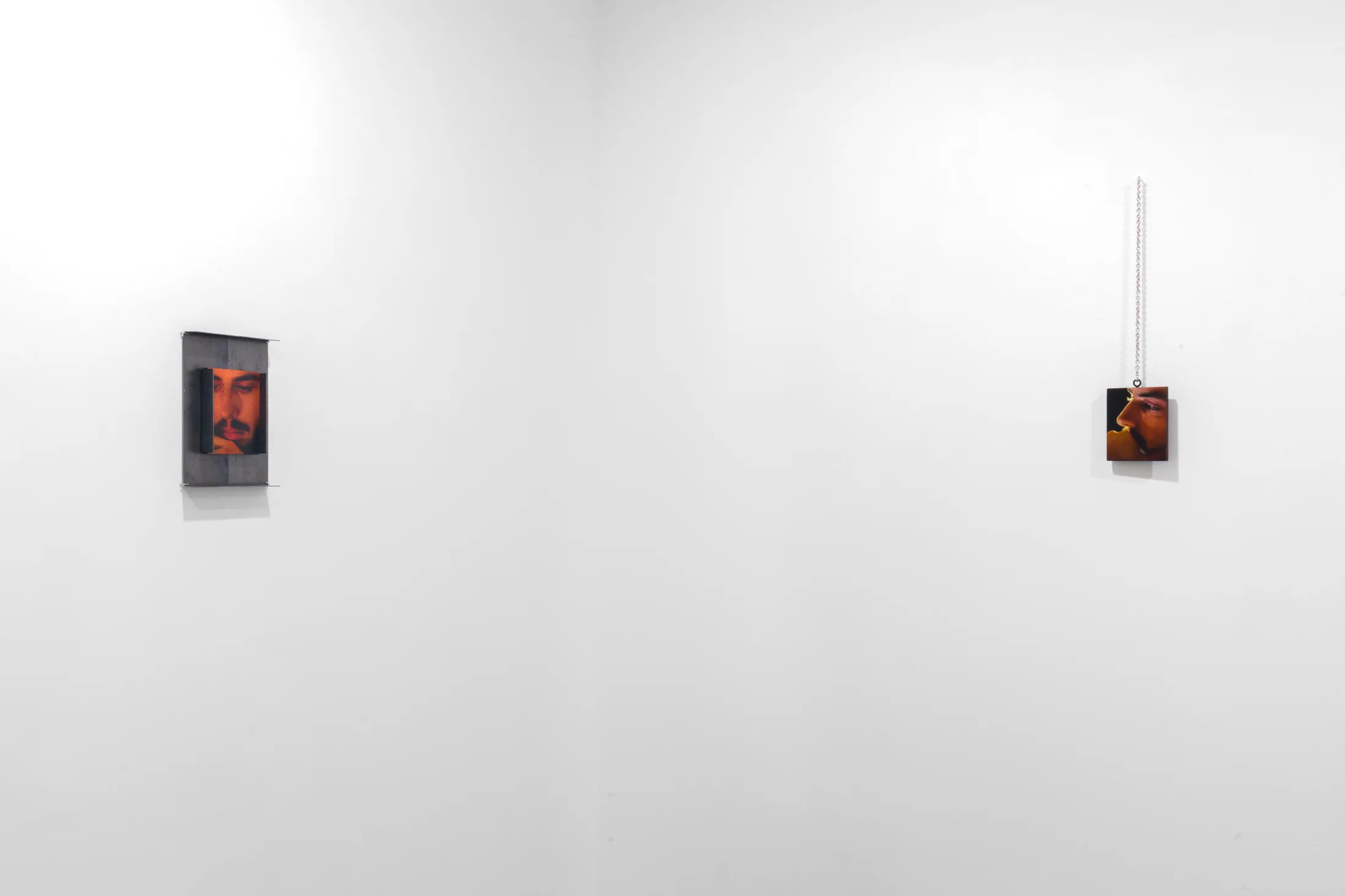
KY: When I'm in a gallery or museum, my experience of viewing artwork involves the piece as a whole, including the frame or objects that holds the painting —enamelled lockets for miniatures, woodwormed cases of altar pieces, rock crystal reliquaries, these ‘frames’ transform. They can make something feel precious, or intimate, or the works become objects to handle. When working I use materials to engage the viewer, a reflective material such as copper or steel brings the viewer into the artwork quite literally like a mirror, and the work becomes a series of gazes, between viewer, painting and the viewer’s reflection. These metals also take on a patina over time, when handled our fingerprints leave their marks, the metal oxidises, and the work itself undergoes a slow evolution - The frames and their materiality bridge the gap between the artwork and its place in the world.
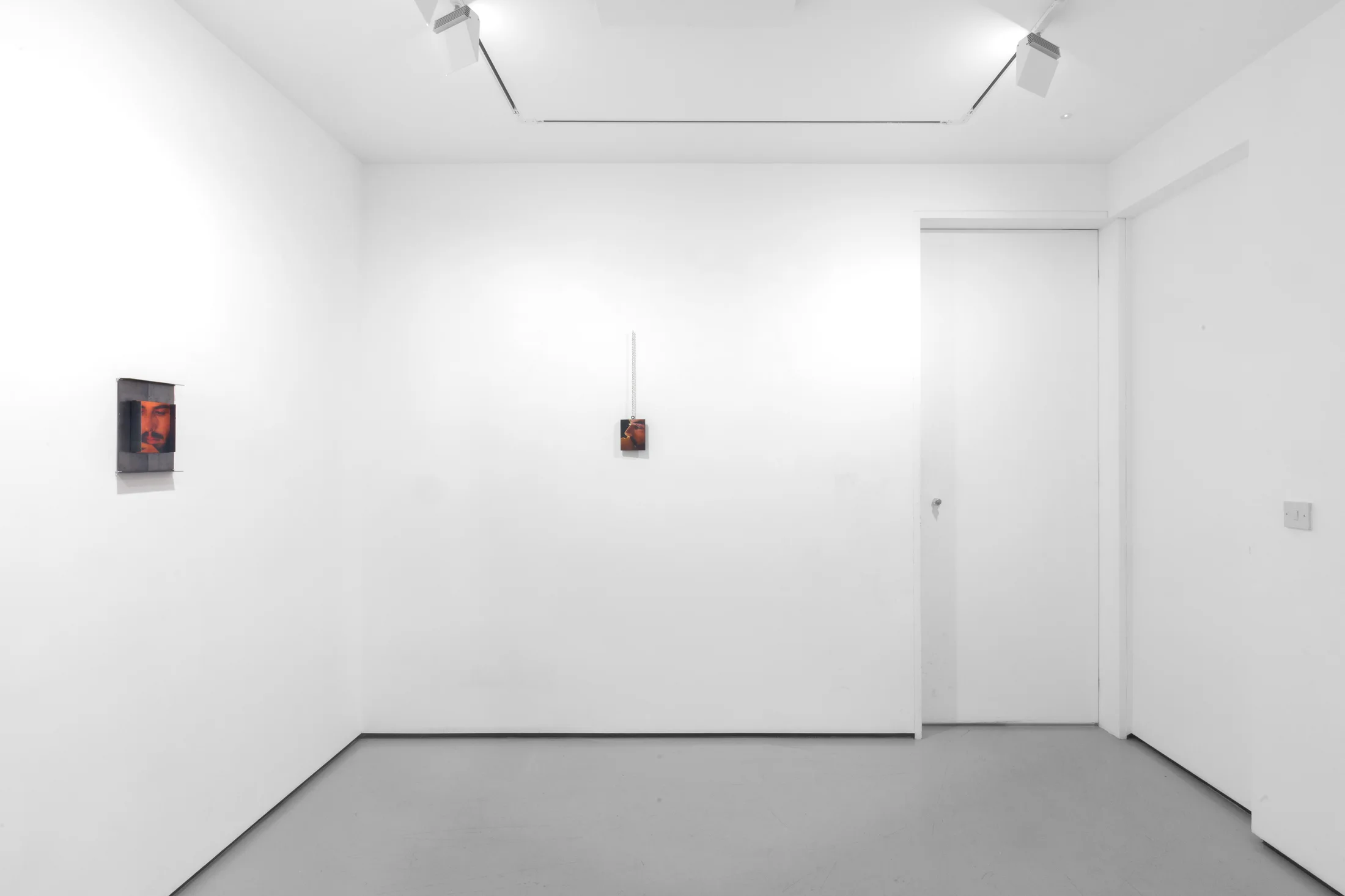
Installation view:
Ki Yoong:
Focus,
WORKPLACE, London, United Kingdom.6 March - 4 April 2025
KY: When I'm in a gallery or museum, my experience of viewing artwork involves the piece as a whole, including the frame or objects that holds the painting —enamelled lockets for miniatures, woodwormed cases of altar pieces, rock crystal reliquaries, these ‘frames’ transform. They can make something feel precious, or intimate, or the works become objects to handle. When working I use materials to engage the viewer, a reflective material such as copper or steel brings the viewer into the artwork quite literally like a mirror, and the work becomes a series of gazes, between viewer, painting and the viewer’s reflection. These metals also take on a patina over time, when handled our fingerprints leave their marks, the metal oxidises, and the work itself undergoes a slow evolution - The frames and their materiality bridge the gap between the artwork and its place in the world.
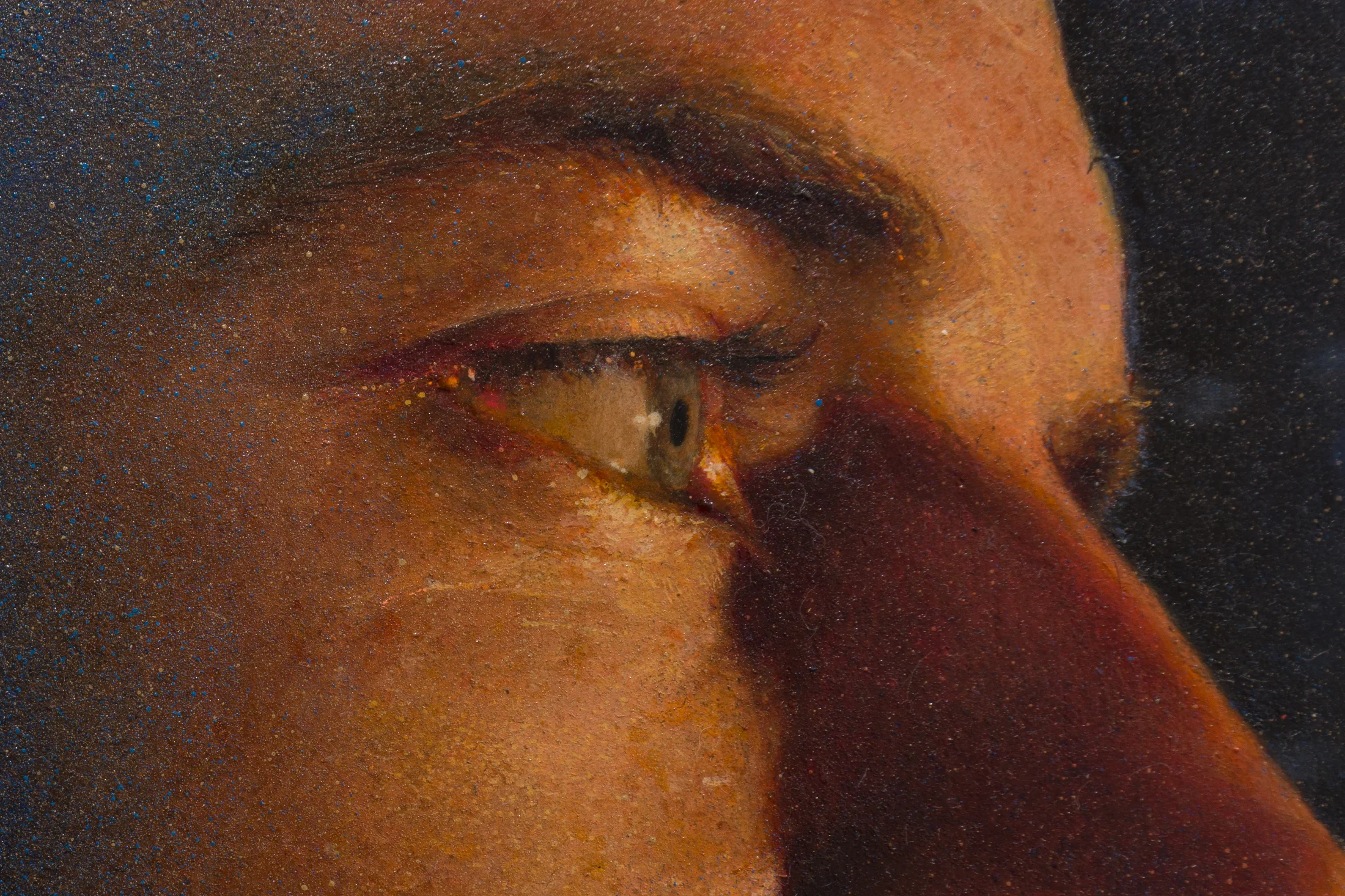
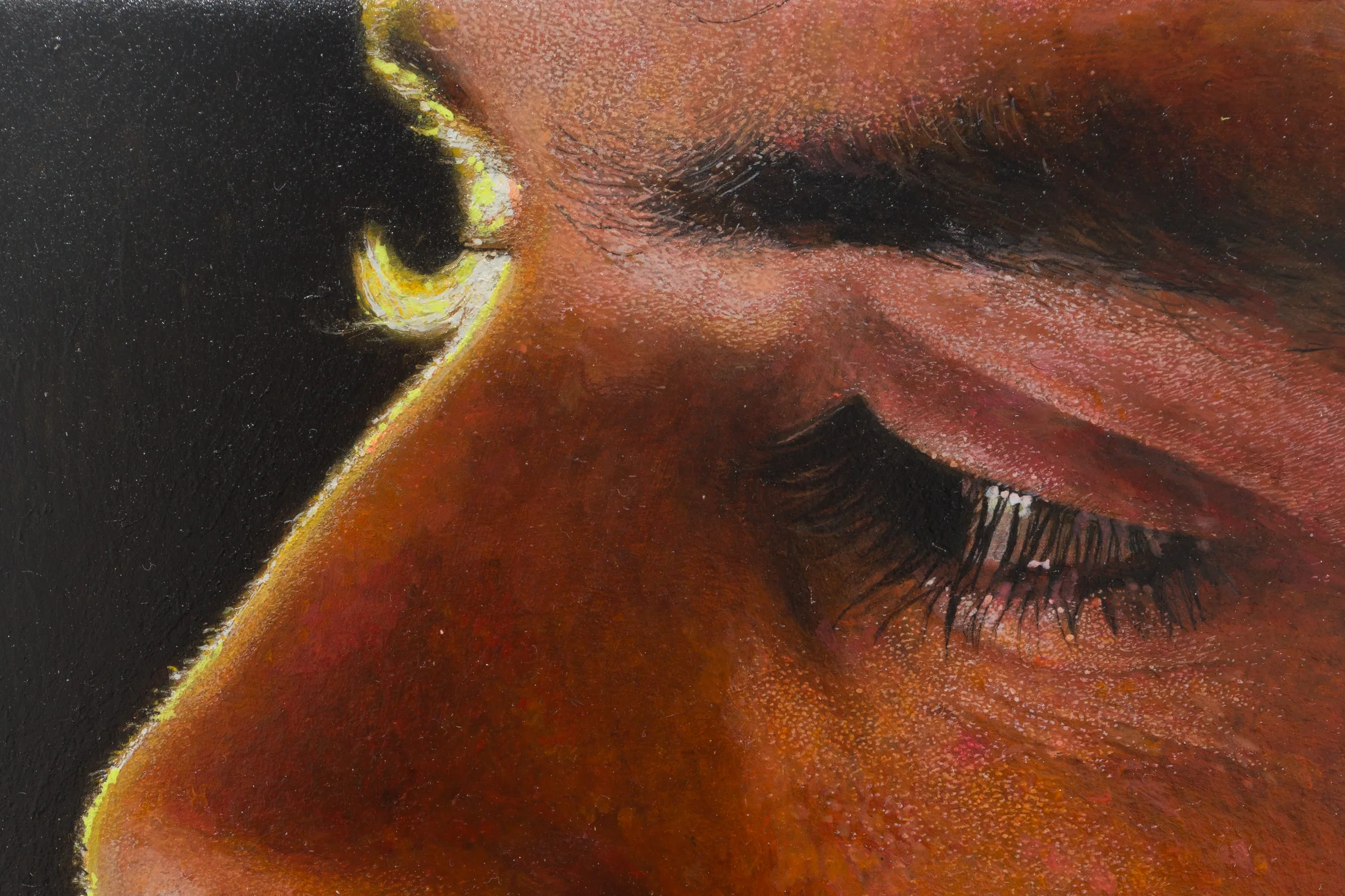
Ki Yoong, Sam, 2025, (detail image); Courtesy the artist and WORKPLACE, UK
WG: You almost exclusively employ tight cropping in your works, along with the spare backgrounds there seems to be strong a tension in the suggestion of what’s outside the pictorial frame. Can you elaborate on this?
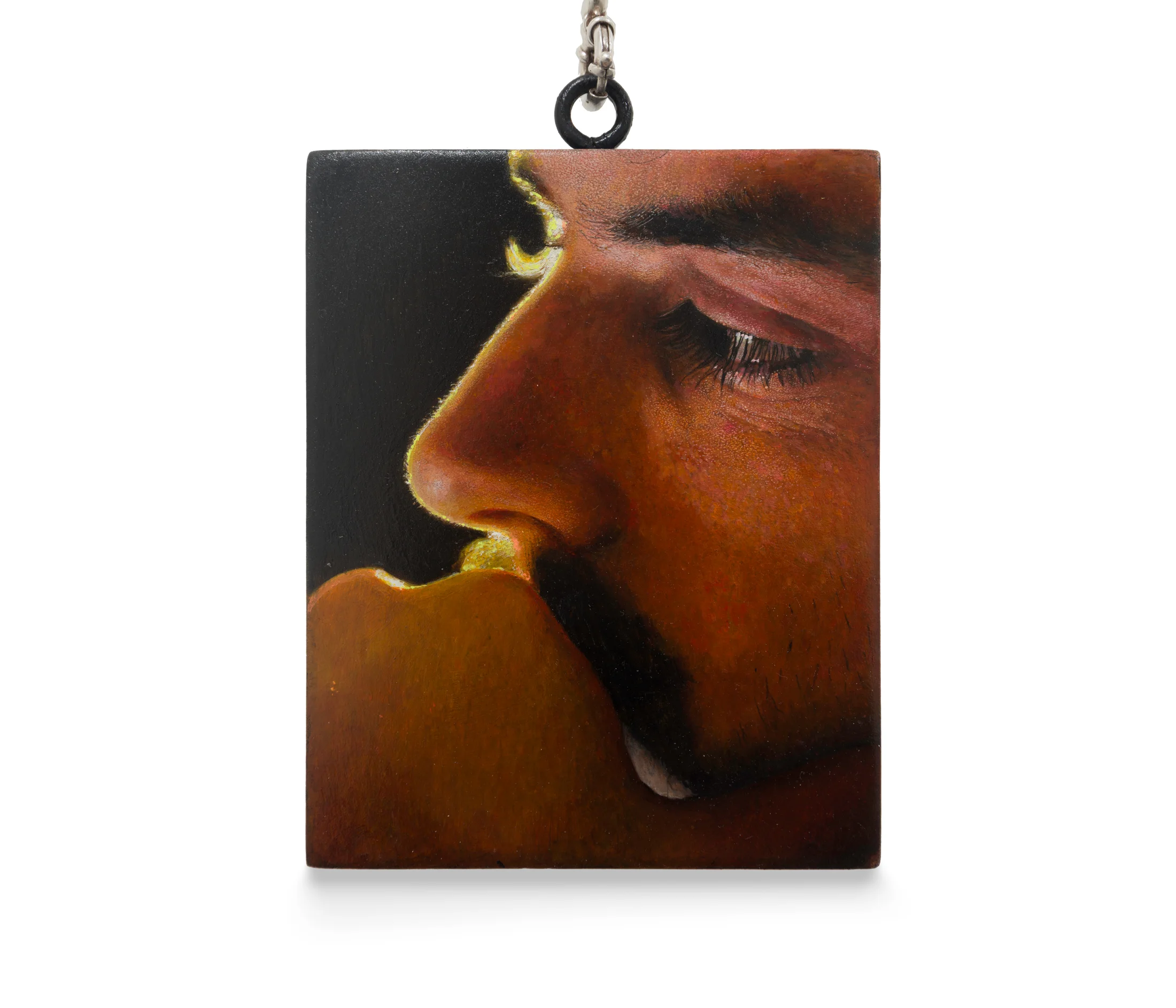
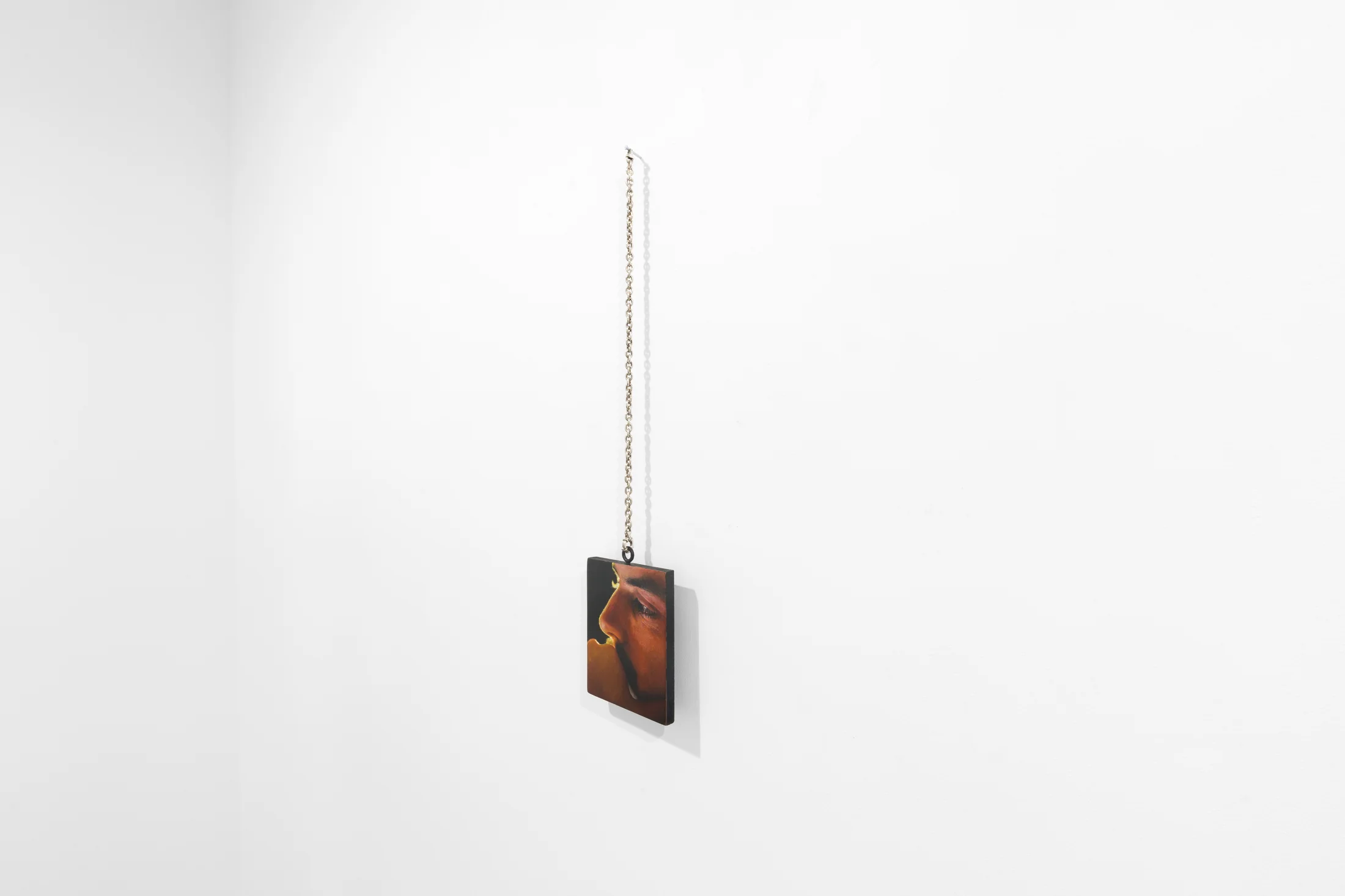
KY: The tight cropping is designed to focus the gaze. By cropping, information is removed, leaving space for the viewer’s own experience to be brought into the process of looking. What do we tell ourselves about the person in the painting, what does that tell us about ourselves - seeing is a personal act and what we perceive is shaped by our own experiences. The crop suggests intimacy, these four paintings are people I care about, so the cropping also becomes a personal act, almost like holding a face in your hands, or seeing someone’s face close to yours
Ki Yoong
KY: The tight cropping is designed to focus the gaze. By cropping, information is removed, leaving space for the viewer’s own experience to be brought into the process of looking. What do we tell ourselves about the person in the painting, what does that tell us about ourselves - seeing is a personal act and what we perceive is shaped by our own experiences. The crop suggests intimacy, these four paintings are people I care about, so the cropping also becomes a personal act, almost like holding a face in your hands, or seeing someone’s face close to yours
Installation view:
Ki Yoong:
Focus,
WORKPLACE, London, United Kingdom.6 March - 4 April 2025
Isolating the subject from its original context shifts how it’s understood, and the suggestion of what’s outside the frame introduces possibility. Portraits are often devices to aid the process of constructing that individual’s identity, acting as a confirmation to that person, through costume, setting, poses. I’m distilling to just the face, to the idea of the self, who are we when we strip it back.
Ki Yoong (b.1988, Bradford, UK) lives and works in London. Yoong received his BA in Fine Art from The University of Leeds in 2010 and his MA in Fine Art from Central Saint Martins in 2013.
Recent exhibitions include: Esther III with Margot Samel, Estonian House, New York USA (2026); Image World, Hypha Gallery 1, London, UK (2026); Pictures of You, Kerlin Gallery, Dublin, Ireland (2025); As We Are, Workplace, London, UK (2025); Focus: Ki Yoong, Workplace, London, UK (2025); Figurative Impressions, Hurst Contemporary, London, UK (2024); Studio West, MEGA Art Fair, Milan, Italy (2024); Marilyn, Plop Residency, London, UK (2024); The Blush Upon Her Cheek, Studio West, London, UK (2024); Faces/Faces, Slugtown, Newcastle, UK (2023); The Picture, Brooke Benington, London, UK (2023); Skin Deep, Studio West, London, UK (2023); A Celebration of Portraiture, Marlborough Gallery, London, UK (2023). Yoong has also collaborated with various brands and institutions such as Vogue, Alex Eagle, Paul Smith, and The House of St Barnabas. Collections include Government Art Collection, UK
WG: What does a typical day in the studio look like for you?
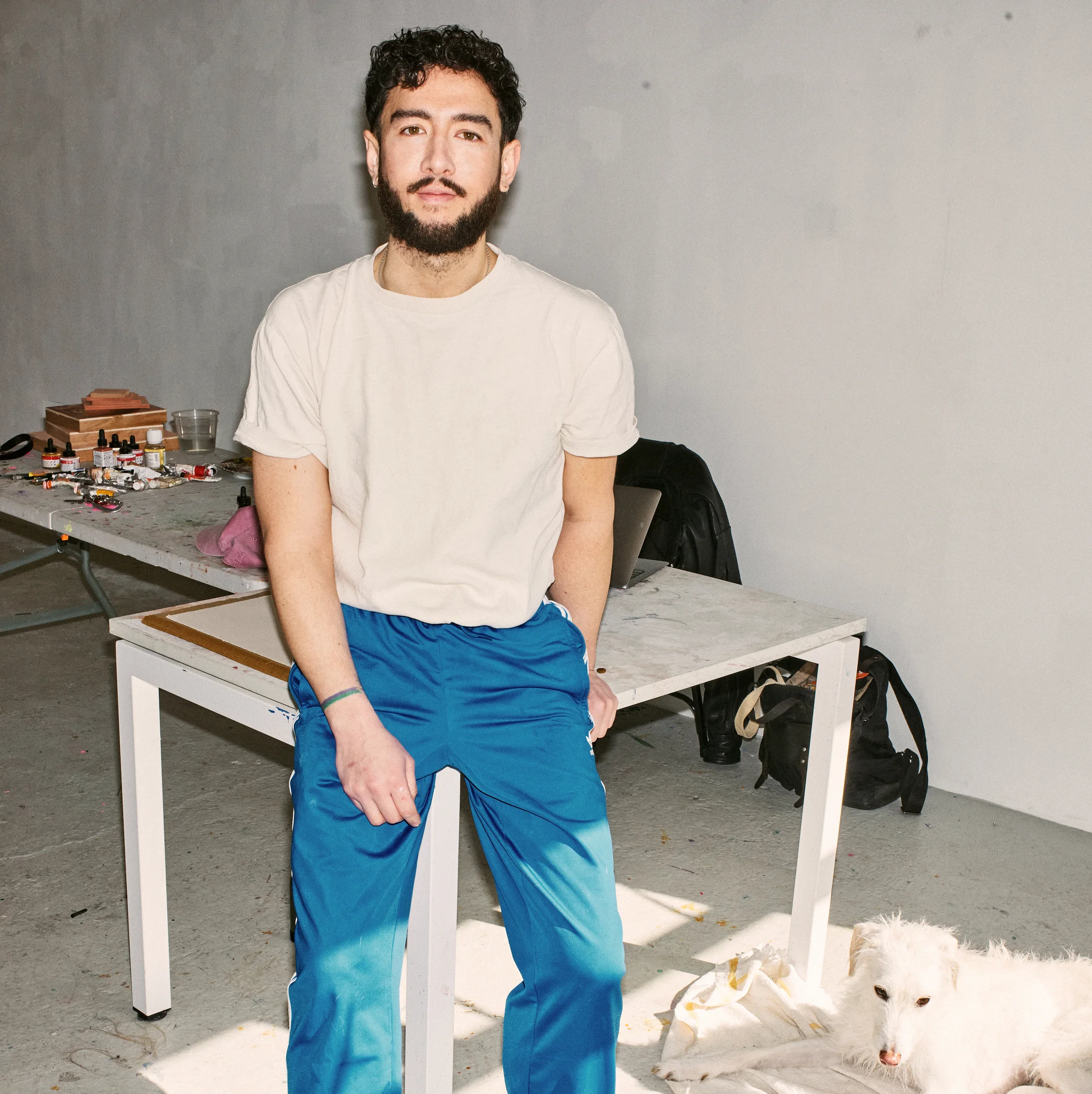
KY: I try to paint every day, if I can. A typical day in the studio for me is pretty simple—just me and my dog Oats. I sit at the table painting while he naps nearby, taking breaks for walks and a bite to eat. I usually have music or a podcast playing to keep me company. Some days, I get lost in the work and happily stay late into the night. This winter has been tough, with the light being so poor there are mornings when I come in and find I need to repaint areas I worked on the evening before, as the colours never quite match under daylight. Very happy spring is almost with us!
KY: I try to paint every day, if I can. A typical day in the studio for me is pretty simple—just me and my dog Oats. I sit at the table painting while he naps nearby, taking breaks for walks and a bite to eat. I usually have music or a podcast playing to keep me company. Some days, I get lost in the work and happily stay late into the night. This winter has been tough, with the light being so poor there are mornings when I come in and find I need to repaint areas I worked on the evening before, as the colours never quite match under daylight. Very happy spring is almost with us!
WG: Can you talk about how art history and poetry inform your practice.
KY: Holbein was a first love of mine, I was pretty obsessive about Tudor paintings when I was in primary school, I’m not sure what it was that captivated me at the time but I was always copying his paintings. The quiet stillness of his sitters has become ingrained in me and comes through my practice, as well as how these paintings live with us today and our experience of them, a memory of a person existing outside of time, we look at them in silence and we are met with silence.
KY: Holbein was a first love of mine, I was pretty obsessive about Tudor paintings when I was in primary school, I’m not sure what it was that captivated me at the time but I was always copying his paintings. The quiet stillness of his sitters has become ingrained in me and comes through my practice, as well as how these paintings live with us today and our experience of them, a memory of a person existing outside of time, we look at them in silence and we are met with silence.
From the Fayum portraits to the works of Nicholas Hilliard, I’ve a love of portraits, and by painting faces I feel connected to a long tradition of depicting people, mostly whom are forgotten. In this sense, the subject of a portrait becomes the absence of a person. We look at them from a world in which they have vanished. It is this that we encounter, a fragmentation between the who and the what, a knife has been drawn across the threads that connect us to who they were and to us they become untethered, like a ghost.
Poet Don Paterson wrote ‘Almost everything will survive you, to the room you, you’re already a ghost’. I explore this thought in my practice, painting it’s a way to briefly hold on to something or someone - it’s lifetime transitions, moving from life towards death and then back again, an object that oscillates between memory and forgetting, the situation of its creation and our present moment.
WG: Is drawing an important part of your process or do you work directly in paint?
KY: Drawing is at the very beginning of my process. I start by sketching out the composition in pencil, laying the groundwork for the painting. After that, I work with very thin layers of oil paint. I see this process as akin to drawing—it’s a series of tiny, fine gestures that accumulate to create the image as a whole. Instead of using large, bold brushstrokes, I layer the paint delicately with a tiny brush, much like the nuanced shading of a pencil.
KY: Drawing is at the very beginning of my process. I start by sketching out the composition in pencil, laying the groundwork for the painting. After that, I work with very thin layers of oil paint. I see this process as akin to drawing—it’s a series of tiny, fine gestures that accumulate to create the image as a whole. Instead of using large, bold brushstrokes, I layer the paint delicately with a tiny brush, much like the nuanced shading of a pencil.