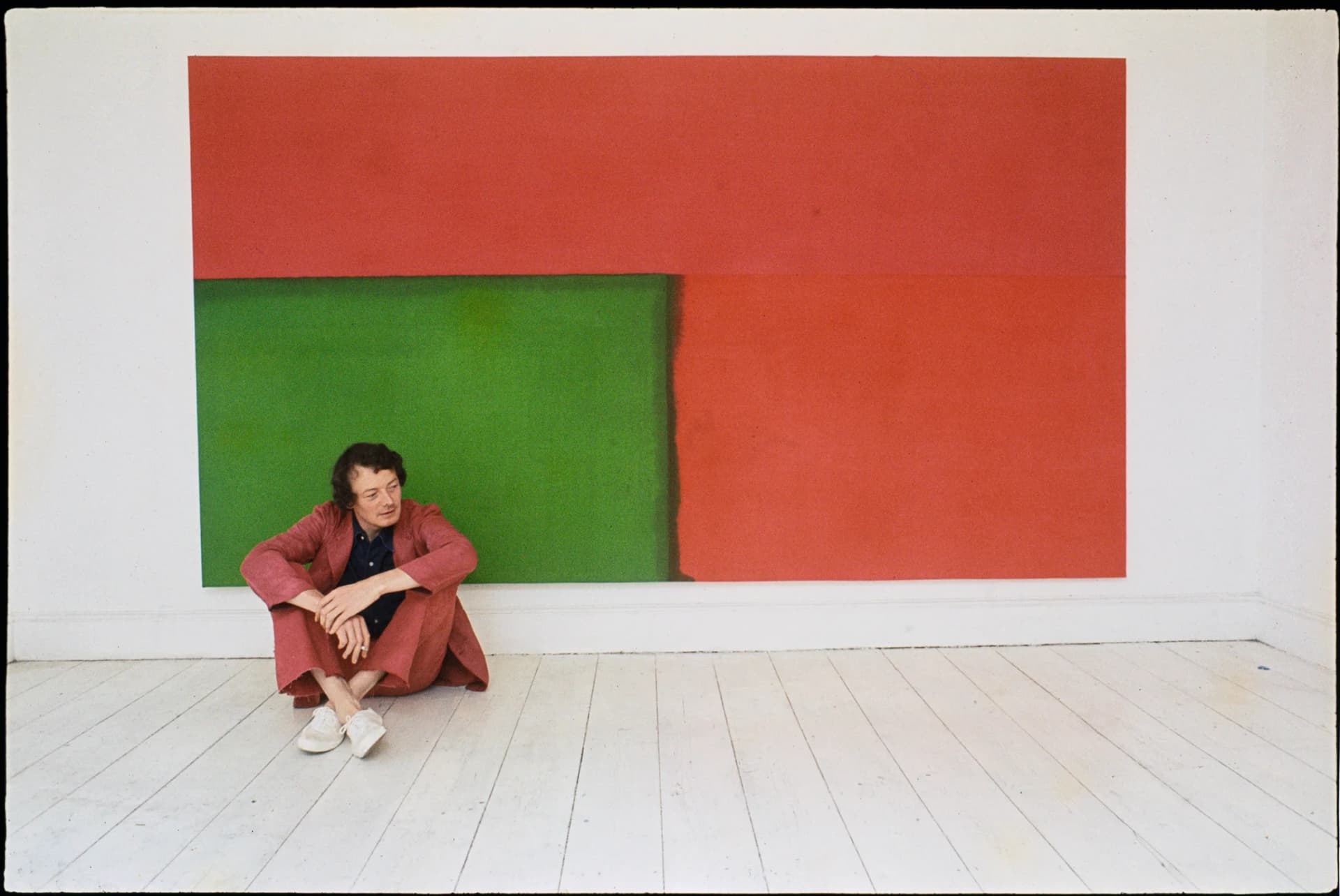
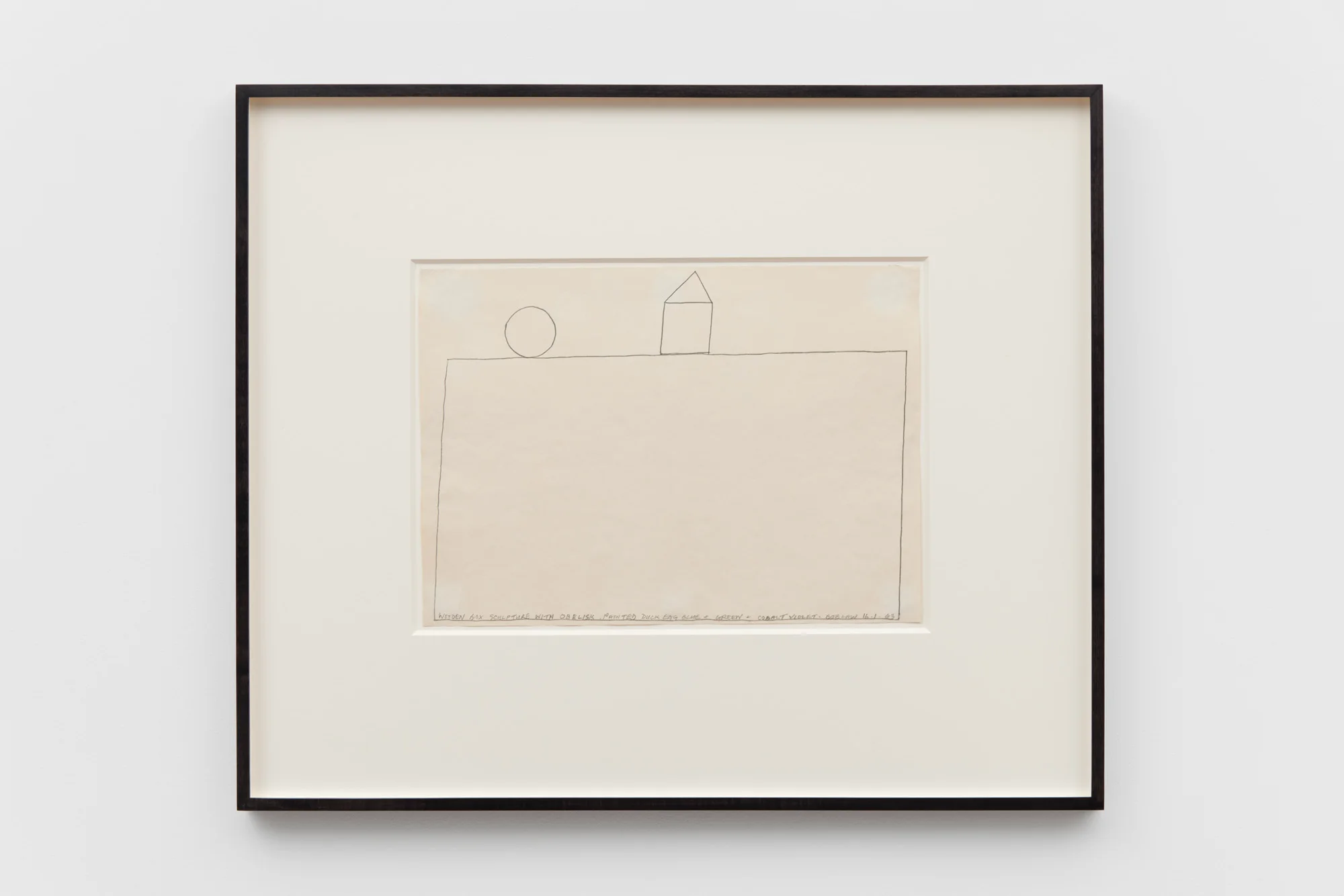
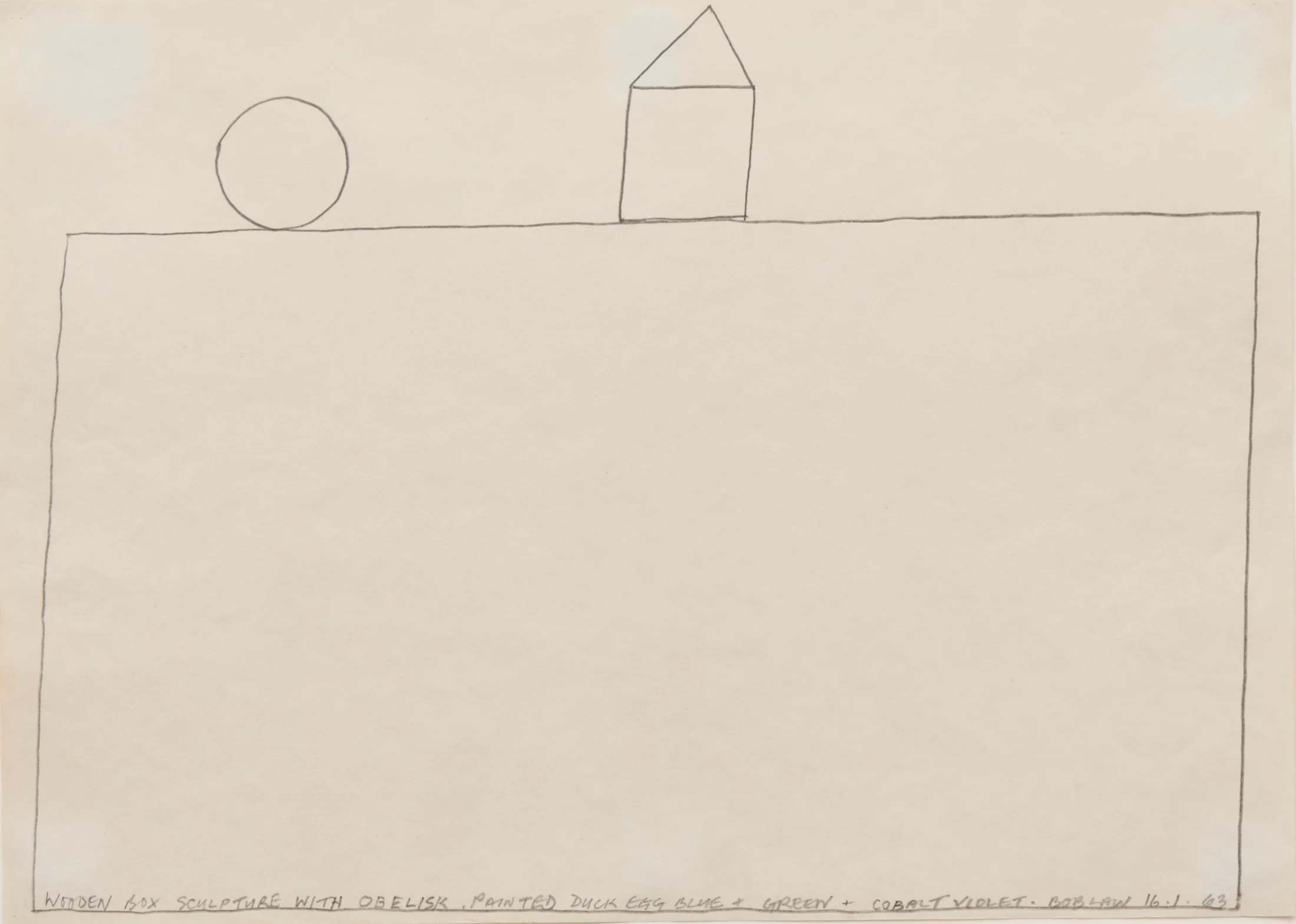
Considered amongst the founders of British Minimalism, Bob Law's work defies easy categorisation and ranges across drawing, painting and sculpture that retains a firm yet always uneasy embrace of pure abstraction. As opposed to the New York-based minimalist artists, Law's practice drew on his engagement with the English landscape and his esoteric range of interests. He produced his 'Field' drawings between the late 1950s and early 1960s in the Cornish landscape of St. Ives. Capturing his experience and drawn while lying on his back, their elemental forms and traditional symbols would set the basis for his work to come. Interests in philosophy, mysticism, alchemy and palaeontology combined with his drive for the reductively essential materialised in the radically monochromatic black canvases that he is most famous for. Rarely ever purely black, these works modulate from blue, to violet and defy photographic reproduction.
Bob Law (b.1934, Brentford, Middlesex, UK – d.2004, Penzance, Cornwall, UK) was a pioneering British artist whose practice spanned drawing, painting, and sculpture. Law’s career was championed early on by critic Lawrence Alloway, leading to his inclusion in Two Young British Painters, ICA, London (1960), and subsequent solo exhibitions at Konrad Fischer, Düsseldorf (1970); Lisson Gallery, London (1971); Museum of Modern Art, Oxford (1974); and Whitechapel Gallery, London (1978). His work has since featured in numerous group exhibitions, including A House of Leaves, DRAF, London (2013); Abstract Drawing, Drawing Room, London (2014); and Artists and Poets, Secession, Vienna (2015). Law’s work is held in major public and private collections worldwide, including Tate, London; the British Museum, London; the Guggenheim Museum, New York; the Stedelijk Museum, Amsterdam; the Art Gallery of New South Wales, Sydney; Museum Sztuki, Łódź; and the Panza Collection, Varese.