Cold Enough For Snow
17 July - 29 August 2025
Workplace, London
- Venue
- Workplace
- Date
- 18 July – 30 August 2025
London,
United Kingdom
Workplace is pleased to present Cold Enough For Snow, a group exhibition of six UK and international artists.
Cold Enough For Snow explores the spaces between personal and collective experiences, memory and perception. Presenting new work by Remi Ajani, Jesse Akele, Kristy M Chan, Nada Elkalaawy, Marta Ravasi and Boo Saville, the exhibition will investigate the shifting boundaries that define personal and collective narratives, history, and human experience.
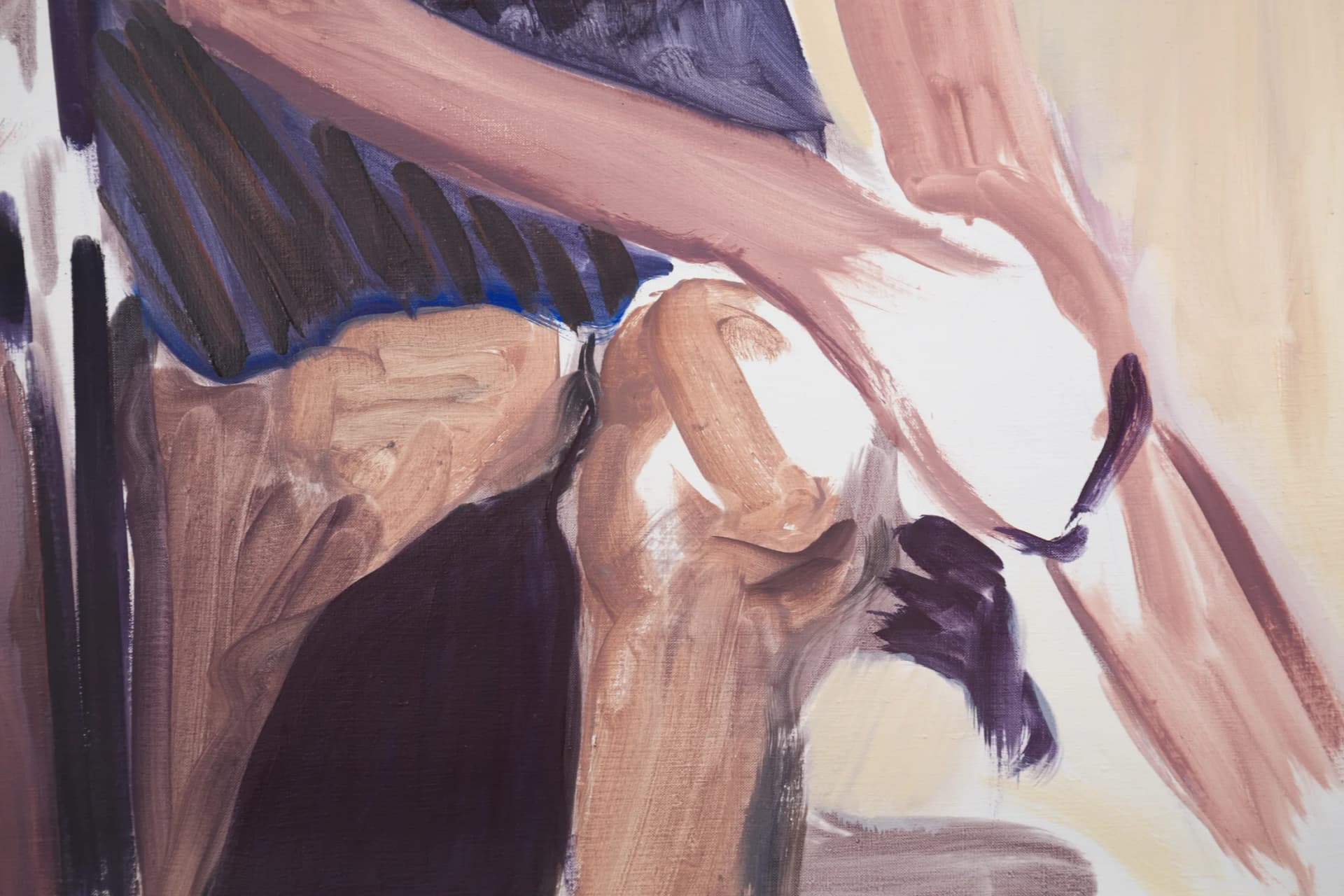
Remi Ajani’s intimate paintings are site where collective and personal experiences collide. Her compositions are drawn from found imagery from her family archives which she utilises to explore a wide range of ideas from the tangible; body language and touch; to more abstract ideas such as the nature of observation and how memory is inextricably linked to complex emotional states. Spontaneous gestures sit alongside slower layered applications of paint which hold the works in a hushed tension, the images slowly revealing themselves whilst hovering on the cusp of collapse.
Similarly, Jesse Akele’s work explores the intersections of identity and lived experience, drawing on the energies of family, friends, and everyday encounters. Through fluid abstraction and fragmented figuration, she seeks a deeper understanding of self, others, and the spaces they inhabit. With a practice rooted in storytelling, Akele’s work reflects how individuals are shaped by their environments, often unconsciously. She is particularly drawn to the intangible imprints of place, memory, and relationship, using painting to give form to these invisible yet enduring connections.
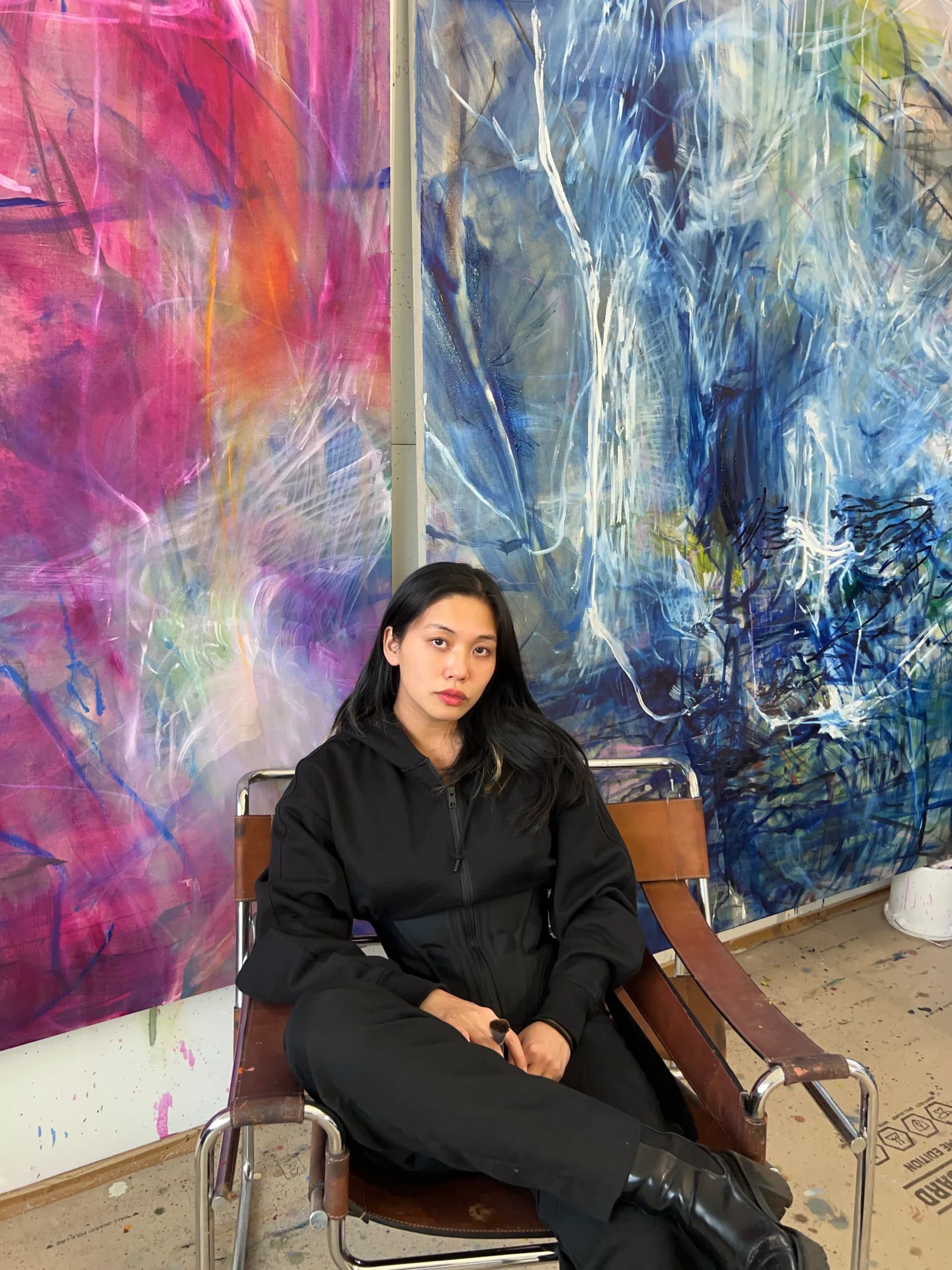
Kristy M Chan’s expansive, gestural canvases are richly layered meditations on the human experience. Through thick, vigorous brushstrokes and intersecting curves, her use of light and shadow maps her exploration of the complexities of "homeland" while navigating diverse cultural landscapes. Her lively use of oil paints — intuitively manipulated, layered, and rearticulated over months, recalls the spirit of Abstract Expressionism and the global diaspora experience.
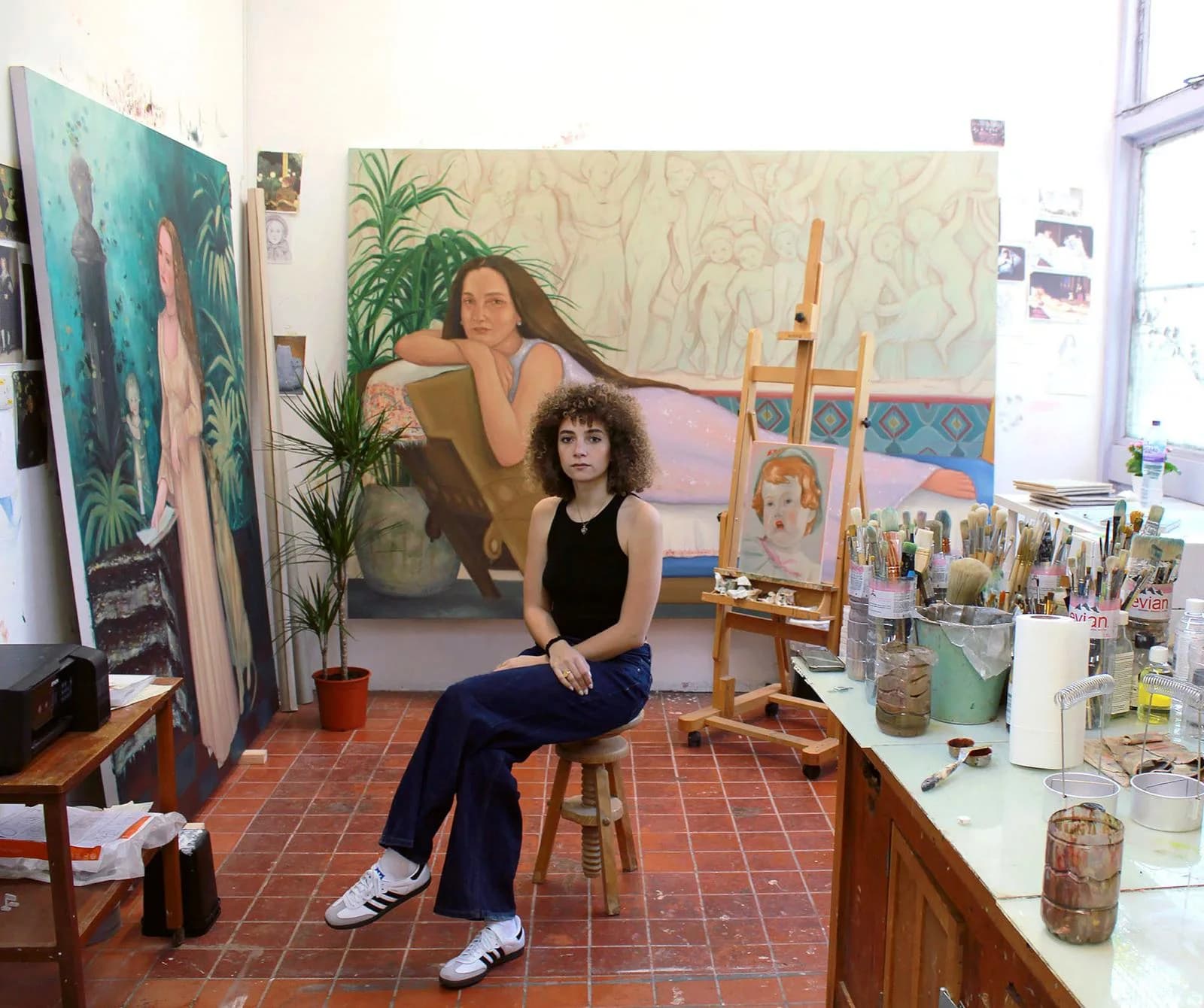
Nada Elkalaawy’s paintings weave together images sourced from art historical objects, her own photographs, and those found online, Elkalaawy is concerned with histories and memory, particularly their implications on personal narratives. Her recent work focuses on closely cropped depictions of tableware including tureens and porcelain vessels often found in Middles Eastern homes. One element of these objects that Elkalaawy is intrigued by is their hollowness - a feature required in their production for firing in a kiln but also inherent in their form as items for display rather than utilised as traditional receptacles. By translating these domestic objects onto canvas, she reimagines their hollow forms as repositories for emotions, memories, and narratives. Pentimento are also visible in her works, in particular in An Arrangement which features traces of earlier images that act like ghosts or phantoms, imbuing the work with an eerie and ephemeral quality that lead to the work constantly negotiating between the past and present.
Marta Ravasi’s diminutive works continue a long tradition of art historical still lives. Rather than painted from life, Ravasi’s works are coalesced from a range of disparate imagery from her own photographs, to images discovered from scouring the internet. Printed out and stored in her studio the images take on a new life, acquiring marks, traces, and imperfections from their environment and the passage of time. These subtle material changes make their way into the weave of her canvases further complicating the reading and provenance of the imagery. Many of her subjects are explored in different ways over time with subtle changes in brushwork and colour, or slight shifts in perspective pushing the limits of the painting and allowing them to shift and evolve.
Boo Saville presents works from both sides of her multifaceted painting practice. Her abstract colour field work utilises multiple layers of oil paint to create an array of optical effects, with her contemplative and meditative painting process echoing the perceptual experience of the viewer. Recently the titles from this body of work are drawn exclusively from female names, Saville’s direct experience of the colours prompting experiences and relationships of friends and family. In contrast, Saville adopts a non-narrative approach to figurative painting, using found imagery as metaphor. Often rendered in a monochromatic palette and sourced from online materials, these works emerge as reflections on thoughts that surface during the abstract painting process. Her work investigates the phenomenology of memory and perception, questioning both our collective and personal histories.